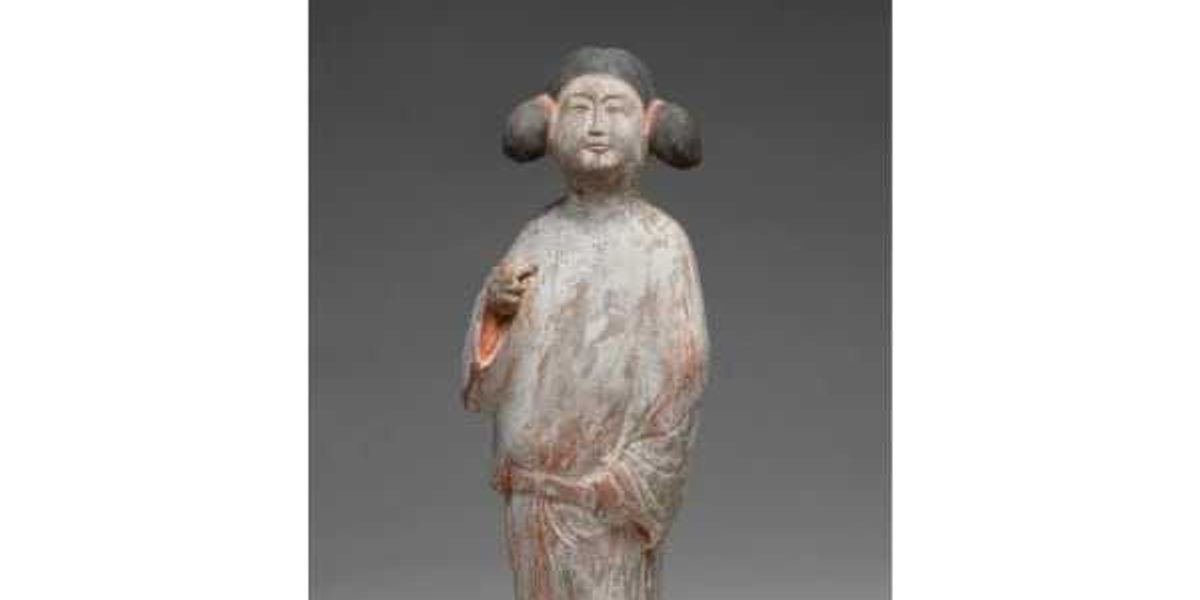
“Ancient Beauty and Body Art from Four Continents” explores how people from four cultures, distant in geography and history, altered and enhanced their appearances to conform to, or deviate from, their societies’ expectations.
Portraits and other images of people from New Kingdom Egypt (16th-11th century BC), Early Imperial Rome (1st century BC-2nd century AD), Classic Maya (AD 250-950), Tang Dynasty China (AD 618-907) do not necessarily show how real, historical people looked; instead, they show us how they wanted others to see them. Ancient beauty standards varied widely from one culture to another and were often strikingly different from what is idealized in popular media today.
Alongside ancient faces, “Ancient Beauty” displays the tools, accessories, and vessels used in antiquity as part of beauty and body modification practices, including hair styling and removal, piercing and tattooing, and applying makeup, skincare, and perfumes. The implements associated with these intimate rituals are often works of art in their own right.
People from all four cultures were buried with precious objects related to self-care and personal adornment. In life and in the afterlife, the way a person crafted their appearance told their community who they were, communicating their power, taste, wealth, gender, ancestry, and age. Thousands of years later, we can try to understand some of those messages from the beautiful things left behind.
The exhibition highlights works of art from across SAMA’s ancient collections, many of which have not been on view in recent years, along with generous loans from the Museum of Fine Arts, Houston, and the Brooklyn Museum.