Introduction
What is Bambara groundnut?
Nutritional composition
Potential health benefits
Sustainability, processing, and nutritional considerations
References
Further reading
Bambara groundnut is a climate-resilient African legume with a balanced nutrient profile, notable lysine content, dietary fiber, minerals, and bioactive compounds, all of which support its value for food security and nutrition. Its benefits are promising, but processing is important to improve nutrient availability and reduce antinutritional factors, while many health claims still need stronger human clinical evidence.
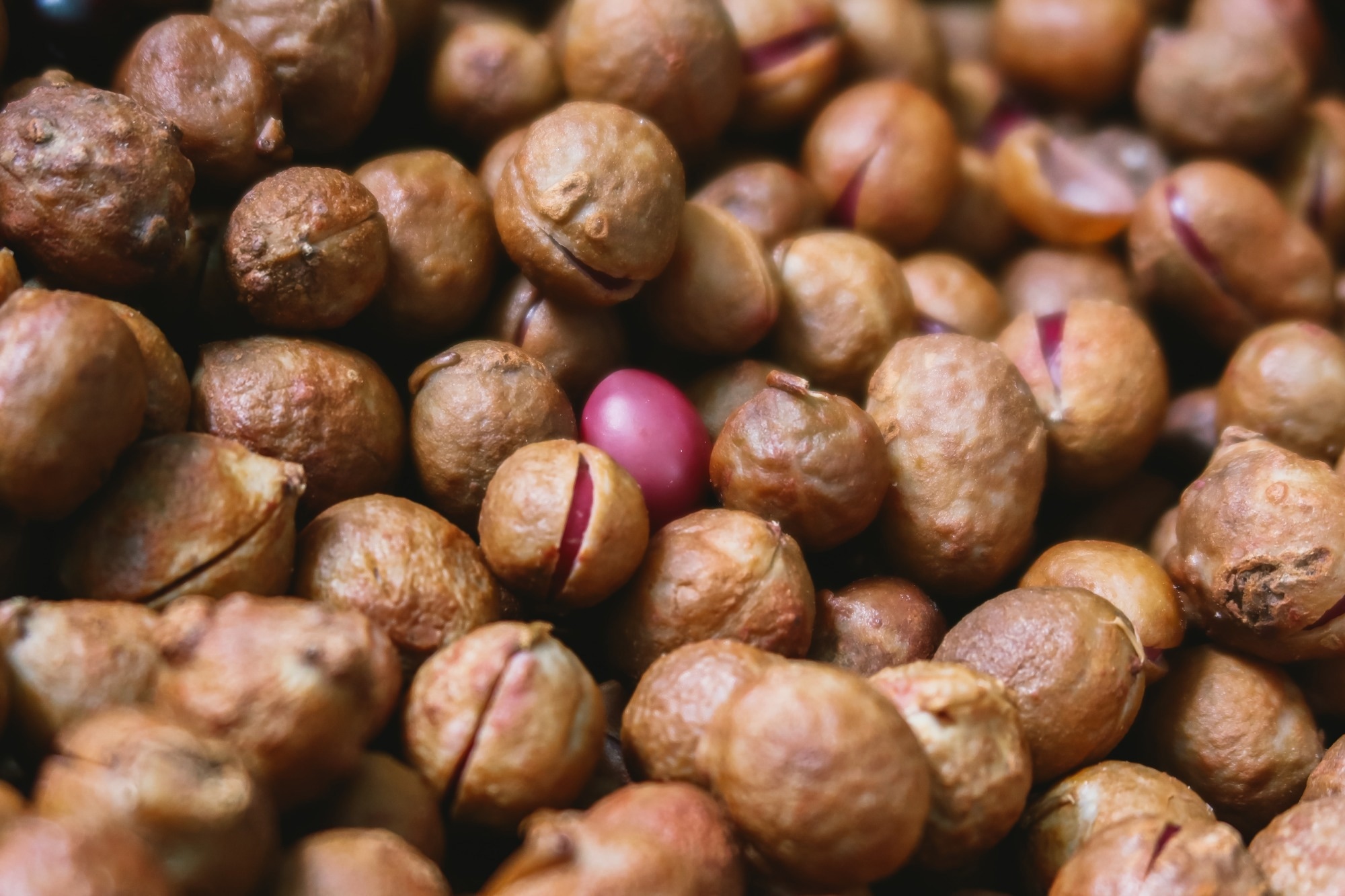 Image Credit: k_lmnop / Shutterstock.com
Introduction
The global agricultural industry relies heavily on a narrow selection of staple crops, exacerbating both climate change and growing public health crises. This reliance has also been linked to reduced dietary diversity and micronutrient deficiencies. To prevent further environmental degradation, unconventional crops like the Bambara groundnut are increasingly being studied for their climate resilience and nutritional benefits.1
What is Bambara groundnut?
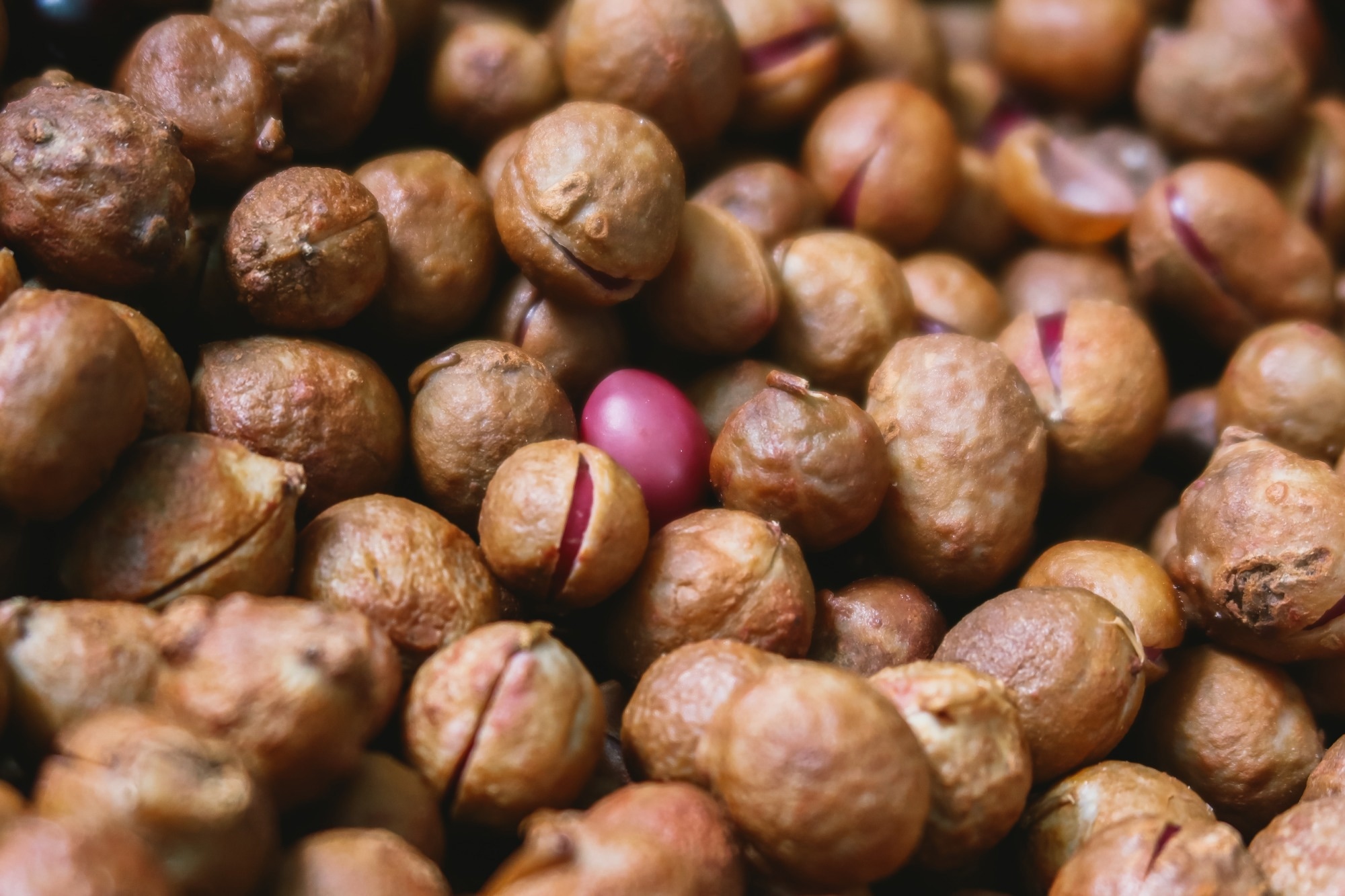
The urgent need for nutritionally diverse and durable crops has increased scientific interest in the Bambara groundnut (Vigna subterranea (L.) Verdc.), a crop indigenous to West Africa, with its center of origin generally located between West and Central Africa.1,6 Throughout these regions, Bambara groundnut is often roasted and ground into a powder used to produce relish, soup, and coffee. Bambara groundnuts can also be found in porridges, bread, and dry snacks.3
With a maturation duration of three to five months, the Bambara thrives at temperatures ranging from 20 °C to 28 °C in well-drained and low-nutrient soils with a pH range of 5.0 to 6.5.3 The Bambara exhibits exceptional drought tolerance by maintaining physiological functions and producing reasonable yields under rainfall scarcity conditions, which often causes failure of other leguminous crops. As a legume, it also fixes atmospheric nitrogen and can support soil fertility in low-input farming systems.1
Spilling the beans on bambaraPlay
Nutritional composition
Despite being the third most significant grain legume consumed in sub-Saharan Africa, the market presence of the Bambara groundnut remains limited due to historical neglect in research funding1,2, weak value chains, and its hard-to-cook nature.1,6
In 2024, the European Food Safety Authority (EFSA) reported no safety objections to the placing on the EU market of Bambara groundnut seeds and flour as a traditional food.5 Quantitative analysis corroborates these findings, indicating that the seeds comprise 49-64.4% carbohydrates, roughly 18-24% crude protein, and 1.4-9.7% fat.1,3
The protein content of Bambara is notable but variable, with storage proteins dominated by vicilin (7S) and legumin (11S) globulin fractions. Vicilin is the primary protein found in Bambara groundnut, whereas the minor legumin fraction provides essential stability to the globulin matrix.1
Bambara groundnut is especially valued for its lysine content, which complements cereal-based diets, but it should not be considered uniformly rich in methionine across studies.1,6 Other amino acids present include leucine, valine, and phenylalanine.3
Bambara is a potent source of essential minerals, including magnesium, iron, and potassium, with levels of 55 mg/100 g, 5-48 mg/100 g, and up to 1,400 mg/100 g, respectively, although these values vary by genotype, seed color, and growing conditions.3,6 Vitamins A, C, and E are present in appreciable amounts, with these concentrations varying based on grain variety, environmental factors, and regional differences in crop management.3 However, the bioavailability of some minerals may be reduced by antinutritional factors such as phytic acid.4
About 36% of the Bambara fatty acid matrix consists of linoleic acid, followed by 23% and 21% oleic and palmitic acids, respectively, with proportions varying by landrace and growing environment.3,7 Bambara groundnut also provides dietary fiber, which contributes to satiety and digestive health.1,8,9 The carbohydrate matrix of Bambara nuts is dominated by up to 49.5% starch content, including both slowly digestible and resistant starches that are involved in glucose release and other metabolic processes.2
Potential health benefits
Historically, African tribes have relied on Bambara groundnut as a traditional medicinal remedy to treat ailments like vision loss, diarrhea, joint pain, and gastrointestinal discomfort, as well as nausea and vomiting during pregnancy.3 These uses are primarily ethnomedicinal reports and have not been established by robust human clinical trials.1,3 These therapeutic indications have been assessed in vitro and in vivo, with antimicrobial effects observed against Gram-negative Klebsiella pneumonia, K. aerogenes, and Pseudomonas aeruginosa species, as well as Gram-positive bacteria like Escherichia coli, Candida albicans, Staphylococcus aureus, Bacillus aureus, and Aspergillus Niger,3 although these findings come largely from extract-based laboratory studies rather than clinical use.3,7
The antibacterial activity of Bambara groundnut extracts is attributed to their rich polyphenol content, including flavonoids, anthocyanins, and tannins, which also confer antioxidant effects in experimental settings. These bioactive compounds have been associated with antioxidant, anti-inflammatory, and cardioprotective potential.7 The extent and durability of these antioxidant properties are determined by legume genotype, soil characteristics, growth parameters, and the type of solvents used during extract preparation.
Bambara groundnuts are a rich source of other bioactive compounds, including catechin, epicatechin, and phenolic acids such as chlorogenic and ellagic acids. These phytochemicals are free radical scavengers that reduce reactive oxygen species (ROS) levels, thereby potentially reducing the risk of cardiovascular disease by inhibiting lipid oxidation and lowering serum cholesterol levels.2,3
Some Bambara-based foods have shown moderate glycemic index values, and studies of whole seeds also report variety-specific differences, indicating that glycemic effects depend on both product form and cultivar.8,9
Importantly, most of Bambara’s health benefits are correlational and derived from the historical data on the biochemical and nutritional components found in these groundnuts. Experimental studies, particularly human clinical studies to establish causal relationships, are limited.1-3
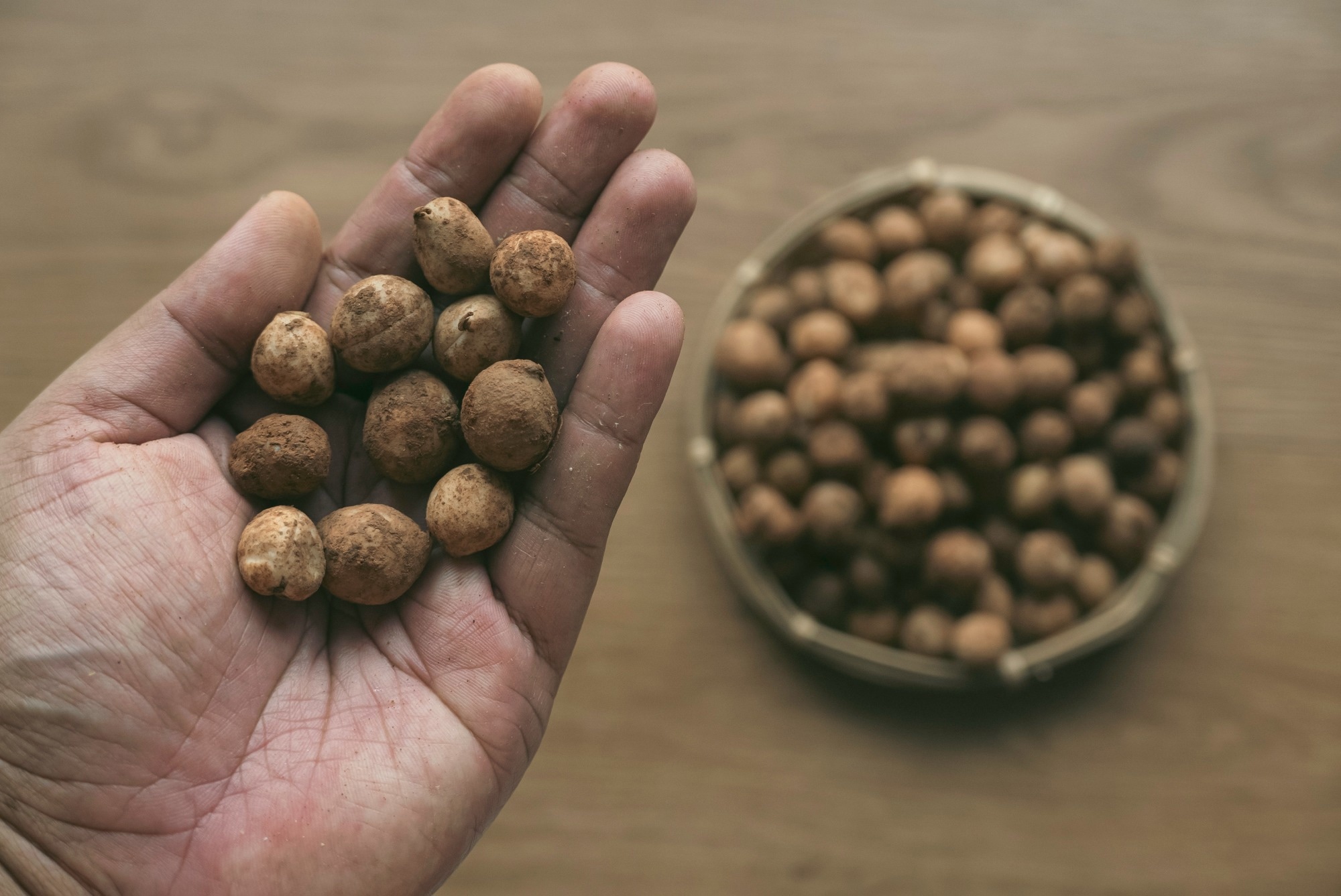 Image Credit: Faizal Ramli / Shutterstock.com
Sustainability, processing, and nutritional considerations
The Bambara groundnut is considered a ‘climate-smart’ crop that enhances soil fertility and reduces the need for synthetic nitrogen fertilizers, thus supporting sustainable intercropping systems with cereals.4 Consequently, the integration of Bambara groundnuts into rotational systems has the potential to reduce pest and disease cycles while stabilizing local food supplies.1,6
Despite its nutritional richness, Bambara contains trace amounts of antinutritional factors (ANFs), such as phytic acid, tannins, and trypsin inhibitors, which necessitate specific processing methods to maintain its nutritional benefits.4 Other reported ANFs include oxalates, which can reduce mineral bioaccessibility and protein digestibility.4
Soaking for 12-24 hours has been shown to facilitate the leaching of water-soluble ANFs and simultaneously activate endogenous enzymes.1
Combined germination and roasting are particularly effective at reducing trypsin inhibitors and tannins by 81.6% and 65.7%, respectively.3 Fermentation also enhances in vitro protein digestibility (IVPD) from a baseline of approximately 70% to 89.7%, while reducing phytate levels by up to 95.9%.4 Dehulling can further improve digestibility and reduce antinutrient levels, but this comes with a tradeoff.4,6
Although dehulling significantly improves digestibility, this processing method inadvertently removes the pigmented testa, which contains many antioxidant polyphenols.3
References
Tan, X. L., Azam-Ali, S., Goh, E. V., et al. (2020). Bambara Groundnut: An Underutilized Leguminous Crop for Global Food Security and Nutrition. Frontiers in Nutrition 7. DOI: 10.3389/fnut.2020.601496. https://www.frontiersin.org/journals/nutrition/articles/10.3389/fnut.2020.601496/full
Odeniran, O. M. (2025). Exploring the Potential of Bambara Groundnut Flour as an Alternative for Diabetic and Obese Patients in the USA: A Comprehensive Review. Cureus. DOI: 10.7759/cureus.78258. https://www.cureus.com/articles/337788-exploring-the-potential-of-bambara-groundnut-flour-as-an-alternative-for-diabetic-and-obese-patients-in-the-usa-a-comprehensive-review#!/
Ramatsetse, K. E., Ramashia, S. E., & Mashau, M. E. (2022). A review on health benefits, antimicrobial and antioxidant properties of Bambara groundnut (Vigna subterranean). International Journal of Food Properties 26(1); 91-107. DOI: 10.1080/10942912.2022.2153864. https://www.tandfonline.com/doi/full/10.1080/10942912.2022.2153864
Elegbeleye, J., & Sivakumar, D. (2026). Unravelling the Impact of Diverse Fermentation Techniques on Key Nutrient Absorption in Bambara Groundnut and African Yam Bean: A Review. Foods 15(6); 1109. DOI: 10.3390/foods15061109. https://www.mdpi.com/2304-8158/15/6/1109
European Food Safety Authority (EFSA). (2024). Technical Report on the notification of dried seeds and flour thereof of Vigna subterranea (L.) Verdc. as a traditional food from a third country pursuant to Article 14 of Regulation (EU) 2015/2283 [JB]. EFSA Supporting Publications 21(1). DOI: 10.2903/sp.efsa.2024.EN-8571. https://efsa.onlinelibrary.wiley.com/doi/abs/10.2903/sp.efsa.2024.EN-8571
Siwale, J., Gerrano, A. S., Mbuma, N., & Labuschagne, M. (2024). Bambara groundnut as a food, nutritional and income security crop in SubSaharan Africa. Food Research 8(5); 70-86. DOI: 10.26656/fr.2017.8(5).191. https://www.myfoodresearch.com/uploads/8/4/8/5/84855864/_9__fr-2022-191_siwale.pdf
Okafor, J. N. C., Jideani, V. A., Meyer, M., & Le Roes-Hill, M. (2022). Bioactive components in Bambara groundnut (Vigna subterraenea (L.) Verdc) as a potential source of nutraceutical ingredients. Heliyon, 8(3), e09024. DOI: 10.1016/j.heliyon.2022.e09024. https://www.sciencedirect.com/science/article/pii/S2405844022003127
Abdulrashid, M., & Hassan, D. M. (2021). Evaluation of phytochemical constituents, proximate contents and glycemic index of bambara groundnut (Vigna subterranea L. Verdc) varieties grown in Northeastern Nigeria. African Journal of Biochemistry Research 15(2); 22-27. DOI: 10.5897/ajbr2021.1120. https://academicjournals.org/journal/AJBR/article-full-text/EE37A1167498
Nufaisah, A., Rimbawan, R., & Nasution, Z. (2025). Glycemic index and fiber content of wholemeal bread enriched with Bambara groundnut (Vigna subterranea L. Verdc). BIO Web of Conferences 153; 03014. DOI: 10.1051/bioconf/202515303014. https://www.bio-conferences.org/articles/bioconf/abs/2025/04/bioconf_icnf2024_03014/bioconf_icnf2024_03014.html
Further Reading
Last Updated: Apr 7, 2026