What truly defines beauty? Is it the billion dollar industry selling ideals or the childhood rituals of playing with a mother’s makeup in a bedroom mirror, mesmerised by the shimmer of a lipstick? Beauty may be borderless but it is far from universal. It is sculpted by culture, and history.

Consider the dewy, multi-step process of K-beauty to the centuries-old ayurvedic practices of India, each tradition tells a story about what a society prizes, values, and celebrates. And while global brands like L’Oreal and rising K-beauty giants sell aspiration, the real power of beauty lies in personal expression, in the intimate, playful, and sometimes defiant ways individuals define themselves.
Western ideals have long dominated global media, shaping how the world keeps pace with its ever-changing standards. For some cultures, these ideals become a blueprint – a framework for what beauty should look like – while others remain loyal to their local traditions and practices.

Flawless skin, slim bodies and perpetual youth are often presented as universal goals, sometimes at the cost of self-acceptance. Yet what may be overlooked or undervalued in the West can be deeply celebrated elsewhere. In parts of Sub-Saharan Africa, curvier bodies have historically been associated with health, prosperity and femininity. Beauty rituals in the region often centre around natural ingredients such as shea butter, a rich, buttery balm used for centuries to nourish skin and hair long before it appeared in global skincare products. In many Middle Eastern cultures, dark features – thick brows, deep-set eyes and dark hair – are often emphasised and celebrated through beauty traditions that draw attention to the eyes, such as kohl. Meanwhile, in Japan less is more: minimalist skincare rituals focus on patience, precision and ritualistic layering while Latin American hair practices celebrate texture and volume, showing that beauty ideals vary widely across continents
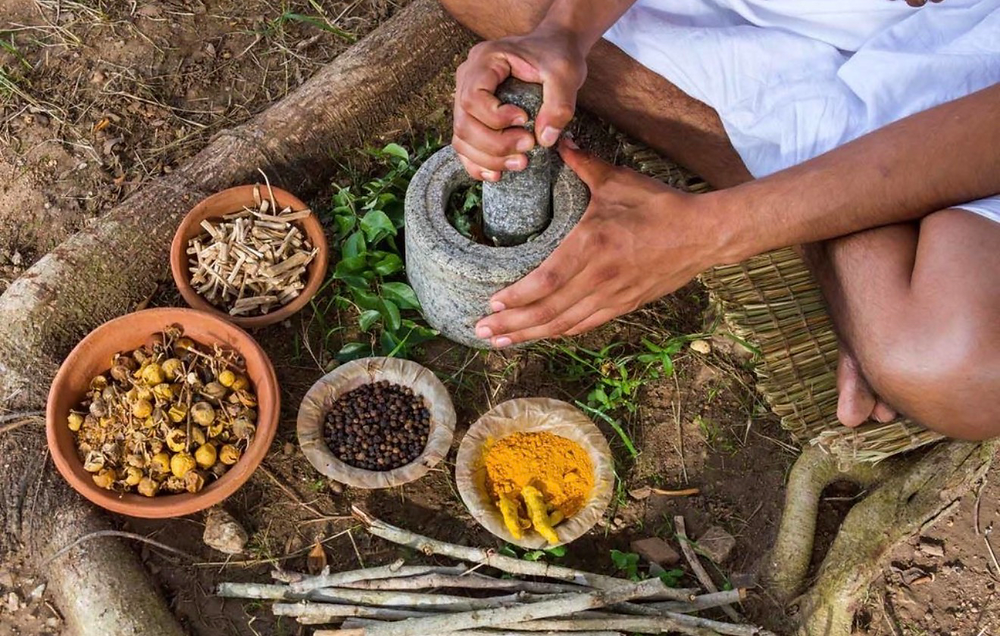
Elsewhere, beauty has long been intertwined with wellness and spirituality. In South Asia, Ayurvedic traditions treat skincare as an extension of internal balance, using ingredients such as turmeric to brighten the skin while symbolising purification and renewal. Often used in pre-wedding rituals, golden turmeric masks are applied not only for their cosmetic benefits but also for their cultural and ceremonial meaning.
In an era of digital connectivity, social media has accelerated globalisation without anyone needing to leave their homes. Beauty rituals and practices now travel across borders in seconds, shared through tutorials, influencers and viral trends. Techniques like gua sha, the use of kohl eyeliner, or practices such as oil pulling were not originally rooted in Western beauty culture, yet they have become increasingly popular in recent years. Snail mucin, a nutrient-rich, viscous ingredient, once a niche local innovation introduced by South Korea’s globally influential industry, now glides into serums and creams.

Sharing global beauty has broadened the world’s understanding of skincare and self-care But it also raises a question of intention. Many of these rituals were historically rooted in health, spirituality or holistic wellbeing rather than aesthetics alone. Gua sha, for instance, was originally used in traditional Chinese medicine to support circulation and lymphatic drainage. Today, it is often framed primarily as a sculpting tool for cheekbones and defining jawlines.
This shift highlights a subtle but important transformation. Sharing of global beauty practices has allowed definitions of beauty to expand beyond their traditional boundaries, but the focus has changed. Rituals that once prioritised inward wellbeing and inner balance are increasingly reinterpreted to favour aesthetics and outward appearance – reminding us that beauty, more often than not, is still treated as something skin deep.
Yet beneath the luxury packaging and viral tutorials, the roots of beauty remain deeply personal. Long before it becomes an industry worth billions, beauty begins in smaller moments – in family rituals, cultural traditions and the curiosity of someone discovering their reflection for the first time.
Ultimately, the ingredients that define beauty worldwide are not just found in bottles or jars. They exist in the stories, cultures and rituals that shape how people choose to present themselves to the world. Beauty may be global, but its meaning will always remain deeply local.