Got story updates? Submit your updates here. ›
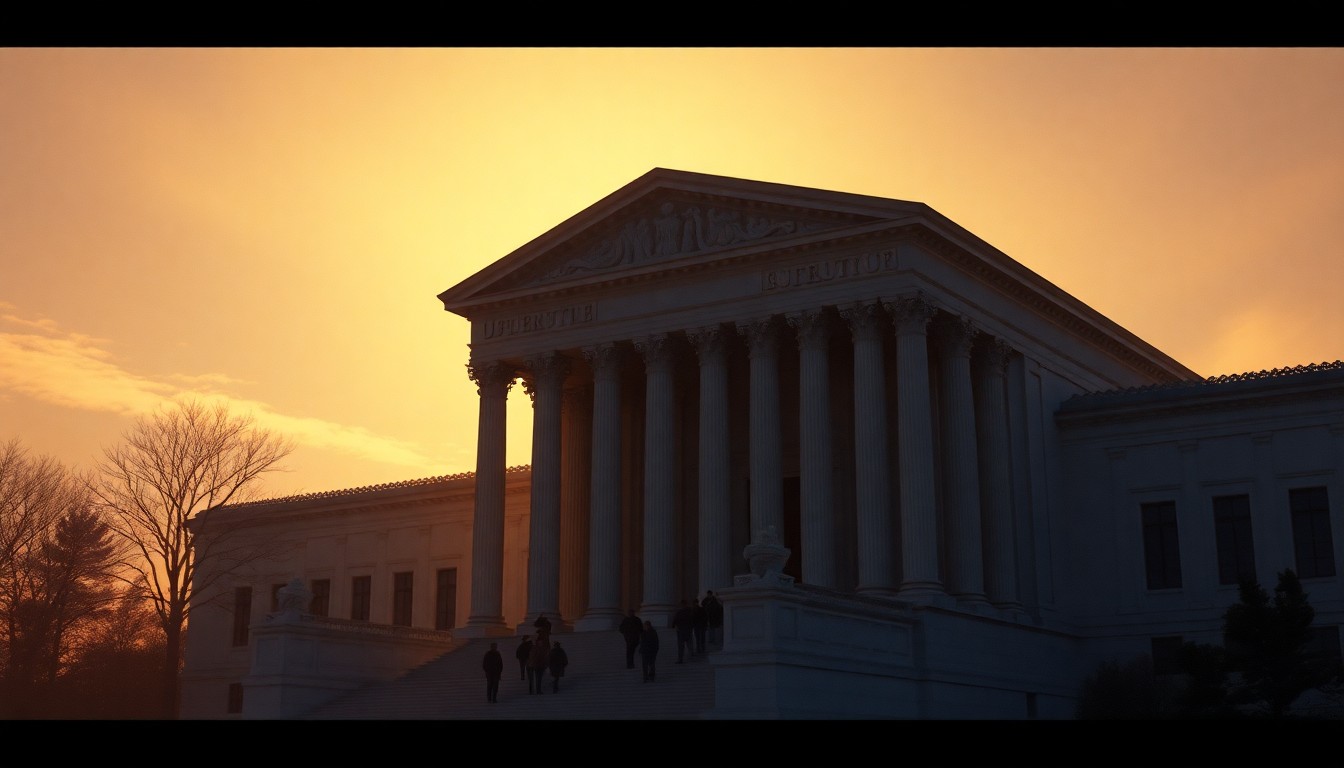 The Supreme Court’s landmark 2024 decision granting the president sweeping immunity has empowered the Trump administration to aggressively expand executive authority.Washington Today
Nearly two years after the Supreme Court’s landmark 2024 decision granting President Donald Trump sweeping immunity from prosecution, the ruling’s broader impact on American government is becoming clear as Trump and his lawyers repeatedly invoke the case to argue for expansive presidential power.
Why it matters
The Supreme Court’s decision in Trump v. U.S. has given the president broad new authorities, including unrestricted power to fire executive branch employees, unreviewable control over matters related to terrorism, trade and immigration, and absolute authority as commander-in-chief. Trump is aggressively using this precedent to push the boundaries of executive power.
The details
An ABC News review found that nearly a third of the 29 emergency applications Trump has filed with the Supreme Court in his second term directly cited the immunity case, with his attorneys referencing portions of the court’s ruling at least 21 times. They’ve used it to argue for ‘unrestricted’ presidential power to fire federal employees, ‘unreviewable’ control over certain policy areas, and ‘absolute authority’ as commander-in-chief. While the court has not explicitly invoked the immunity precedent in its recent rulings, it has generally embraced the administration’s broad view of presidential authority.
The Supreme Court issued its landmark ruling in Trump v. U.S. in 2024.Since January 2025, the court has not referenced the Trump v. U.S. decision to justify any of its rulings in favor of the Trump administration.
The players
The current President of the United States who has aggressively invoked the Supreme Court’s 2024 immunity ruling to expand his executive powers.
The Chief Justice of the United States who authored the majority opinion in the Supreme Court’s 2024 immunity ruling.
James Sample
A constitutional scholar at Hofstra Law and ABC News legal contributor.
Sarah Isgur
The SCOTUS blog editor and ABC News legal contributor.
Jack Goldsmith
A Harvard Law professor and former assistant attorney general during the George W. Bush administration.
Got photos? Submit your photos here. ›
What they’re saying
“They’re not just invoking a precedent, they’re building an architecture.”
— James Sample, Constitutional scholar, Hofstra Law; ABC News legal contributor
“The Constitution ‘creates an ‘energetic, independent executive,’ not a subservient executive,’”
— John Sauer, Solicitor General
“We just don’t know yet what this case means, and it will be up to a future Supreme Court to define it.”
— Sarah Isgur, SCOTUS blog editor, ABC News legal contributor
“The Court has traditionally proceeded cautiously and carefully when marking out exclusive presidential power because the president is known to run hard when the Court recognizes such power. But it did the opposite in Trump v U.S.”
— Jack Goldsmith, Harvard Law professor, former assistant attorney general
What’s next
The Supreme Court is still crafting a decision in the case involving Trump’s attempt to remove Federal Reserve Board Governor Lisa Cook, which could further clarify the scope of the president’s powers under the 2024 immunity ruling.
The takeaway
The Supreme Court’s 2024 decision granting Trump sweeping immunity from prosecution has had a significant and lasting impact, empowering the president to aggressively expand his executive authority and assert unprecedented control over the Justice Department and federal agencies.