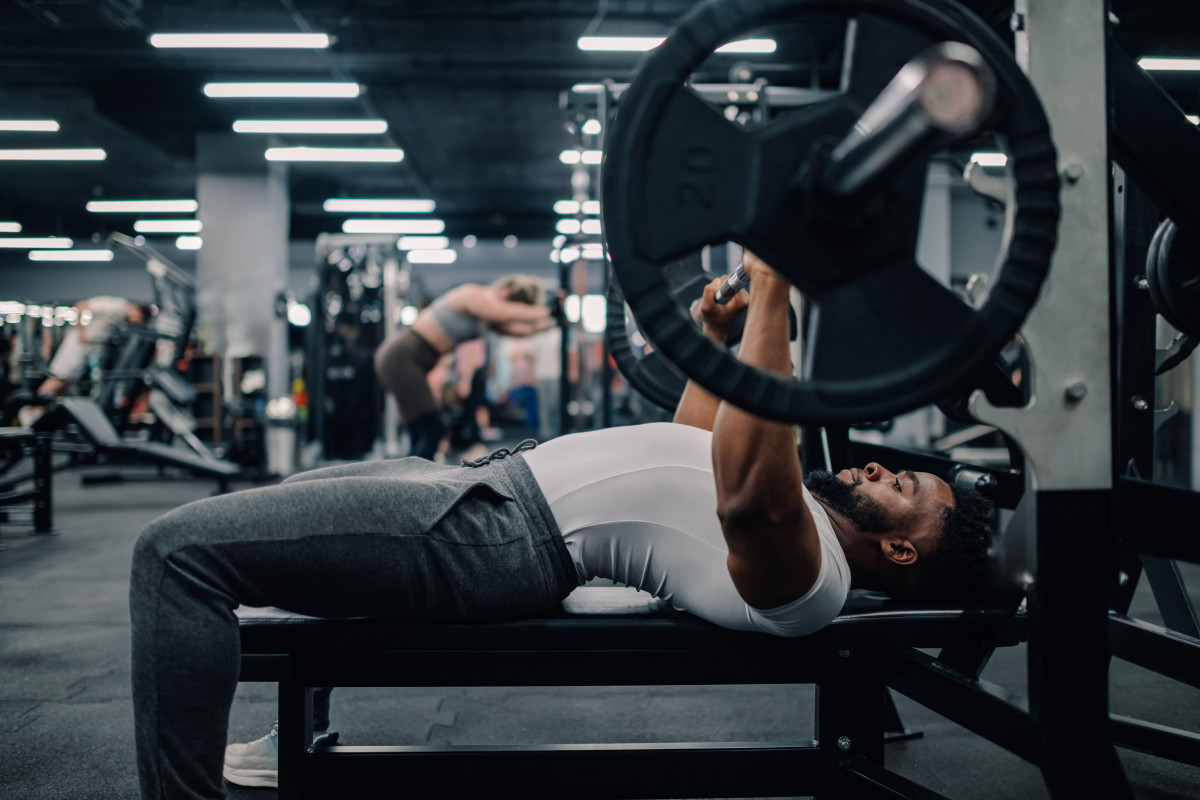
One of the more controversial topics in the world of lifting is the timeless debate of whether to arch your back or not on the bench press. Take a look at any powerlifter during a competition, and you’ll notice just how extreme their back arches can get. But scroll through the comments on a social media video of an everyday lifter using a back arch, and you’ll often find it flooded with criticism about their form. Still, utilizing the almighty back arch can have a significant impact on strength gains.
Part-time weightlifter, dad of two, and Global Head of PR for Ultimate Performance, Stefan Jarmolowicz, knows that minor adjustments can lead to massive gains. After undergoing an impressive physique transformation in his 40s, Jarmolowicz saw his bench press jump from 165 pounds for five reps to 220 pounds for eight. The secret to that 55-pound leap was a trainer recommendation to place an ab mat under his back, a move that keeps his chest high and his form locked in during every rep.
“When most people flat bench a barbell, they tend to round their shoulders and depress the height of their chest as they struggle to lift the load, which takes the emphasis away from the chest,” Jarmolowicz says. “But, if you use the pad, it creates both a back arch and ‘chest-up’ position that tilts your rib cage upwards to better align muscle fibers with the barbell’s plane of motion.”
Even Charles Glass, also known as the “Godfather of Bodybuilding,” is a big advocate for using a pad to maximize gains and improve pressing power. In past videos, he’s emphasized that it helps keep your chest in the right position, allowing for stronger and more consistent contractions.
A 2024 study also found that using an arched back during the bench press allows lifters to handle heavier loads, largely because it shortens the bar path and reduces range of motion. Accordingly, utilizing the pad helps keep your chest pointed toward the ceiling so it doesn’t collapse as fatigue begins to set in. And since a lot of lifters struggle to actually feel their pecs engage during the bench press, supporting that chest-up position helps keep tension in all the right places.
“Honestly, by really focusing on having that ‘chest up’ position, it’s made me so much stronger, able to shift more weight, and I can actually ‘feel’ like I’ve worked my chest muscles,” Jarmolowicz adds.
This story was originally published by Men’s Journal on Apr 8, 2026, where it first appeared in the Health & Fitness section. Add Men’s Journal as a Preferred Source by clicking here.