Badminton star PV Sindhu doesn’t need an introduction. The two-time Olympic champion and Padma Shri awardee’s story is a testament to grit, discipline, and what a strong sense of purpose with the right support can achieve.
“Athletes are fortunate to have a platform that reaches millions of people. With that visibility comes a certain responsibility. When young players or fans look up to you, your actions and choices carry influence. If we can use that platform to inspire someone, support a meaningful cause, or create opportunities for others, then we absolutely should. Even small initiatives can make a difference in someone’s life. For me personally, giving back to sport and society has always been something I want to do more of as my career progresses,” said the 30-year-old.

In this candid conversation with indianexpress.com, the Telangana-bred Sindhu opens up about the people who helped shape her journey, the lessons she has learnt, and why now giving back feels extremely personal for her.

From early-morning training sessions with her parents and spending quality time with her entrepreneur-husband, Venkata Sai Datta, she reflects on her life. Excerpts:
Q: What’s keeping you busy at the moment?
PV Sindhu: Right now, my life is very much centred around training and preparing for the next phase of my career. My long-term goal is very clear. I want to perform at the Los Angeles Olympics over the next three years and give it my absolute best. I want to return to the top ten in the world rankings and stay there. In the shorter term, we have some very important events coming up. We have a home World Championships and the Asian Games, both tournaments where I would love to perform strongly. Representing India on home soil always brings a special kind of motivation.
But beyond my own career, I also feel a strong responsibility to give back to the sport that has given me so much. I already enjoy mentoring younger players whenever I get the chance, and I hope to do much more of that in the future. Watching young athletes grow in confidence and belief is incredibly rewarding.
So, most of my days right now are filled with training sessions, recovery routines and preparation for those goals.
Story continues below this ad
Q: Your Dubai airport hold up, and the evacuation were widely discussed recently.
Sindhu: It was certainly a very unusual and unsettling experience. You are not used to seeing missiles flying overhead in your daily life, so naturally, it was a bit shocking for all of us. But I must say the Dubai authorities handled the situation incredibly well. Their professionalism and care for people during that time were remarkable. Our team stayed together throughout the situation, which helped a lot. My coach and several members of our team were understandably shaken, but we supported each other and stayed calm.
We tried to keep ourselves distracted as well. We were talking, playing card games, and just trying to keep the atmosphere light while waiting for things to settle. I would also like to thank the Indian High Commission in the UAE, especially in Dubai. The officers were extremely supportive and proactive in ensuring the safety and welfare of Indian citizens during that time. It was reassuring to see that level of care.
Q: Can you describe your bond with your parents, who themselves were athletes — national-level volleyball players who represented India?
Story continues below this ad
Sindhu: Without a doubt, the greatest support in my life has come from my parents. Both of them were athletes themselves, so they understood the demands of sport. But the sacrifices they made for me are something I can never truly describe. For almost 13 years, my parents woke up at three in the morning every single day to take me to training. Imagine doing that day after day, year after year, just so your child can chase a dream. That level of belief shaped my entire life. Then of course, there were my coaches. From my very first coach, Mehboob Ali, to the coaches I work with today, every one of them has played a crucial role in my development.
But what many people do not see is the team behind the scenes. The physiotherapists who help you recover after long tournaments, the strength and conditioning coaches who push you in the gym, the nutritionists who carefully monitor what you eat, and the entire support staff who quietly work in the background. Without that ecosystem, an athlete simply cannot perform consistently at the highest level.
I am currently associated with the EBG Foundation’s Champion program (dedicated to grassroots sports development and nurturing young talent) that began through a few conversations about the role sport can play beyond medals and trophies. What really stayed with me was the idea that sport can create opportunity and change lives if the right support systems are in place.
Throughout my journey, I have been extremely fortunate. I had parents who believed in me when I was just a young girl with a racquet, coaches who guided me patiently, and people around me who were willing to sacrifice their time and effort for my dreams. When you grow up with that kind of support, you understand how powerful it can be. So, when the opportunity came to be part of something that supports young talent and gives them a platform, it felt very natural to me. Some things in life are not about money or recognition. They are about chasing something greater than yourself and contributing to a cause that matters. If I can help even a few young athletes find their path and believe in themselves, that is something that truly means a lot to me.
Story continues below this ad
When you are young, it is easy to get excited about winning tournaments or gaining recognition quickly. But the reality is that sport is a long journey. It takes years of hard work, patience, and resilience to reach the top. Programs like Champion are extremely important because they give young athletes the environment to learn and develop. They provide the right platform where talent can be guided properly.
Q: Take us through your demanding fitness routine
Sindhu: When you are training between 20 and 25 hours a week, staying fit almost becomes part of your lifestyle. But it is not just about the number of hours. The quality of training is extremely important. I work closely with our Head of Performance, Dr Wayne Lombard, who oversees everything related to my physical preparation.
Together, we design training sessions that challenge the body but also monitor the load carefully. Badminton demands explosive movement, endurance, agility, and strength all at the same time. So a typical week includes on-court training, strength sessions in the gym, agility and movement drills, mobility work, and recovery sessions. There is a lot of science behind how the body is managed. The goal is to keep improving physically while also making sure the body stays fresh and injury-free.
Q: Your diet is gluten and lactose-free…
Sindhu: Diet plays a very important role in my preparation and recovery. Over the past few years, I have experimented with different nutrition approaches under the guidance of my nutritionist. Currently, I follow a diet that avoids gluten and lactose, which has helped me feel lighter and recover better.
Story continues below this ad
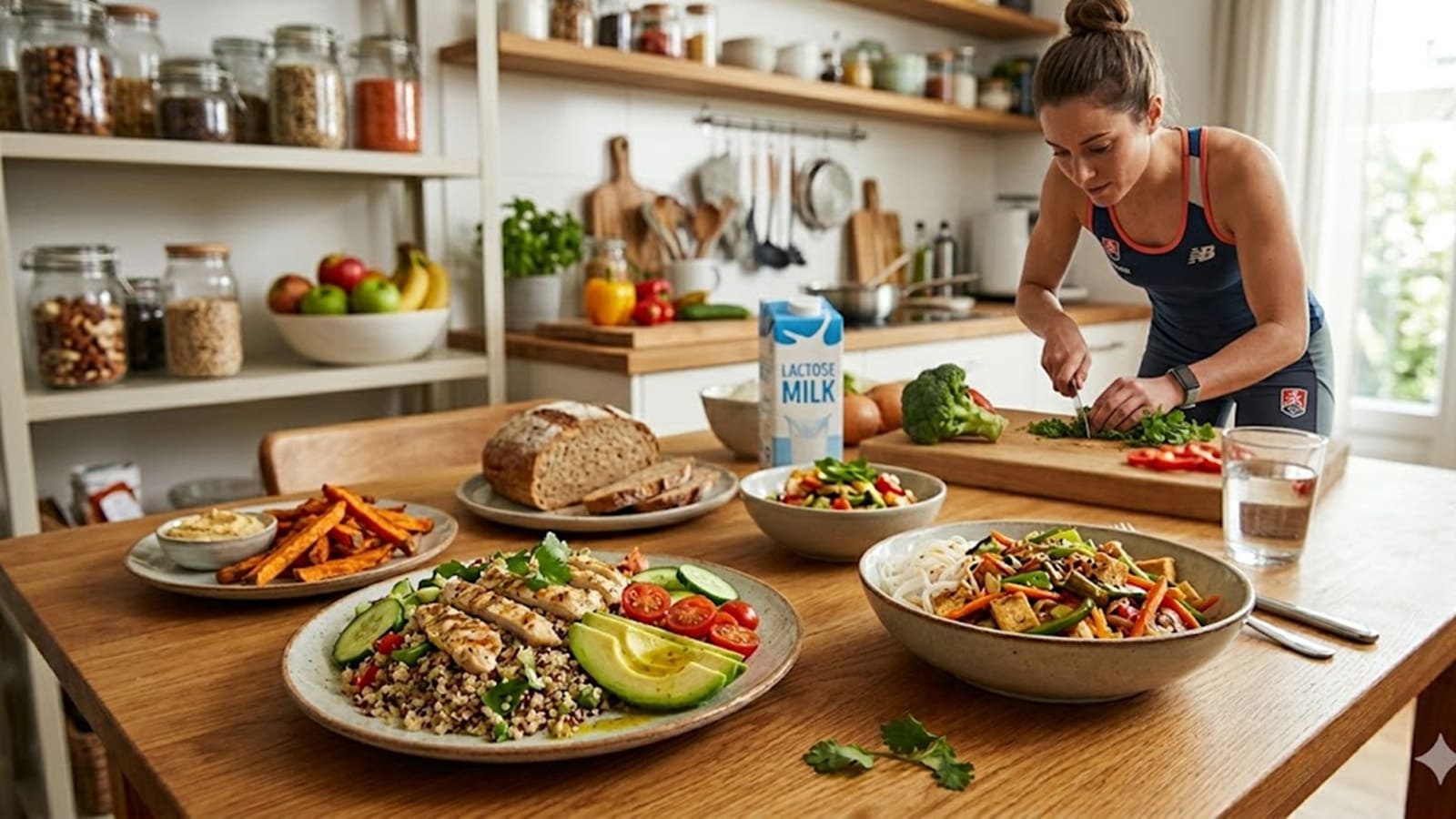 Here’s what you should note (Photo: AI Generated)
My diet is also quite protein-focused. I consume roughly 140 to 150 grams of protein a day to support muscle maintenance and recovery from intense training. When you remove certain foods from your diet, you have to get quite creative with your meals. But once you find what works for your body, the difference in energy levels and recovery can be quite noticeable.
As athletes grow older, the way they approach training changes slightly. Recovery becomes more important. You become more conscious of how your body responds to workload, travel, and tournaments.
Q: In between all this, how do you unwind?
Sindhu: After a long training day, I honestly prefer very simple things. Sometimes it is just sitting on the sofa and watching something with my husband. Those quiet moments after a busy day are something I really enjoy. We also like going for long walks together whenever we get the chance. It helps clear the mind after a demanding day on court. I also enjoy swimming. My husband is a much better swimmer than I am. I always joke that he is like a fish in the water. But I have been learning from him and slowly getting better.
Those small moments away from training help me relax and reset.
Story continues below this ad
Q: Do you follow any practices for your mental health?
Sindhu: Yes, mental well-being is extremely important for athletes. Over time, I have developed a few practices that help me stay balanced. One of them is reading the Hanuman Stotram eleven times a day. It gives me a sense of spiritual grounding and calmness. I also practice meditation and breathing techniques whenever I can. These help me stay present, especially during stressful match situations. Everyone finds their own methods to maintain mental balance. For me, spirituality, meditation, and quiet reflection have always helped.
Q: How do you ensure you don’t get overwhelmed by critics and social media chatter?
Sindhu: In sport, you quickly realise that opinions will always exist. Some will support you, and some will criticise you. Over time, you learn to filter out the noise and stay focused on your own process. Results do not always come immediately, and there will always be phases where things are challenging.
Story continues below this ad
I remember meeting Virat Kohli for coffee in 2024 during a phase where I was trying to rediscover my rhythm. He told me something that really stayed with me. He said, Sindhu, just close your eyes and think about the reason you fell in love with this game in the first place. Play with a smile and enjoy it again. That line stayed with me very deeply. When you reconnect with the love you have for the sport, everything becomes simpler again. So I try to shut out the noise, smile, and focus on playing the game that I have always loved.
Q: Do you feel there is pressure on women to achieve everything within a limited time?
Sindhu: Personally, I have never felt that pressure. In fact, my husband has always been incredibly supportive. He has often told me that I should play for as long as I want to and that everything else can be figured out later. There has historically been some stigma around these topics, but I think the world is changing. With the advancements in science and with stronger support systems today, women have much more flexibility in planning their lives and careers.
Women should absolutely prioritise their ambitions and their careers if that is what they want. Having a supportive partner and family makes a huge difference, and I feel very fortunate in that regard.
Story continues below this ad
Women today have incredible opportunities in every field, including sport. The conversation is no longer about men versus women. It is about how far you are willing to push yourself and what you want to achieve. So my message to young girls is very simple. Dream big, believe in yourself, and work hard every single day. Do not allow doubt to limit your ambitions. The world is waiting for you.
Q: What’s your reflection on life as an athlete?
Sindhu: The best part about sport is that it constantly teaches you about yourself. It pushes you to your limits, tests your character, and forces you to grow stronger every single day. And the best part about life is the journey itself. The people you meet, the lessons you learn, the victories you celebrate, and the setbacks that make you stronger. Medals and trophies are special, but the memories and the growth you experience along the way are what truly stay with you forever.