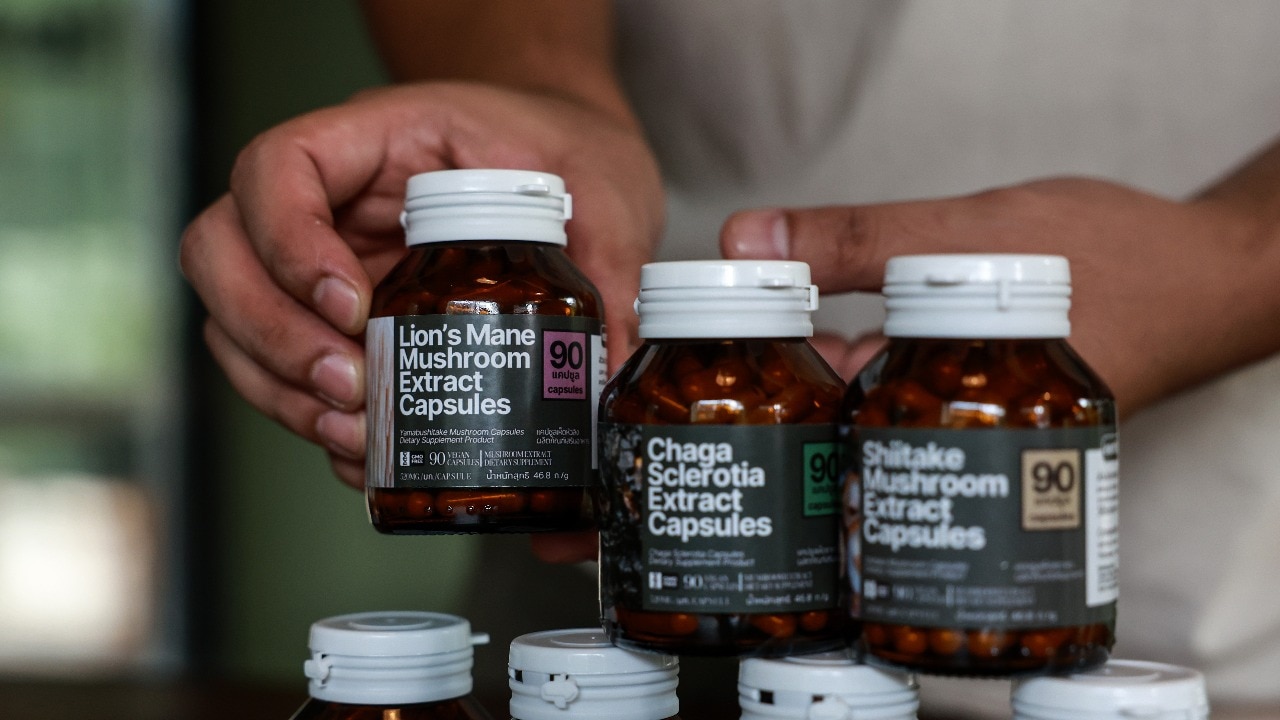
 From powders to gummies and coffee mixes, mushroom supplements have taken over the supplement aisle and are enjoying a moment in the spotlight.
These supplements are booming, especially because they claim to make tall promises, from boosting immunity to improving focus and even helping cure cancer. A major claim that is being made is that they aid suppress tumours and also support patients during cancer treatment.
But what are they? Mushroom supplements come in different forms, such as capsules, powders, gummies or extracts, and are made from fungi such as reishi, turkey tail, lion’s mane or cordyceps. Basically, they include one or more varieties of medicinal mushrooms.
The Indian functional mushroom powder market was valued at $68.52 million (Rs 570 crore) in 2024.
There is an established benefit that food-grade mushrooms are an excellent source of antioxidants and are rich in fibre and protein. But when broken into a pill or powder, they may not have the same benefits. Also, supplements are unregulated and often have concerns regarding adulteration, including substances not listed on the label.
Mushroom supplements’ popularity is driven largely by influencers and wellness trends, but what does science say about them? We look at whether they live up to the hype or not.
Research does show promise, but it is important to understand research in its context. Studies conducted in a lab setting or in animals show benefits but may not apply to humans. People with autoimmune disease, liver disease and cancer patients should avoid it or use it cautiously.
The claim about boosting immunity against cancer and providing support to patients through cancer therapy raises concerns. Let’s unpack the science behind these claims.
RESEARCH SUGGESTS BENEFITS, BUT IN MICE
Some of these mushrooms contain natural compounds called beta-glucans. There are studies that have looked into the effect of mushroom beta-glucans with radiation therapy on cancer. It does show that beta-glucans were effective in controlling tumour growth, but only in mice.
Dr. Meenu Walia, Chairman, Medical Oncology, Max Super Speciality Hospital, Patparganj explained that “there is some early research, especially with mushrooms like turkey tail, suggesting they may support immune function during cancer treatment. But this evidence is still limited and not strong enough to make it a standard recommendation.”
She highlighted that they should not be seen as a replacement for cancer treatment – “even their role as supportive therapy is still being studied.” So there is a lack of concrete evidence.
According to Cancer Research UK, the world’s leading cancer charity that conducts research on cancer, “there is not enough evidence to say that any type of mushroom can prevent or cure cancer.” It further elaborates that it is thought that some of the chemical compounds in mushrooms might strengthen the immune system, and thus they are associated as a supportive cancer therapy.
So does research support immunity-boosting effects? A 2023 controlled trial confirmed that Reishi -glucan can effectively modulate the immune system and ‘dietary intake’ of Reishi -glucan can bolster innate immunity and provide stronger protection. But again, this study was not a human trial and was conducted in mice.
Human diseases are often complex and data suggest that 90% to 96% of drugs that pass preclinical animal tests fail in human clinical trials.
A 2021 review of studies highlighted that supplementation with beta glucans has health-promoting properties and is well-tolerated and strengthened immune defence that reduces the incidence and symptoms of cold, flu and other respiratory infections, but larger studies are required to confirm their additional benefits.
“There is some human evidence that certain fungal extracts can modestly modulate immune responses, but there is no robust evidence supporting broad ‘immunity boosting’ claims for the general population,” explained Dr Anshuman Kaushal, educator and robotic GI surgeon popularly known as ‘angry doc’.
“They may have selective value in defined settings,” he added.
Dr. Walia also highlighted that strong, large-scale human studies are required to confidently say that these supplements improve immunity in healthy individuals.
SAFETY VS RISKS
“For many healthy adults, they appear generally well tolerated, but they are not risk-free; rare cases of serious adverse effects, including liver injury, have been reported,” Dr. Kaushal said. There have been reported cases of drug interactions too. He also advised caution for patients with autoimmune disease.
Dr. Walia noted that these supplements are considered safe, but they are not regulated strictly as medicines, so quality and purity can vary.
While they are marketed as promising agents for cancer treatment, “cancer patients need to be especially cautious,” said Dr Walia. “These supplements can interact with chemotherapy, immunotherapy, or other medications.”
“Self-medication is not advisable, as even ‘natural’ supplements can have unintended effects during cancer treatment,” warns Dr Walia.
– Ends
Published By:
Nabeela Khan
Published On:
Apr 10, 2026 17:02 IST