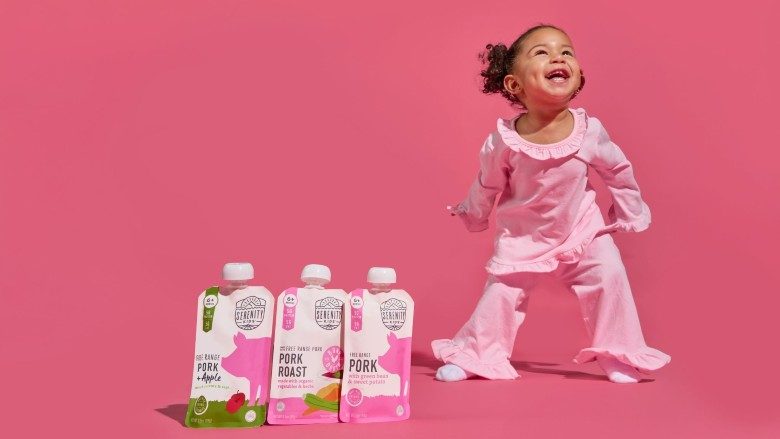
As the health and wellness movement continues to gain traction among US consumers, many parents are evaluating how protein fits into their babies’ diets. According to Innova Market Insights 2024, protein-dense formulations, including meat, are a key driver for baby food launches in North America. Organic baby and toddler food brand Serenity Kids offers meat-based pouches specifically for children, recently expanding its portfolio with three new pork-based pouches.
The National Provisioner sat down with Jennie Shen, director of insights and innovation at Serenity Kids, to discuss the pork-based pouches, meat’s role in infant nutrition, and the biggest opportunities for meat-based baby nutrition.
Serenity Kids recently introduced three new pork-based pouches. What made pork the right next step in your protein lineup, and how does the launch build on the brand’s broader approach to meat-based baby nutrition?
Jennie Shen: At Serenity Kids, our internal rally cry is “Give Meat a Chance.” We believe that meat is one of the most nutrient-dense, bioavailable, and digestible first foods for infants, serving as a critical source of heme-iron and zinc during the first 1,000 days of development.
Pork is the third most popular meat in America and accounts for 42% of red meat consumption. But most importantly, parents told us it was one of the top five proteins they wanted in baby food. With 86% of baby food buyers already purchasing pork-based products for their own households and 75% of moms expressing a desire to buy pork for their babies, we saw a clear opportunity to meet existing consumer demand with a cleaner, higher-quality option.
By adding these three new pouches, we are empowering parents to expand their child’s palate during the critical “flavor window” with high-quality protein from pork and 12 diverse organic vegetables and herbs. This launch brings pork to the baby aisle and diversifies the meat-based nutrition landscape, ensuring that parents are able to give their little ones more variety through power-packed pouches they can trust.
From a formulation standpoint, what priorities guided development of these products, whether in sourcing, fat composition or flavor balance?
Jennie Shen:
Our nutrition standards are the guiding priority for every product we develop. When you choose Serenity Kids, you’re choosing nutrient-dense ingredients, resilient sourcing, and a healthier foundation for the next generation.
We also believe that taste is paramount. Our Pork with Green Bean & Sweet Potato offers a classic, mild profile that is perfect for those very first bites of solids. For parents looking to expand their child’s palate, our Pork & Apple and Pork Roast varieties level up the flavor complexity. By incorporating gourmet herbs and diverse vegetables, these blends transition babies toward the savory profile of a true home-cooked meal.
Safety and sourcing are also non-negotiable pillars of our strategy. Heavy metals are always top-of-mind, so we go beyond standard organic requirements to prioritize soil health and rigorous third-party testing. We don’t just trust a label either. Co-founder and CEO Serenity Carr, along with our Quality Assurance team, personally visited our pork supplier’s farm and slaughterhouse to ensure total integrity. By building these deep-rooted relationships, we can guarantee that the food in our pouches is as intentional as it is powerful.
What unique considerations come with working with pork in baby food applications, particularly compared to proteins like beef or poultry?
Jennie Shen:
Serenity Kids is proud to be paving the way for convenient, shelf-stable meat protein in the baby food category. In product development we explored different cuts to guarantee a clean, mild, and savory profile that encourages positive flavor associations, ensuring a baby’s first experience with pork is as delicious as it is nutritious.
Looking ahead, where do you see the biggest opportunities for innovation in meat-based baby nutrition?
Jennie Shen:
One of our biggest opportunities for innovation in meat-based baby nutrition is scaling regenerative sourcing. We have set a goal for our supply chain to be 50% regenerative by 2030. This isn’t just about a label or a claim; it’s about rebuilding soil health and sequestering carbon to ensure the food system we leave behind is as healthy as the babies we are nourishing today and for future generations to come.
We continue to see an opportunity to educate parents that meat is a perfect first food for babies. Parents are often not clear on the recommended introduction window for meat (at 6 months, or when ready for solids) and also can have concerns about taste acceptance (babies love it!).