And indeed, overall vaccination rates this school year held firm, according to the Department of Public Health, itself an accomplishment at a time when the federal government is aggressively trying to reverse decades of time-tested immunization policy.
Yet even here, home to the measles vaccine and the nation’s first public health department, there are concerning hints of slippage.
Consider: Kindergarten classes in 86 schools now do not have enough vaccinated children to reach the recommended level of immunity from whooping cough, and 163 kindergarten classes haven’t reached herd immunity rates for measles.
More broadly, seven of 14 counties in Massachusetts failed to meet the 95 percent vaccination threshold for herd immunity against measles, compared to five counties the year before. Franklin County, one of the most rural in the state, fell below 90 percent.
Nearly 200 more kindergartners this school year received religious exemptions from required school vaccinations than a year prior — an increase of 23 percent. It’s the fifth consecutive year such exemptions have risen in Massachusetts.
With 1,068 in total, the number of religious waivers this school year is the most in state records. The Legislature is now considering a ban on these easily obtained exemptions.
Almost 10 percent of kindergartners in Dukes County, home to Martha’s Vineyard and the Elizabeth Islands, have a vaccine exemption, adding to alarm on the Vineyard as tourist season approaches.
“We really dodged a bullet last summer, but it feels like the risks are higher this summer,” said Dr. Sonya Stevens, a Mass General Brigham pediatrician on the island, who added that the data didn’t capture even larger potential problems ahead.
“We have a lot of babies, a lot of younger kids that are delayed and on alternate vaccine schedules,“ she said. ”There’s a much bigger issue out there.”
Pockets of undervaccination, including in tourist hot spots, could leave areas vulnerable to outbreaks. Local public health departments are already preparing for that possibility.
In Franklin County, a nearly $500,000-a-year state grant paid for new hires, and local public health officials have identified skilled, vaccinated volunteers to staff clinics during a potential measles outbreak.
“We are actively preparing for the potential of an outbreak,” said Phoebe Walker, director of community health for the Franklin Regional Council of Governments.
In his first year as secretary of the Department of Health and Human Services, Kennedy gutted the Centers for Disease Control and Prevention, installed vaccine skeptics on a key advisory panel, and reversed federal vaccine guidance, such as ending federal recommendations that children be vaccinated against flu, rotavirus, hepatitis A, hepatitis B, some forms of meningitis, and RSV. That reversal came amid a flu season that killed 127 children.
Under Kennedy’s leadership last year, measles cases skyrocketed to levels not seen in three decades, the CDC reported, killing three people, including a child. Massachusetts reported one case within the state so far this year, and experts say it’s inevitable others will be imported.
A spokesperson for the federal agency, Emily Hilliard, said vaccine skepticism and declining vaccination rates began before Kennedy took office; the secretary, she added, is focused on raising the standards for vaccine safety.
“He remains focused on restoring public trust in our public health agencies,” Hilliard said.
A federal judge reversed key elements of Kennedy’s initiatives, but the government plans to appeal.
In response to Kennedy’s initiatives, Massachusetts positioned itself as a vocal defender of evidence-based vaccination policies. Goldstein led the creation of a regional public health coalition that coordinates child and adult immunization recommendations across states from Maine to Virginia. Governor Maura Healey was quick to promise Massachusetts would counter any federal policies that limited access to vaccines.
The state’s annual report on child vaccinations, released last week by the Department of Public Health, gathers data from public and private preschool, kindergarten, seventh-grade, and twelfth-grade classes but misses children too young for school. The data, from the 2025-2026 school year, offer the first detailed look at Massachusetts’ state of vaccination under Kennedy’s leadership.
State officials are confident Massachusetts could quickly contain the spread of something like measles.
“We do have the immunity wall that is necessary to take what could be a large-scale disaster and keep it as small as possible,” said Dr. Robbie Goldstein, the state’s public health director.
He acknowledged, though, the challenge of maintaining high vaccination rates in the current environment.
“I don’t really blame people for having questions when they’re hearing on the nightly news and seeing on social media these concerns at the federal level being raised about vaccines,” he said.
Dr. Craig Spencer, a public health professor at Brown University, said maintaining stable vaccination rates is a win for the state in the current environment.
“In spite of the rhetoric we’ve heard over the past few years that the antivax community is taking over,” he said, “the overwhelming majority of parents are still vaccinating their kids.”
Overall, nonmedical vaccine exemptions remain rare, affecting fewer than 2 in 100 kindergartners, compared with a national average of 3.6 percent. Only one other state that allows such waivers had a lower rate than Massachusetts last school year, according to the health news site KFF. About 1.2 percent of the more than 298,000 children counted in the state data had religious exemptions.
Just a few more unvaccinated kids, though, can increase the risk to other children, including those still too young to be vaccinated, or who have health conditions that leave them particularly vulnerable, said Dr. Jonathan Davis, Tufts Medical Center’s chief of newborn medicine.
“The kids who aren’t vaccinated, they come home, they’re bringing it to their baby brother or sister,” he said.
The increase in religious exemptions among kindergartners is deeply troubling to Kathryn Alcaide, of Chicopee, an advocate for the ban on religious exemptions. Fourteen years ago, her infant son, Brady, died of whooping cough. He was too young to receive the DTap vaccine that would have protected him, but he may never have gotten sick if community vaccination had been more robust, she said.
“You can hug your son every night. I can’t hug mine,” she said of people seeking to opt their children out of vaccinating.
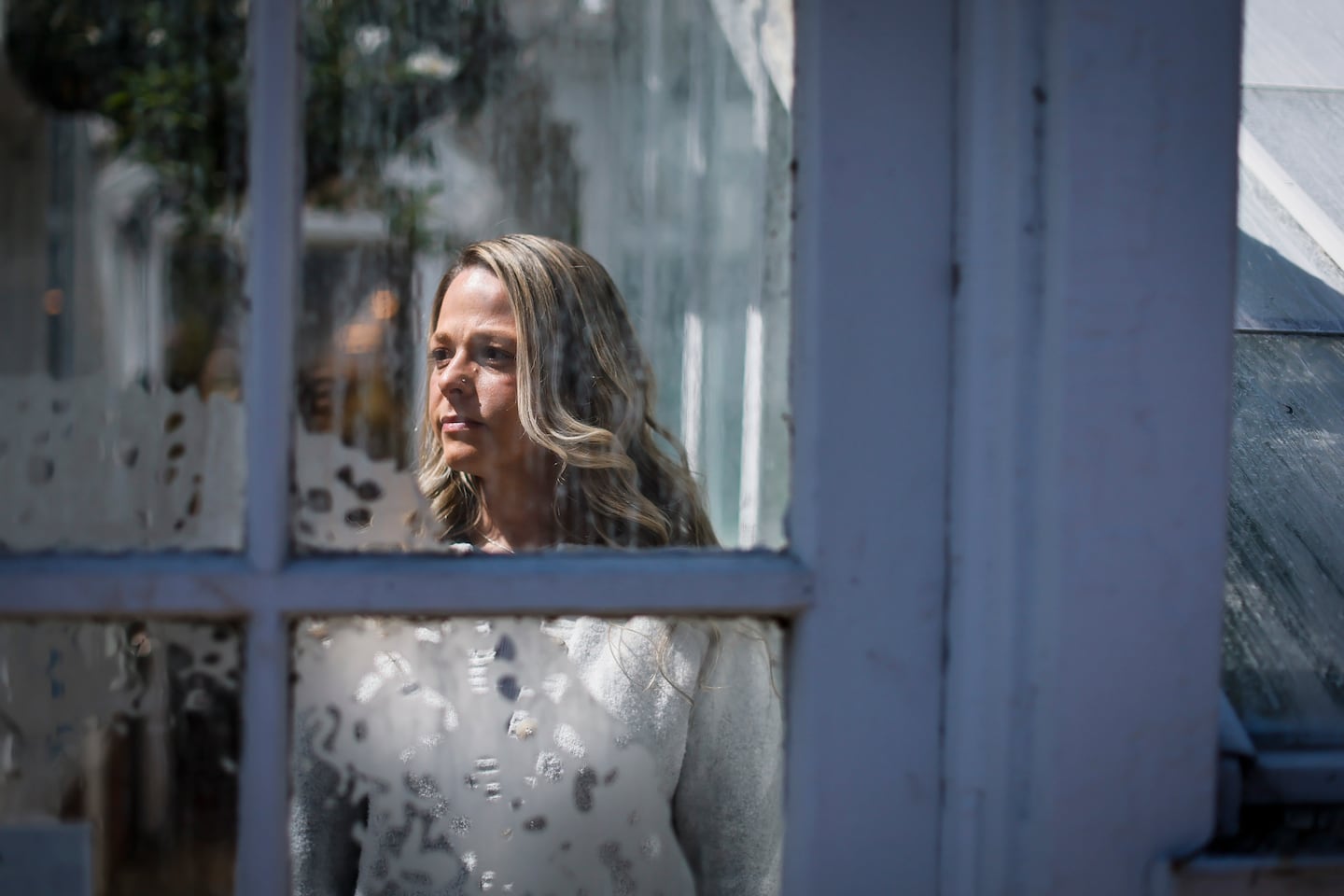 Kathryn Alcaide, whose infant son died from whooping cough, now advocates for improved vaccination rates across the state.Erin Clark/Globe Staff
But for some, vaccination presents a distressing conflict with deeply held beliefs.
João Santos, a Martha’s Vineyard father, won’t allow his school-age child to receive the MMR shot because it includes cells descended from material from decades-old abortions, he said.
“This raises a serious moral problem for us and violates our beliefs about the sanctity of life,” wrote Santos, who is Catholic.
States that banned religious exemptions, including Connecticut and Maine, saw vaccination rates immediately increase, said Northe Saunders, president of the activist group American Families for Vaccines, a national group that originated in Maine and has pushed for such bans.
“When there’s a possibility to be skeptical and an easy path to exercising that skepticism, we see people opting out,” he said.
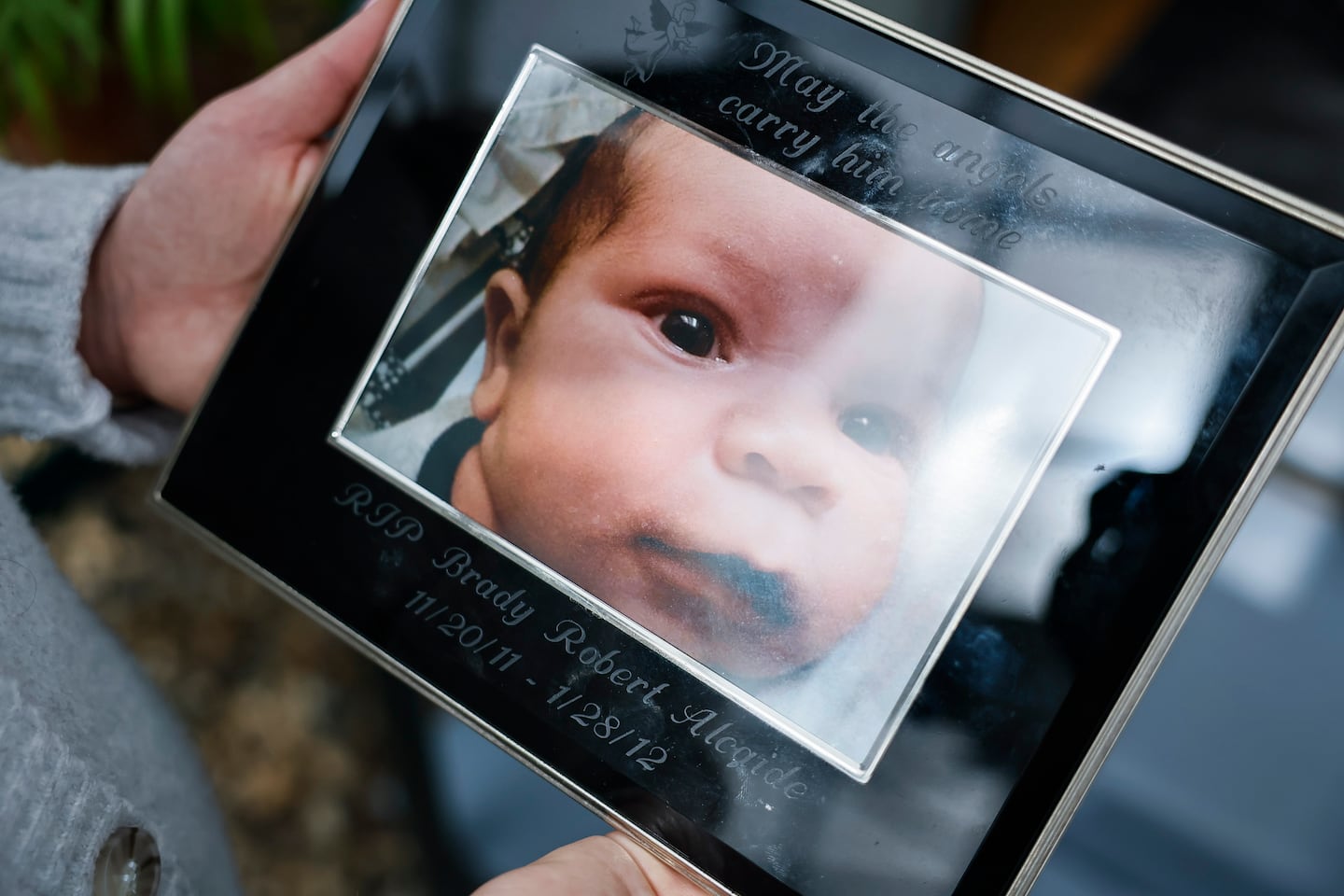 Alcaide held a photo of her infant son.Erin Clark/Globe Staff
But Candice Edwards, executive director of Health Action Massachusetts, which has fought to preserve religious exemptions, saidthe opt-out rate is so low that existing public health measures, including quarantining unvaccinated children during outbreaks, make a ban on exemptions unnecessary.
The large spike in exemptions among kindergartners in Duke County is in part a factor of small numbers; there are just under 750 children ages 5 to 9, according to the Census. But vaccine avoidance is a real problem, said Stevens, the pediatrician, on an island where close to 9 percent of kindergartners are not vaccinated against measles.
And she blames some of that on misinformation floating around social media or on a false assumption their lifestyle insulates them from risk.
“I think the families that feel like they have very healthy lifestyles and have the ability to choose healthy foods and hopefully protect their kids from exposures feel they are less susceptible,” she said.
And to those parents on the island whose children are vaccinated, their neighbors’ choices can be bewildering. Suzanne Cosgrave, a Vineyard Haven mother whose 5-year-old son is vaccinated, believes Kennedy’s leadership validated some parents’ preexisting anxieties about vaccines, and made them feel empowered to act on them.
“On the island that was already there and really present,” Cosgrave said. “It became more accepted to maybe not listen to doctors.”
Jason Laughlin can be reached at jason.laughlin@globe.com. Follow him @jasmlaughlin.