 9 min read
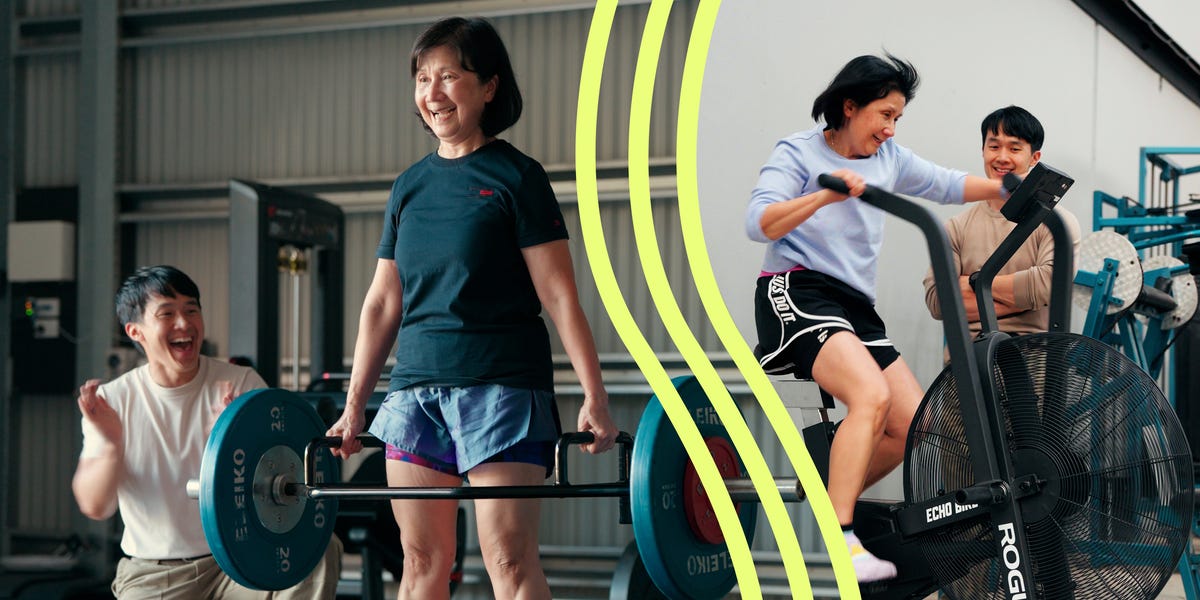
If you saw 66-year-old Betty Teo at her local park doing pull-ups on the monkey bars or celebrating her recent birthday with a 145-lb deadlift PR, you would have never guessed her fitness journey started with a fall down the stairs.
Just months ago, Betty tripped at home and landed hard on her hands. “I was coming down the stairs and, for some reason, I missed two or three steps down. I don’t know how I missed [them],” Betty recalls. “I couldn’t protect myself. I just fell flat on my hands.”
A feeling of numbness overcame her as she was on the floor. She was equally surprised and disappointed this happened to her. She didn’t tell anyone about it for a while—until it happened again while she was in the gym with her son, Eugene Teo, CSCS, a few weeks later.
Living alone, the first fall incident was especially alarming—not just for Betty, but also for Eugene. A bodybuilder and fitness coach, Eugene responded the way he knows best: by setting out to transform his mother into what he calls an “athletic weapon.”
“Immediately, I was like, ‘Oh, this is pretty serious. I’ve got to make sure that I’m doing everything I can to cover all of her bases—from coordination and balance to reflexes,’” Eugene says.
The duo’s workouts—and important message about longevity—have since gone viral.
Eugene started recording their workout sessions with his mom and posting the videos to Instagram, garnering traction from hundreds of thousands of followers—many of whom worry about their loved ones falling, or who are at a higher fall risk themselves.
For good reason, considering an estimated 684,000 people die from complications after falls each year, according to the World Health Organization. For women, declining estrogen levels in post-menopause can cause low bone density—which in turn increases their risk for osteoporosis and osteopenia. This means that bones are easier to break in a fall—and thus, more difficult to recover from. Pair that with the general loss of muscle mass, balance, proprioception, and reflexes that comes with aging, Eugene says, and a small trip can turn quickly into a scary experience.
The pair started training specifically to improve her balance, stability, strength, and bone density, one and three times per week. It’s not just strolls or chair yoga: the workouts are dynamic, fast-paced and challenging. “Life isn’t always happening in a slow controlled environment. You need to expose your body to different forces, side to side, rotation, twisting, snapping,” says Eugene.
One major key was adding in plenty of plyometrics, or jumping exercises like pogo hops and depth drops. When Betty first took on her jumping regimen with Eugene, she was surprised to find how difficult it was: she realized that as an adult, she hardly ever jumped anymore. After only a week or two of incorporating just five to 10 minutes of jumping into her routine, Betty says her ankles and toes felt stronger and she felt a major reduction of arthritic pain. Walking was easier, and she felt more comfortable and confident.
They prioritized leg and back strength by doing exercises like deadlifts. It’s Betty’s favorite exercise out of her entire regimen, and part of the reason she decided to celebrate her birthday by reaching deadlift PR—an achievement she wouldn’t have hit had she not started training hard after her fall.
Betty doesn’t neglect cardio either. She gets in at least three hours a week of zone 2 cardio, which is usually morning walks outside. She and Eugene also work on sprints to bring up her aerobic capacity. Betty typically opts for the AirBike, since it helps her build strength in her legs and she can set measurable goals to hit based on provided metrics on the screen.
Not only has Betty recovered from her fall—she’s stronger and more confident than she’s been in years.
“In my case, these exercises also help independence,” says Betty. Her family can worry a little less about her living alone and operating on her own. While traveling, she can now carry her own luggage and put it in the overhead bins. If public transport is out of service, she can walk longer distances. Her exercise regimen empowers her to be adaptable and self-reliant—something not every 66 year-old can say, especially after a fall.
She says she feels more confident moving through her day-to-day life with the strength she’s built. Despite how she might feel before a workout session—sometimes nauseous or sleepy— Betty says she almost always walks out as a totally different person. She’s refreshed, strong, and ready for whatever comes at her.
When Eugene’s not around for a gym sesh, Betty takes her exercise into her own hands. She heads to her local park, where she jumps from elevated platforms, skips and jumps on the basketball courts, and of course, does her pull ups on the monkey bars.
Does Betty still worry about falling again? Of course. The difference now is that she’s stronger, more stable and more coordinated than before—all things that are key in mitigating injuries and fall severity. Falls are part of life: All you can do is be as prepared as possible.
“If you’re hesitant to go to the gym, do it from home first. Start with little things,” says Betty. Stomps from the couch or jumps in your backyard are both super easy ways to get started. Betty and Eugene suggest finding the exercises you love most, and focusing on those; the more you enjoy your routine, the more likely you are to do it.
If you’re ready to get moving, here are Eugene and Betty’s favorite moves to build strength and protect yourself as you age.
7 Exercises That Betty Uses to Train for Longevity
Eugene recommends working these types of exercises into your workout routine 1 to 3 times a week.
Turkish Get-Up
Why it rocks: “One thing about fall prevention is you need to accept the fact that you are going to fall. So what better way to prepare you for [than] getting used to being on the ground,” says Eugene. He introduced Turkish get-ups as a way to help his mom feel more stable on the ground—a big deal when you’re a grandmother to a young toddler who spends a lot of time down there.
The exercise involves getting from a lying down position to a standing position (with a weight in your hand), forcing you to engage your core, glutes, hips and more. Eugene recommends five or six reps each side to get the full benefit—about five minutes. It works great as a warm-up move, too, and includes it in Betty’s routine. “Her core’s awake, her coordination is going, and then she’s ready for deadlifts, leg exercises, or cardio,” says Eugene.
How to:
Start lying down, holding a light kettlebell or dumbbell straight over you, wrist, elbow, and shoulder stacked, with the leg on the same side as the weight bent. Keep your eyes on the weight all the way through the move.Drive your planted foot into the ground while driving your opposite hand into the floor. Lift your torso to plant your opposite elbow, and then hand.Squeeze your glute to drive your hips up, continuing to hold the weight over you. Thread your back leg under to get into a kneeling position.Straighten your back leg into a lunge position, and push through the front leg to come to standing.Do the same thing in reverse to return to the lying position. That’s 1 rep.
Sets and reps: Aim for 3 sets of 5 reps each side.
Stomp
Why it rocks: High impact moves are an important way to improve bone density. And, if you don’t feel like you’re quite ready for jumps yet, this low-barrier exercise is a surefire way to get a good amount of impact without working against gravity—and it’s one of Betty’s favorites. Within a few days of stomping, she said her balance and leg strength noticeably improved. Plus, the exercise was easy to incorporate whenever she was just getting up from the couch.
How to:
Take a seat on a chair or a couch. Lift both legs up so feet are hovering off the floor.Slam both feet to the ground, planting the whole foot.Stand up off the couch. That’s 1 rep.
Sets and reps: Aim for 3 to 5 sets of 3 to 5 reps.
Jump
Why it rocks: One of the best ways you can develop leg strength, stability and build back bone density is surprisingly simple: jumping.
“A lot of people would be familiar with the idea that you lose muscle as you age. People don’t realize that you lose strength about three times faster than muscle. And you lose power about three times faster than strength,” says Eugene. When you land after a jump, your entire body has to work to support that impact, helping to support your ankles, legs, core, and build back integral strength and power. One 2020 study in the IEEE Journal of Translational Engineering in Health and Medicine found that power and plyometric training for women aged 60-70 led to improved bone mineral density in the tibia and bone microstructure in the lower back.
There are so many ways to incorporate jumps into your routine. Jump rope, broad jumps, squat jumps…they are all efficient and effective. If you’re just starting with jumping, start with some pogo hops. “That’s where we started. My mom is just learning how to just jump up and down and land properly, and not lose stability around her hips,” Eugene says.
How to:
Stand tall with both feet firmly planted hip-width apart.Do a small hop up. Land with your weight evenly distributed over your mid-foot. That’s 1 rep. Once those feel easy, try to make the reps continuous, or hop in different directions (forward and back, side to side, etc).
Sets and reps: Aim for 2 to 3 sets of 20 to 30 reps.
Depth Drop
Why it rocks: To add even more challenge, try adding in height with a depth jump. By jumping from a higher platform (mid-shin height will do) you’ll increase the amount of force in your joints when you land, says Eugene. This progression to greater force is basically like adding more weight to a barbell.
How to:
Stand up on a box no taller than 18 inches. With knees slightly bent, dangle one foot off the edge.2. Step off with your back foot, and land on the floor in a high squat, knees slightly bent tracking over your toes. That’s 1 rep.
Sets and reps: Aim for 3 to 5 sets of 3 to 5 reps.
Counter-Movement Jump
Why it rocks: Think of this as an elevated squat jump. “It’s a very explosive, powerful movement, which creates more impact on the joints,” says Eugene.
How to:
Start standing tall, feet hip-width apart. Drop into a squat position.Immediately explode out of the squat, aiming to jump as high as you can.Land with the whole foot in a high squat. Return to standing. That’s 1 rep.
Sets and reps: Aim for 3 to 5 sets of 3 to 5 reps.
Deadlift
Why it rocks: The deadlift is an efficient way to strengthen your entire body. Eugene recommends using a trap bar because it makes the motion easier to learn and offers a more controlled range of motion. With a deadlift, your leg muscles, back, core, and arms all have to work at once, helping to improve coordination and get your brain used to activating different muscles.
Pro tip: To warm up for a deadlift, especially if it feels particularly daunting, try standing on a towel and pulling up on both sides of it to mimic the tension of the exercise. This motion will get your reflexes primed for the deadlift itself, and make the exercise feel more approachable, Eugene says.
Eugene recommends choosing a weight that feels challenging by the end of your set, but where you still feel like you can perform 2-3 reps beyond your allocated amount of reps with good technique.
How to:
Stand with feet hip-width apart, toes pointed out. Hinge through the hips and bend at the knees to meet hands to bar. Grab on to it, palms facing body (if using a trap bar, your palms will be facing your sides). .Squeeze your core and shoulder blades to tighten up your grip. Inhale, and squeeze glutes to powerfully stand up, bringing the bar with you. Keep it close to the body as you come up.3. Hold at the top for 2 seconds. Press hips back as you hinge at the hip and return the bar to the floor. That’s 1 rep.
Sets and reps: Aim for 3 to 5 sets of 3 to 5 reps.
Cardio Sprint
Why it rocks: Cardiovascular exercise helps reduce your risk of heart diseases, diabetes, stroke, dementia and high blood pressure, per the American Heart Association. And because adults with cardiovascular diseases are at a higher risk of falling, keeping your heart in good shape is perhaps just as important as strength training when it comes to fall prevention.
While Betty opts for an air bike, you can opt for a treadmill, elliptical, rower, or ski erg. Eugene has her run through sprint intervals to really push her to her limit and get her heart to work hard. The bike machine also helps with leg strength without being too high impact; perfect for someone who has arthritis, osteoporosis or weak bones.
Sets and reps: Aim for 5 to 10 sets of 15 seconds at max pace and 45 seconds recover
Find the Perfect Women’s Health Training Program for You


Halle Newman is a freelance journalist and copywriter based in New York City. When she’s not writing, she’s probably strolling through Central Park with a matcha or trying out a new dance class.