
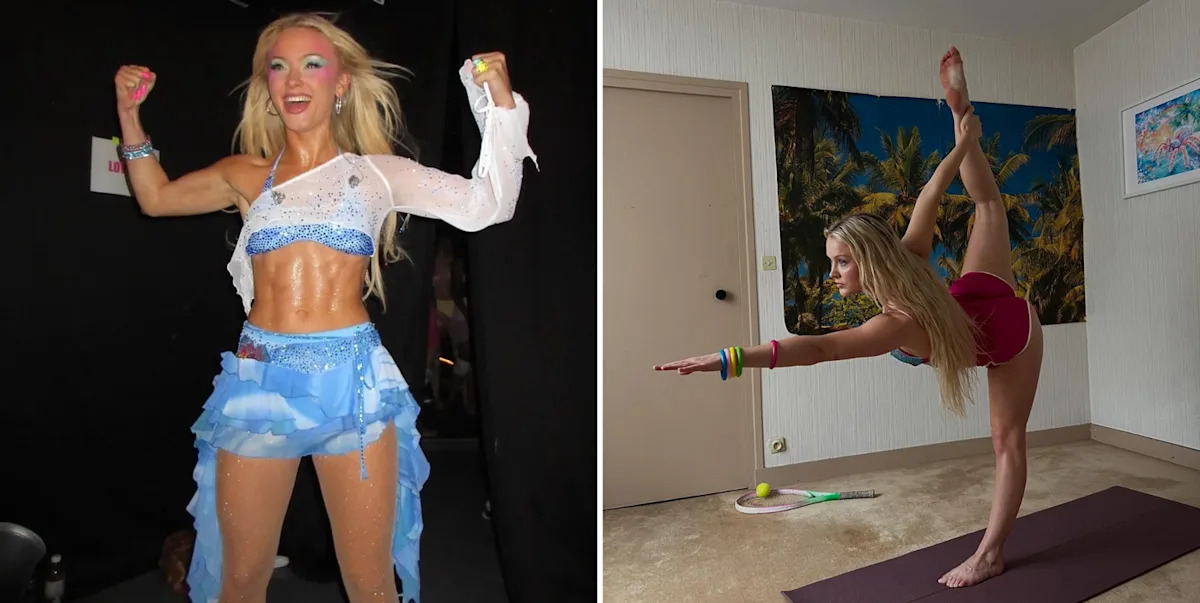
If you’re listening to the radio or scrolling social media, chances are you’ve come across Swedish pop star Zara Larsson and her technicolour musical magic. But beyond wondering how she fits it all in, there’s another question: what does her workout look like to maintain those washboard abs and seemingly endless energy?
What is Zara Larsson’s workout?
Back in 2021, Larsson told Women’s Health that her routine included early morning gym sessions, combining treadmill cardio with strength and resistance moves like dead bugs, planks and lunges.
Fast forward to now, and the singer is deep into a global tour, delivering full-throttle performances night after night. While Larsson has joked that her abs come down to ‘laughing and laughing’, good genetics and skipping the gym, her on-stage choreography tells a different story.
Because while she may not be logging hours in the weights room, performances like hers are a workout in their own right – sustained cardio, constant core engagement and full-body endurance, all while delivering show-stopping vocals. And she doesn’t take it lightly. Larsson trained as a dancer from a young age, even attending the Royal Swedish Ballet School.
According to ex-professional dancer turned Equinox trainer and founder of BeBody, Lucy Borrie, dance training is far more demanding than people expect. ‘What people see on stage with a great performer like Zara Larsson is just the tip of the iceberg – it’s a total masterclass in functional conditioning,’ she says.
So, just how effective is dance as a workout – and could it help you hit your own fitness goals this summer?
What are the benefits of dancing as a workout?
Dance workouts have surged in popularity in recent years. While the aerobics boom of the ’80s laid the groundwork, the 2020s have seen formats like barre rocket in popularity.
And for good reason. Research shows dancing is one of the most effective workouts you can do – with the added bonus that it’s actually enjoyable.
A 2018 systematic review and meta-analysis found that dance significantly improved body composition, blood biomarkers and musculoskeletal function, with cardiovascular benefits comparable to other structured exercise. A 2024 review also found dance improved fat loss and body composition in people with overweight or obesity, making it a strong long-term option for weight management.
There’s also evidence that dance supports joint health by improving flexibility, range of motion, lower-limb strength and balance, particularly in older adults.
What are the best types of dance workouts?
One of the biggest advantages of dance is variety – there’s something for every fitness level and interest.
‘What makes dance different is that it’s inherently accessible – whether it’s a class or your living room, it turns something that could feel like routine cardio into something engaging enough that you actually want to keep doing it,’ says Borrie.
Dance classes
Across the UK, there’s no shortage of dance classes for all levels. At their core, they’re highly effective workouts, blending cardio, strength and coordination into one session.
The constant movement keeps your heart rate up, while choreography challenges balance, agility and muscular endurance in ways traditional gym sessions often don’t. There’s also a cognitive benefit – learning routines taps into memory, coordination and focus.
‘Dance is essentially an extreme sport for the brain,’ says Borrie. ‘You’re learning choreography, memorising patterns and executing them at speed while staying in time with the music. Unlike running, where you can switch off, dance demands total presence – you’re building fitness while strengthening that mind–body connection.’
Different styles offer different benefits. Ballet and barre focus on strength, posture and flexibility; hip-hop and commercial styles build power and endurance; while partner dances like salsa can improve coordination and even mental wellbeing through social interaction.
This ballet-inspired workout is deceptively tough, improving strength, flexibility and range of motion, particularly in the lower body. It also targets deep stabilising muscles around the core and spine.
And it’s not just hype – one study found that just 10 classes over two months led to improvements in pelvic floor function, including reduced discomfort and urinary incontinence.
Dance cardio
Workouts like Tracy Anderson, Jazzercise and DanceBody blend high-intensity cardio with choreography, delivering sessions that feel more like performance than punishment.
Expect light weights, high reps and routines synced to music.
‘With dance cardio, you’re constantly moving through the resistance of your own bodyweight – shifting your centre of gravity and controlling your mass in all directions,’ Borrie says. ‘That builds a different kind of strength, but it also creates a huge endorphin response. Because you’re focused on rhythm and choreography, it doesn’t feel like traditional cardio.’
How can I incorporate dance workouts into my fitness routine?
Start by booking a class. Think of dance as ‘stealth cardio’ – an easy way to mix things up without sacrificing results.
Swapping one or two gym sessions a week for dance can still meet your cardio targets, while adding coordination and endurance.
For balance, pair it with strength training and a lower-intensity day like walking. You can also use a short, high-energy routine as a finisher.
The key is choosing a style you enjoy. Consistency is what delivers results.
What to keep in mind before heading to a class
Ditch the idea of perfection. Dance is as much about coordination and expression as it is fitness – focus on enjoying it.
Wear supportive trainers with a bit of glide (overly grippy soles can strain your knees), or studio shoes if needed. Opt for breathable, flexible clothing.
Build intensity gradually rather than going all-out from the start, and stay hydrated – it’s often more intense than it looks.
Don’t skip recovery either. Dance works smaller stabilising muscles alongside larger groups, so stretching afterwards is key.
And yes – have fun. It sounds obvious, but enjoyment is what keeps you coming back.
More celebrity fitness routines