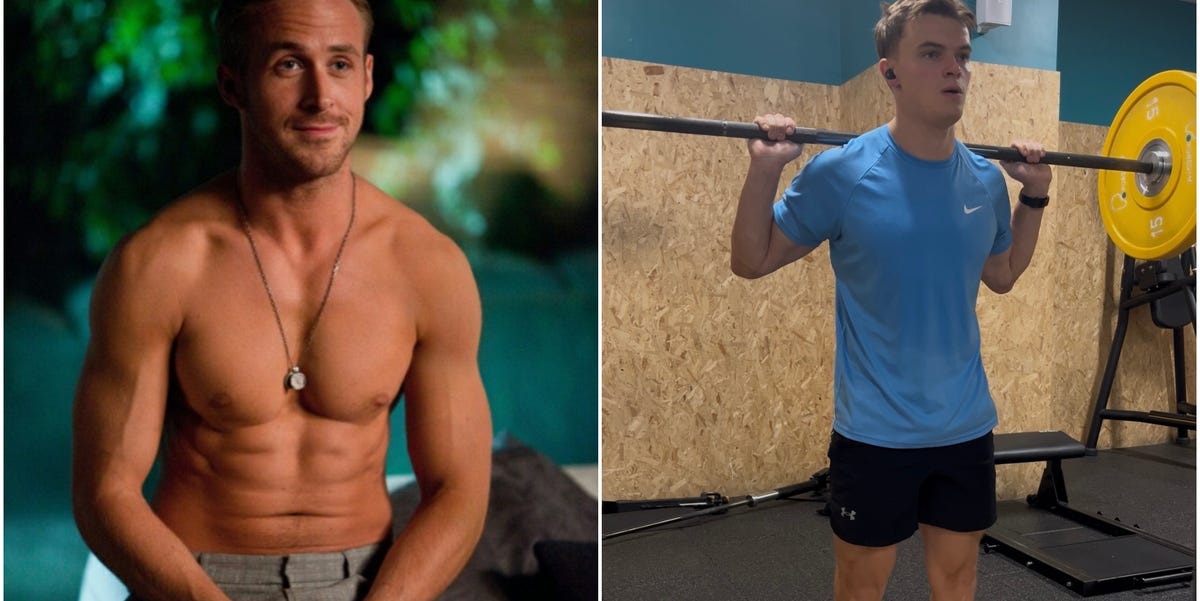
Since first showing off his abs in Crazy, Stupid, Love, Ryan Gosling’s physique has become something of a Hollywood benchmark. The 45-year-old has trained for a wide range of roles in the decade and a half since – from Blade Runner 2049 to the newly released Project Hail Mary and, in a full-circle moment, a shredded Ken in Barbie.
Among them, though, 2016’s La La Land is where Gosling’s athleticism really came to the fore. Working with trainer Arin Babaian, the Canadian actor built a foundation strong enough to meet the demands of dancing, moving fluidly and lifting co-star Emma Stone overhead.
‘I used our days to build up his legs, core and back,’ Babaian told Men’s Journal. ‘Those were the elements that were going to allow him to carry his own bodyweight and have complete control over his movements. If you are going to be picking people up over your head, you had better be pretty strong.’
I wanted to find out just how strong Gosling needed to be. While I wasn’t about to hoist an unsuspecting member of my local gym into the air, I did attempt a key workout Babaian devised to get Gosling into peak condition. Here’s how it went.
The Workout
Complete 5 rounds with minimal rest between
Is It Worth Trying?
I’m not surprised Gosling was able to build such a strong base – this workout ticks every box. Not only does it strengthen the legs, back, shoulders and core, it also delivers a tough conditioning hit that mimics real-world athletic demands.
After jumping off the treadmill, I quickly realised the main challenge wasn’t just muscular, but cardiovascular. 400m isn’t a trivial distance to run at pace, which makes it tough to go straight into deadlifts. For that reason, I took a brief 10-20-second pause after each run to reset and prepare for the lifts. It made it much easier to maintain decent form throughout the following exercises – without it, I’d have quickly lost focus and risked injury.
To keep things efficient, I stuck with the same weight throughout, rather than adding and stripping plates between movements like the push press and back squat. That meant using a 50kg bar for the entire workout – a comfortable starting point that became progressively more demanding as the session went on. Movements that felt smooth early on became noticeably slower in later rounds.
Using the same weight also added more of a challenge for my shoulders, though the volume on the legs helped balance things out. And running under fatigue is no joke. Especially when each round takes around 4-5 minutes and your muscles are crying out for a break.
Where this workout really comes into its own is in the exercise selection. From the deadlift through to the back squat, each movement flows naturally into the next. For example, once you finish your final power clean rep, the bar is already in position for a front squat. As someone both stubborn and competitive, I was determined to complete full rounds without stopping between exercises – something that became increasingly difficult as fatigue set in.
I completed my runs on a curved treadmill positioned next to the barbell, but running outside would be just as straightforward. Dumbbells could also work if you don’t have access to a barbell, making this an easy session to adapt with minimal equipment.
It’s a great option when you’ve got around 30 minutes and want to test your capabilities, build muscle and challenge your aerobic system at the same time.
It’s also a workout I’ll come back to semi-regularly. The time element means I can aim to improve my score or simply reduce rest periods. A genuinely tough session that’s well worth testing yourself against.
How to Do the MovementsDeadlift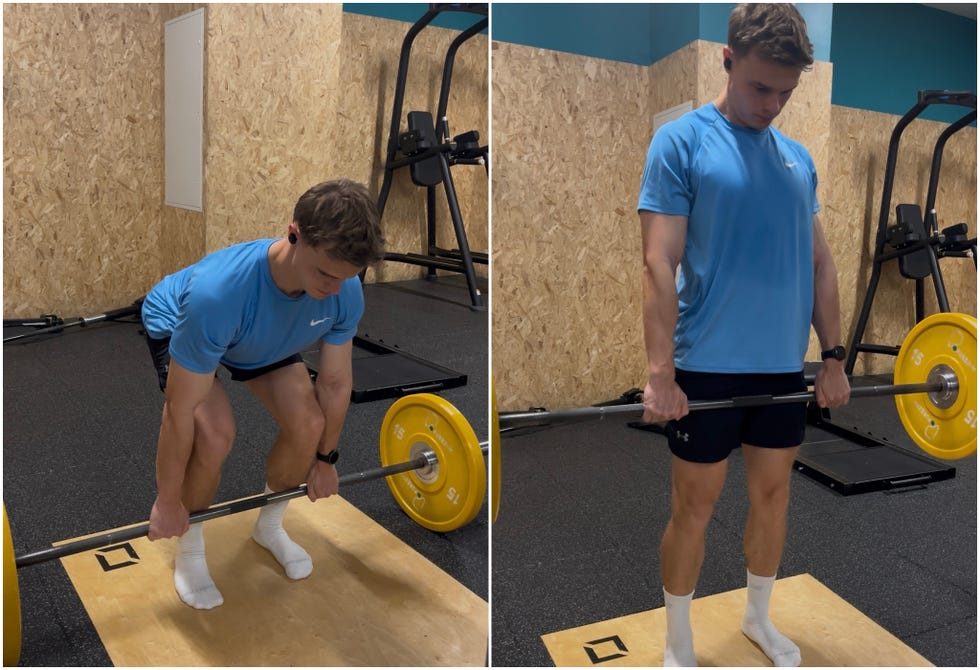
Hinge down with a flat back and grasp the bar with an overhand grip. With your core braced, drive your feet into the floor and lift your torso. Thrust your hips forward to stand tall, keeping the bar close to your body. Lower under control and repeat.
Power Clean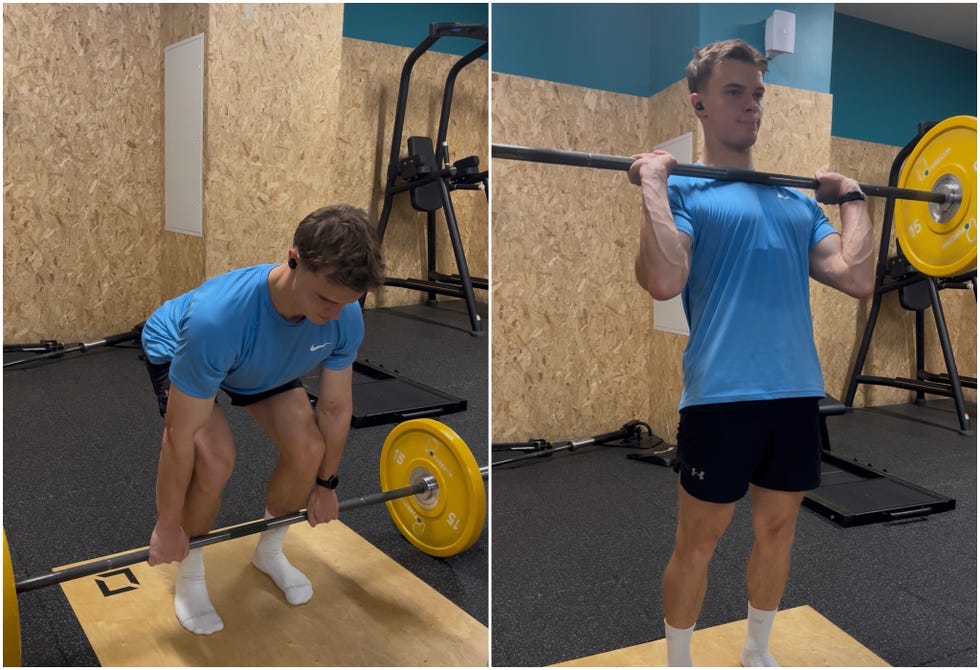
As you finish your final deadlift rep, maintain your torso angle and drive through your feet to keep tension in the lower body. As the bar passes your knees, begin to open your torso while keeping the bar close.
Extend your hips, brushing the bar up your thighs. As you reach full extension, shrug and pull your elbows high. Drop under the bar into a quarter squat and catch it with elbows forward and a full grip. Stand up to complete the rep.
Front Squat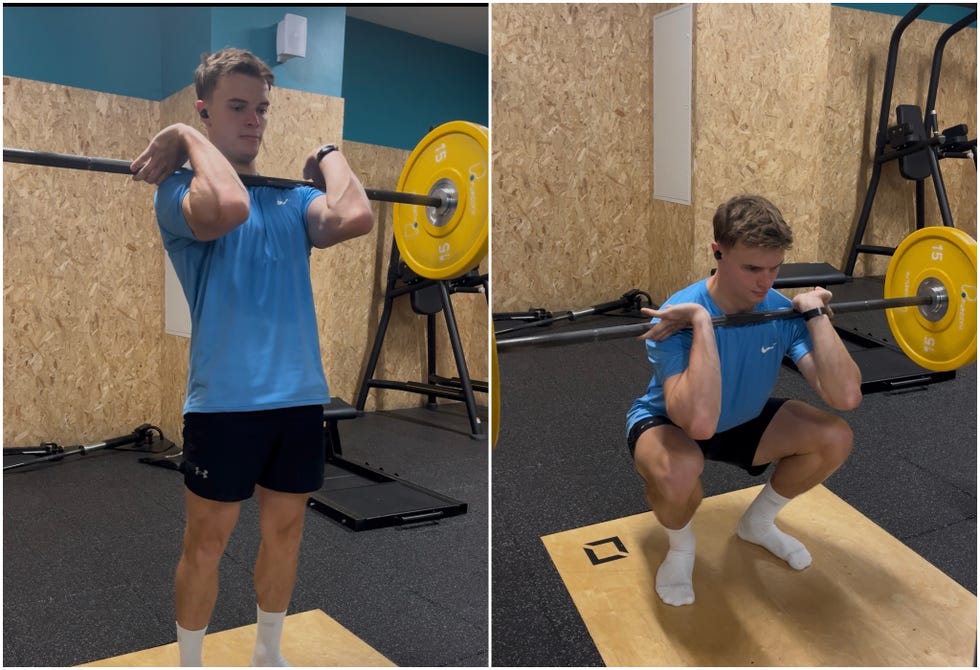
With the bar resting across your clavicles, bring your elbows forward and up. Brace your core and keep your chest lifted. Sit into the squat, lowering until your thighs are at least parallel. Drive through the floor to return to standing.
Push Press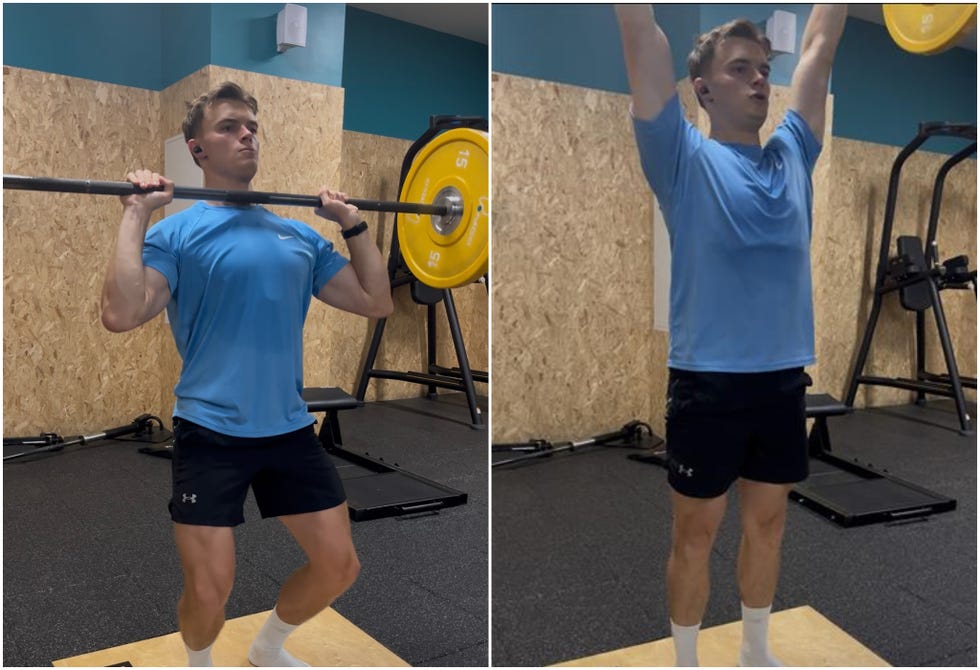
Hold the bar at shoulder height with palms facing forward. Dip slightly at the knees, then drive up explosively, using your legs to help press the bar overhead. Lower under control.
Back Squat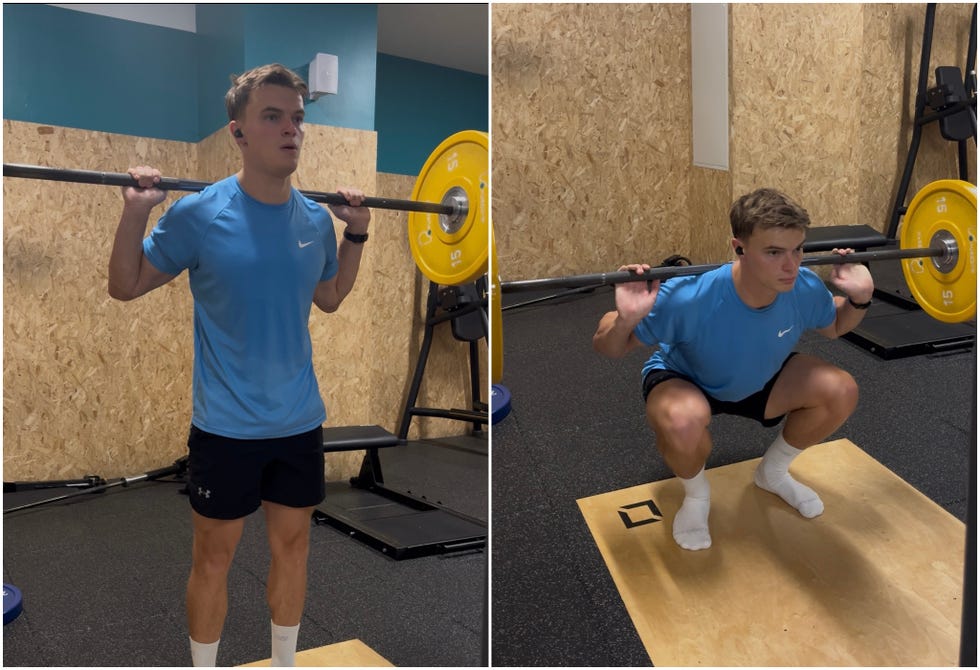
Unrack the bar so it sits across your upper back. Step back and set your stance just wider than shoulder width. Brace your core, keep your chest up, and lower into a squat until your hips drop below your knees. Drive back up to standing.
Related Stories
Ryan is a Senior Writer at Men’s Health UK with a passion for storytelling, health and fitness. Having graduated from Cardiff University in 2020, and later obtaining his NCTJ qualification, Ryan started his career as a Trainee News Writer for sports titles Golf Monthly, Cycling Weekly and Rugby World before progressing to Staff Writer and subsequently Senior Writer with football magazine FourFourTwo.
During his two-and-a-half years there he wrote news stories for the website and features for the magazine, while he also interviewed names such as Les Ferdinand, Ally McCoist, Jamie Redknapp and Antonio Rudiger, among many others. His standout memory, though, came when getting the opportunity to speak to then-Plymouth Argyle manager Steven Schumacher as the club won League One in 2023.
Having grown up a keen footballer and playing for his boyhood side until the age of 16, Ryan got the opportunity to represent Northern Ireland national futsal team eight times, scoring three goals against England, Scotland and Gibraltar. Now past his peak, Ryan prefers to mix weightlifting with running – he achieved a marathon PB of 3:31:49 at Manchester in April 2025, but credits the heat for failing to get below the coveted 3:30 mark…
You can follow Ryan on Instagram @ryan.dabbs or on X @ryandabbs_