No fluff. No aspirational montages. Definitely no PR unboxings. “We don’t care,” she said. “That’s for the 20-year-olds.” Instead, this consumer wants problem solving. And she will call out brands that overpromise. “Don’t come to us just because you want the demographic,” Taylor warned. “Come to us with a product that really was made and works for us.”
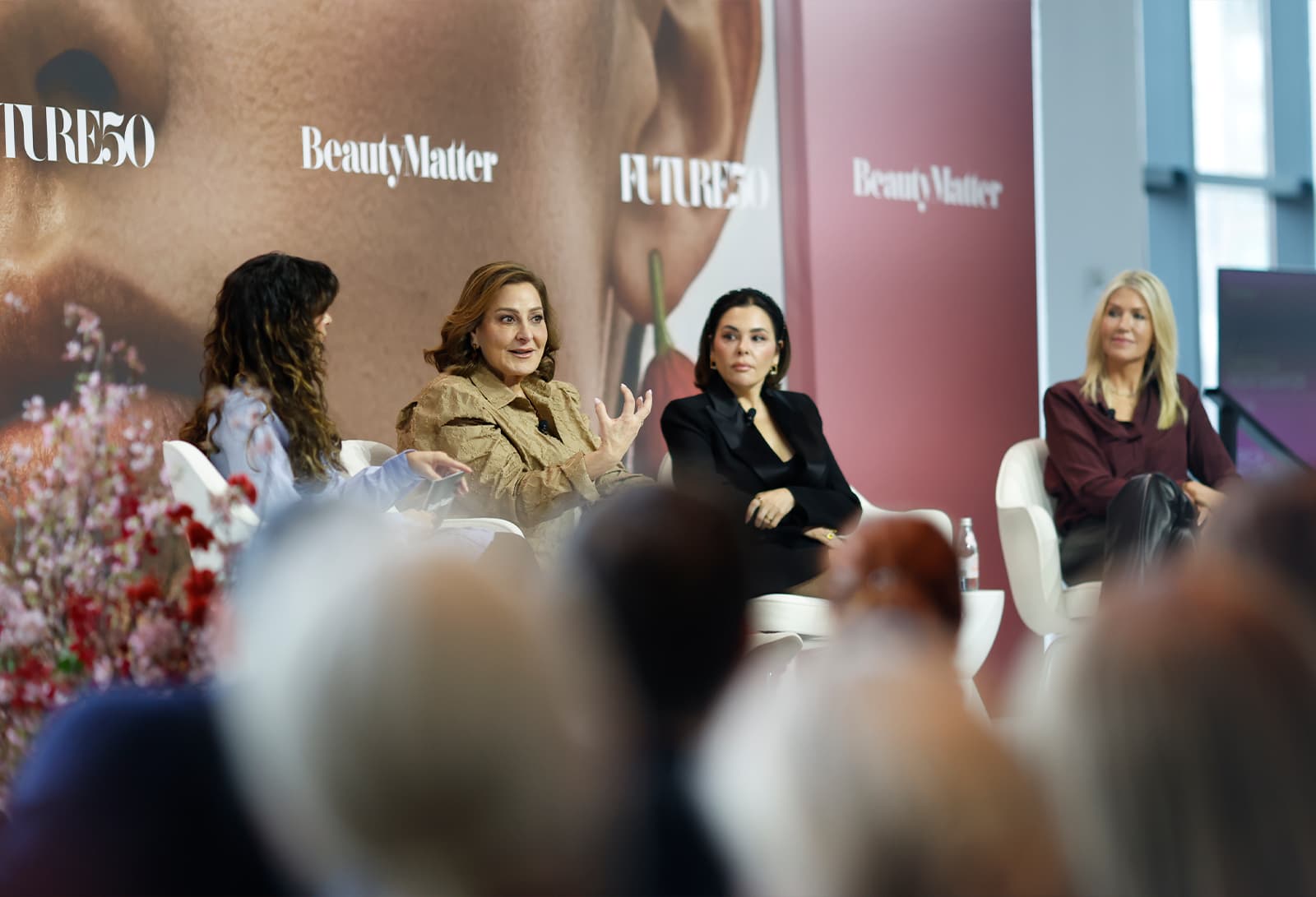
Creal, who launched her brand specifically for women 40-plus, agreed, and aimed at the industry’s messaging misfires. “There’s a lot of lecturing going on,” she said. “I’m like, just shut up and make good stuff for them.”
Her critique of beauty’s “anti-aging” narrative was equally sharp. The issue isn’t the term itself—“women don’t care about the term,” she noted—but the reductive way brands approach this life stage. “It becomes so fricking sterile,” she said. “It’s like they turn 40 and suddenly they never want to have sex again. Who is that? I don’t know that person.” Instead, Creal is focused on portraying women in their full lives: aspirational, dynamic, and yes, still interested in beauty. “I’m just trying to create a brand that is showing her in her entirety,” she said.
That philosophy extends to product development, where the panelists agreed the industry often gets it wrong. Creal offered one of the most memorable analogies of the session: “When you’re formulating for somebody in their 20s, you’re basically making formulas for a rubber mat …. Now I’m formulating for 40s, 50s, 60s .… Think about formulating for tissue paper.” Translation: Everything, from texture to finish, needs to change.
Geller echoed that mindset but brought it back to practicality, and, as always, humor. “Who can’t see anymore in a regular mirror?” she asked, prompting a sea of raised hands. Her solution: magnification mirrors in compacts and larger labels on packaging. “So you don’t have to put magnification on your camera and zoom in on the lipstick to see what color it is.” It’s a small detail with big implications: designing for real life, not just marketing.
Geller’s approach to building her brand has always been rooted in that kind of intimacy with her customer. “I’m obsessed with my customer,” she said. “They’re my friends.” That means reading reviews repetitively, responding to DMs personally, and refusing to sell anything she wouldn’t wear herself. “If I’m not wearing it, I’m not selling it.”
It also means acknowledging the full spectrum of this consumer, not just the polished, affluent shopper. Through QVC, Geller has reached women who may not have access to Sephora or Ulta Beauty stores, or who are just beginning their beauty journey. “She may be at home and not doing anything, and really going through a rough time,” she said. “And I’m there.”
The emotional connection to beauty, something often overlooked in industry conversations, surfaced again when Taylor described her own community. “There are people who are lonely,” she said. “Social media … it’s their outlet. It makes them feel like they have made some friends.” That sense of connection may be one of the most underappreciated drivers of loyalty among this demographic.
When it comes to where they shop, the answer is everywhere. This consumer is omnichannel, comfortable buying on TikTok Shop or Amazon while also wanting to touch and test in-store. “I like to play,” Taylor said. “I like to go in. I like to see things.”
Creal pointed out that this behavior will only intensify as millennials age into the category. “Fifty percent of millennials will be 40 in 2028,” she said. “It’s coming, people.” In other words, this is not a niche. It’s the future.
The panel closed with advice for brands, and more than a few laughs. Geller’s guidance was simple: “Start with a product that delivers … and not a bunch of fluff.” Taylor added a warning against inflated claims: “Don’t overpromise and underdeliver. That is some bullshit.” And if all else fails? Geller offered one final, tongue-in-cheek tip on resilience: “Some medication. Not going to lie. It helps.”
Beneath the humor, the message was serious. This consumer is informed, engaged, and ready to spend, but only with brands that respect her. Or, as Creal put it, the solution isn’t complicated: “Make good stuff that works.”