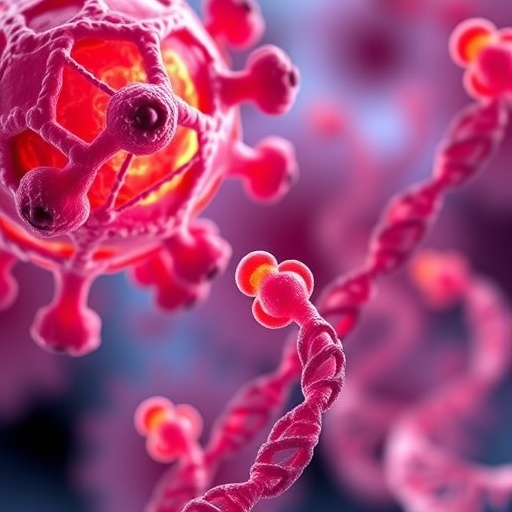
A leading virologist claims that beer brewed with “vaccine yeast” can trigger the immune system to produce antibodies that defend the body from certain diseases. db looks at the arguments for and against the concept.
Chris Buck, a virologist at the National Cancer Institute in Maryland, has published a research paper detailing how a brewer’s yeast he created can produce harmless viral proteins from polyomavirus – a family of viruses that infect up to 91% of people by the time they turn nine years old. These proteins, in turn, trigger protective antibodies, which can help protect against some cancers.
He started off by using “baking yeast” on mice to test the effectiveness of the method, and in doing so Buck was able to show via blood tests that the beer did in fact elicit an immune response. He believes that putting the viral proteins into yeast is more effective than consuming the proteins directly as the yeast protects the proteins from being destroyed by stomach acid, allowing them to reach the intestine, where immune cells can learn to recognise them.
The next step was to move on from mice and test the theory on himself, which is where beer entered the room. Buck drank one to two pints of ‘vaccine beer’ (hiding the proteins in a form of brewers yeast he used to ferment the beer) every day for five consecutive days, taking two five-day booster doses five and seven weeks later. After drinking the beer, blood tests showed that his body had produced the antibodies for two kinds of BK polyomavirus that can lead to some bladder cancers.
“The idea really is to just take living yeast, which are what makes beer, and put a vaccine inside the living yeast. And by doing that, you can actually get the yeast to cause an immune response,” Buck said on his YouTube channel.
He hopes that with continued research and development vaccine beer can be rolled out on a wider scale and he has started a non-profit called the Gusteau Research Corporation to develop molecules to advance the beer’s production. He intends to brew the beer for his research as a private citizen rather than partner with a company at this point.
“Gusteau’s primary current focus is the development of plasmids that can enable ordinary brewers yeast to express candidate vaccine antigens,” reads a statement on the non-profit’s website. “It’s hoped that this approach will enable brewers to explore the strange new world of vaccine beer.”
Stumbling block
However, not everyone supports the notion of a vaccine beer.
The National Institutes of Health (NIH), part of the US Department of Health and Human Services and the nation’s medical research agency, has rejected Buck’s application on the grounds that he cannot simply experiment by drinking the beer himself; any legitimate trial would need to be carried out on a much larger human scale and comply with official regulations.
Speaking to The Times, Buck said that his application had been declined by the review board “before it could even be considered”. He now plans to pursue his research independently.
Critics say that vaccines should only be developed under US Food and Drug Administration approval, but according to Buck this argument disregards the fact that “if something is already in the food supply and doesn’t appear to be causing problems, then the manufacturer can just say, look, it’s generally recognised as safe because it’s already there and we don’t know of any problems.”
Arthur Caplan, a medical ethicist at the New York University Grossman School of Medicine, told Science News that the idea of vaccine beer could worsen anti-vaccine sentiments. “This is not the place for do-it-yourself,” he said.
Partner Content

Countering, Buck argued that anti-vaxxers may actually find vaccine beers a more palatable concept.
“Food-based vaccines are dramatically faster, easier and cheaper to produce and are less painful than traditional injection vaccines,” he said. “For some populations, edible vaccines may also be more acceptable and accessible than existing pharmaceutical products.”
Supporters believe it could make immunisation more affordable for low-income families, especially in regions such as the US where patients (or their insurers) pay for their own healthcare.
Dietary supplement or drug?
According to QPS, a leading global contract research organisation focused on bioanalytics and clinical trials, “vaccine beer remains an experiment at the intersection of immunology and regulation”.
While QPS concedes that if its benefits are confirmed, the approach “could expand oral vaccine strategies” it cautions that the thorny issue of regulation terminology would need to be ironed out first. “The idea hinges partly on regulatory distinctions,” it said.
Buck claims that if you can eat something, then you can sell it as a dietary supplement product, and dietary supplements are not required to undergo the same multi-stage clinical trials designed to establish safety and efficacy in the same way that drugs are.“Vaccines are drugs. We all know this. But just because something is a drug does not mean it can’t also be a food,” he has said.
Buck believes that in the future beer vaccines could be engineered to protect against flu, Covid and related viruses.
“Anything that is a common-cold virus is in our crosshairs now,” he said, before stressing that the vehicle for delivering the vaccine does not have to be beer. The same yeast-based approach could, in principle, be incorporated into other foods or beverages with no ties to alcohol, such as yogurt.
Summing up, QPS said: “The science behind virus-like particles and yeast delivery is tangible and testable. The larger question is whether that science will move through the established clinical trial system or remain a provocative proof of concept.
“If carefully evaluated through rigorous testing, yeast-based oral vaccines could eventually offer a simpler, scalable way to confer immunity, although beer as a delivery vehicle would be suitable only for adults…
“The path forward will depend not only on scientific replication but also on navigating the delicate balance between innovation, oversight and public trust”.
Related news
Top 50 beer companies in America revealed
Overall beer category decline fails to hold back US craft ‘resilience’
People will drink in local brewery taprooms if pubs keep ignoring independent beer