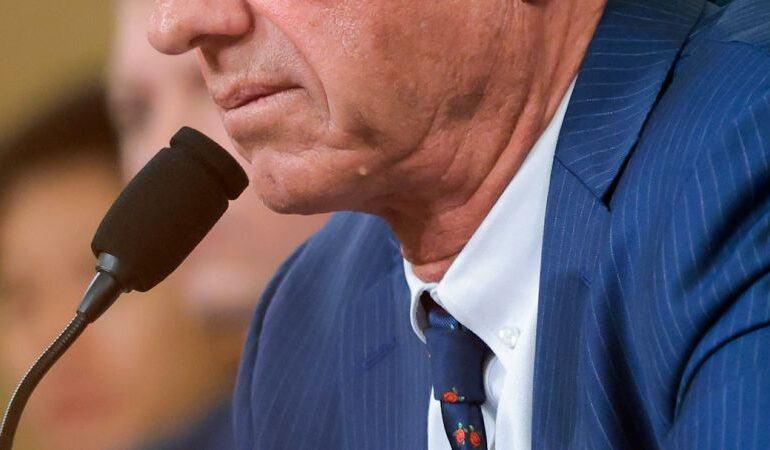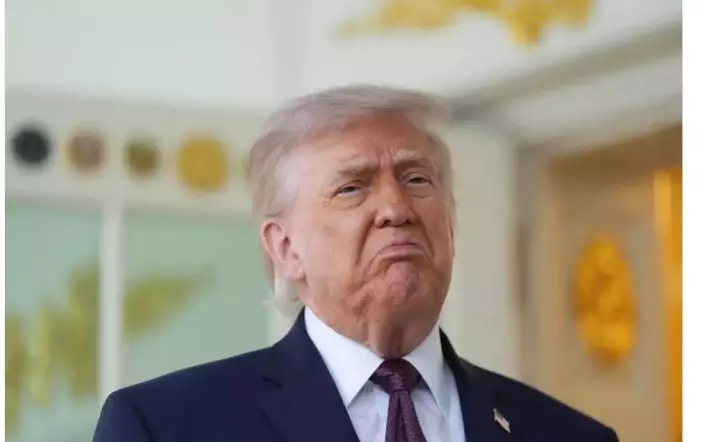
Trump’s recent decisions have been erratic. His speech is incoherent, his rhetoric outrageous, and he has even cast himself as Jesus Christ. These abnormal behaviors have surfaced before, but since he launched war on Iran, they have only intensified.
More and more people across US political circles are questioning whether he is actually deranged, and even his die-hard supporters and former aides say he is “really crazy.” They are not just talking. They are taking action, pushing to invoke the 25th Amendment and calling on Vice President Vance and Cabinet members to remove him.
Support for that idea is rising fast. The odds of success are slim, but the more it is said, the more the public comes to believe he is “unwell,” and that is dragging his approval ratings down further.
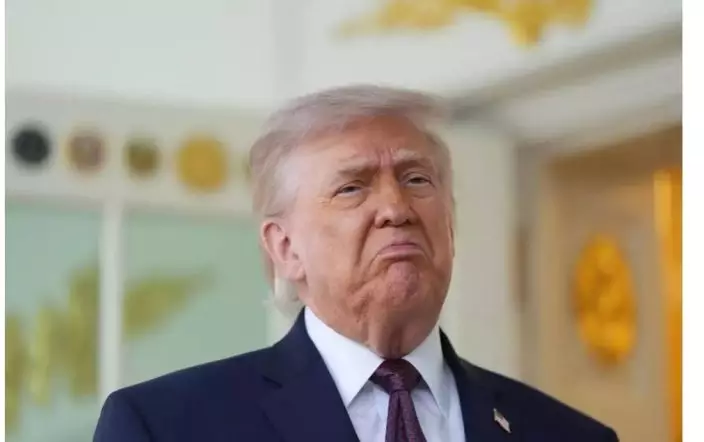
The NYT says Trump’s recent erratic, incoherent behavior has politicians across the spectrum openly questioning whether he’s “mentally unstable,” with even former allies calling him “crazy” and urging his removal.
Claims that Trump is “deranged” are nothing new. As far back as 2017, when he first took office, 35 mental health experts published an open letter in a Us newspaper warning that he was “extremely emotionally unstable,” as reflected in his speech and behavior, and said he was “unable to safely perform the duties of president.”
At the time, psychiatrist Allen Francesces, one of the signatories, said: “Mr. Trump causes severe distress rather than experiencing it and has been richly rewarded, rather than punished, for his grandiosity, self-absorption and lack of empathy.” That “diagnosis” still fits Trump today, and the case against him sounds even stronger now.
This controversy has only grown. His recent war on Iran has plunged the world into chaos, and the issue of “mental abnormality” has drawn even greater attention.
The New York Times today published a report headlined “Trump’s Erratic Behavior and Extreme Comments Revive Mental Health Debate”. The article says Democrats are not the only ones raising doubts. Former supporters in the Republican Party, along with his former aides and MAGA (Make America Great Again) die-hards, are also saying “It’s insanity” and calling him “a genocidal lunatic”.
Examples of Erratic Conduct
The report points to several recent examples, including Trump’s sudden blast that “A whole civilization will die tonight” in reference to Iran. His decisions, it says, also keep shifting and contradicting themselves. He has also done things no other president has done, publicly attacking Pope Leo XIV by name and calling him “weak on crime” and “terrible for foreign policy.” It shows, the report suggests, a portrait of a hysterical dictator.
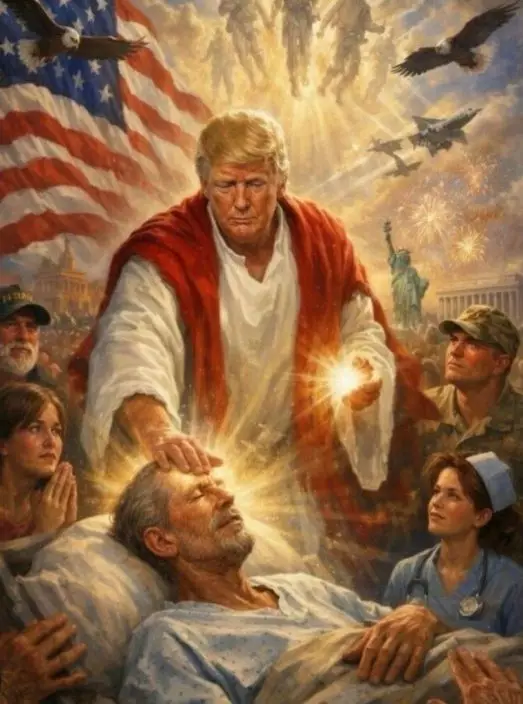
On April 13th, Trump posted an AI image casting himself as Jesus Christ, which many saw as yet another sign of “not doing too hot”.
Democrats are, naturally, making the most out of Trump’s erratic words and actions. So far, about 70 members of Congress have pushed to invoke the Twenty-fifth Amendment, urging Vice President Vance and Cabinet members to remove him on the grounds of “presidential disability.” The odds are close to zero, since Vance remains loyal to him and would never stage a palace coup. Even so, the uproar will almost certainly deepen damage to Trump’s image and make his already weak approval ratings worse.
The New York Times noted that, tellingly, Republican supporters, MAGA supporters and even some of Trump’s former staff are voicing similar doubts.
Former Republican congressman Marjorie Taylor Greene, who broke with Trump some time ago, told CNN that Trump’s claim he would wipe out Iranian civilization was “Not tough rhetoric, it’s insanity.” Far-right influencer Candace Owens, once a loyal Trump backer, also called Trump “a genocidal lunatic”, while Alex Jones, the conspiracy theorist and founder of Infowars, said Trump “does babble and sounds like the brain’s not doing too hot.”
White House Allies Speak Out
Trump’s first-term aides, including White House lawyer Ty Cobb, are even blunter. They say he is “a man who is clearly insane,” and that a string of late-night posts on social media “highlights the level of his insanity.”
Trump bristles when these people tell him he is “mentally unwell.” He fires back: “They’re stupid people, they know it, their families know it, and everyone else knows it, too! They’re NUT JOBS, TROUBLEMAKERS, and will say anything necessary for some ‘free’ and cheap publicity.” Of course, a crazy person would never admit to being crazy, just as a drunk refuses to admit he’s drunk.
If Trump were not holding power, whether he is mentally unwell or not would not matter. But the United States is at war now, and chaotic decisions from him would be a serious matter. Former CIA Director John Brennan warns that “this man is clearly mentally unstable,” yet he controls the vast firepower of the nuclear arsenal; if he remains commander-in-chief, the concern is enormous. Brennan therefore also calls for his removal under the 25th Amendment.
War Powers and Public Fear
That said, it is basically impossible to bring Trump down right now. But when so many voices speak in unison and question whether he is “mentally unwell,” the public is likely to feel the same way too, delivering the latest blow to his support. An Ipsos poll last month found that 61 percent thought he was erratic; another YouGov survey found that half of respondents said he was unfit to be president. The numbers may still have further to rise.
As the saying goes, people share the same heart and mind. Putting a supposedly “mentally deranged” person in charge of a country and its armed forces is indeed frightening. But beyond hoping he does not go off the rails, what else can be done?
Lai Ting-yiu
What Say You?
** The blog article is the sole responsibility of the author and does not represent the position of our company. **
US-Iran talks had raised hopes that the clouds of war might ease a little, but after 21 hours of negotiations produced nothing, the meeting was abruptly called off and the faint glimmer of hope quickly vanished.
The worst part is that Trump has gone into a fresh rage, announcing that the US Navy will block the Strait of Hormuz; any vessel that pays transit fees to Iran and uses its ports will not be allowed to enter or leave.
The IRGC immediately responded forcefully, and the conflict is clearly escalating. The sudden turn has a reason. Ray Dalio, founder of Bridgewater Associates, who studies century-long shifts in hegemony, posted that in this geopolitical contest the financial battlefield is just as fierce: Whoever controls the Strait of Hormuz wins this war, because over the long term, it threatens the dollar’s status. That makes it easier to see why Trump suddenly blew up.
After Iran blocked the Strait of Hormuz, two developments made Trump deeply uneasy and convinced him they had to be checked.
First, Iran seized the opportunity to boost oil exports and set prices in yuan. Beyond opening new revenue channels and helping pay for the war, that also deliberately lifted the profile of the “oil yuan.”
Second, charging foreign vessels transit fees in yuan likewise strengthens the renminbi and works as a substitute for the dollar, building momentum for this new financial order. Trump clearly sees that this trend threatens the dollar’s status; if the gap keeps widening, the fallout could be endless.
Dalio views the Hormuz dispute through that lens and says the fight has already moved beyond control of a trade route, because signs point to a shift in the international financial system. He cited a comment by former IMF chief economist Rogoff, saying that if Iran and China gain the upper hand in buying oil with yuan and paying transit fees, more countries will be encouraged, in order to avoid US financial sanctions, to speed up a move away from the dollar and diversify into financial systems outside the dollar sphere.
In a recent interview with Al Jazeera, Rogoff put it even more bluntly, saying that “At one level, Iran is aiming to poke its thumb in the United States’s eye, adding insult to injury. At another level, Iran is dead serious about preferring yuan to avoid US sanctions and to cultivate its ally, China.”
Beyond collecting transit fees in yuan, Iran is also selling large volumes of exported oil to China at discounted prices, mainly in yuan-denominated transactions. Rogoff believes that if Iran and China win out on this front, it will push other countries to diversify their investments and gradually break away from the dollar-based financial system. He said his long-held view is that “the dollar’s dominance has already peaked.”
Yuan Oil Challenges Dollar
According to Bloomberg tanker-tracking data, Iranian crude oil and condensate exports averaged about 1.7 million barrels per day in March, topping neighboring Iraq. Before Trump announced yesterday that he would blockade the Strait of Hormuz, experts inside the government had already pushed the hard-line plan to cut Iran’s economic lifeline.
Trump’s deployment of troops to block the Strait of Hormuz serves two goals. It aims to stop Iran from exporting oil for profit and to prevent it from charging transit fees to ships from other countries. On the surface, the move is about cutting off Iran’s revenue and showing the world that “I’m in charge here.” But the deeper calculation is to stop the rise of the “petro-yuan,” which could eventually threaten the “petrodollar.” If that trend is not stopped early, the fallout could be long-lasting.
But Trump’s move is a dangerous gamble. The New York Times notes that a naval blockade is an act of war and could trigger serious consequences. In fact, senior Revolutionary Guard officials have already warned: “Any wrong move will drag the enemy (the United States) into a deadly whirlpool in the strait.” The military has also deployed missile batteries along the shores of the Strait of Hormuz, and US warships taking part in the blockade mission face the risk of attack.
Will Trump, because of the “financial war” behind the struggle over the Strait of Hormuz, be willing to use force again? Or will he once again pull a TACO, all bluster and no action, then back down? That will be what the world watches over the next few days.
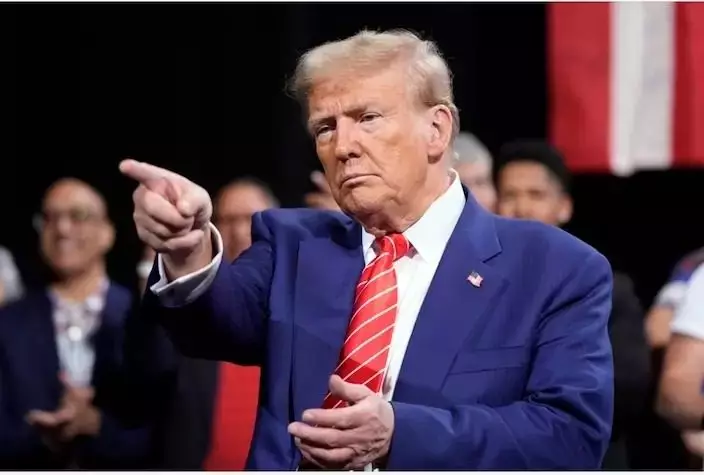
Trump has ordered the Navy to block the Strait of Hormuz, and behind this struggle for control of the strait is a “financial war.”

Iran is demanding payment in yuan for transit fees through the strait, and selling oil in yuan as well; in the long run, this poses a certain threat to the dollar’s status.