 When a UK mother noticed her young son becoming lethargic, losing weight rapidly, and gulping water like he’d been through a desert, her mind went to the worst place imaginable, a brain tumour. But investigations revealed he’d been accidentally poisoned with an overdose of vitamin D that had been prescribed for growing pains. His bottle of vitamin D3 drops was roughly seven times more concentrated than it should have been, sourced from one of two defective batches distributed across the UK. The overdose gave the child an acute kidney injury, and a leading expert told BBC News he would have died had he finished the full prescribed course.And this wasn’t an isolated case. Another child, Kayan, was admitted to Sheffield hospital in February 2025 with elevated calcium levels and impaired kidney function. Doctors at Sheffield Children’s NHS Foundation Trust diagnosed vitamin D intoxication “far above expectation for standard supplementation.” His mother only learned about the product recall in April 2025 and although his kidneys have partially recovered, he may require a transplant in future. She told BBC News: “I can’t help but feel that for eight weeks, I’d been slowly poisoning my son.”
So what actually happens when you take too much Vitamin D?
Vitamin D is fat-soluble, meaning unlike vitamin C, it doesn’t flush out through your urine. Excess vitamin D builds up in body tissues and the bloodstream, and in serious cases leads to hypercalcemia, a dangerous accumulation of calcium in the blood that can form deposits in arteries or soft tissues, and may predispose individuals to painful kidney stones.The symptoms don’t announce themselves dramatically. They creep in slowly, which is exactly what makes vitamin D toxicity so easy to miss:Persistent nausea, vomiting, and loss of appetiteExcessive thirst and frequent urinationFatigue, confusion, and disorientationMuscle weakness and bone painElevated blood calcium levels (hypercalcemia)Kidney dysfunction or, in severe cases, acute kidney failureMost cases resolve without serious complications, but in some instances severe hypercalcemia can lead to acute renal failure requiring hemodialysis. 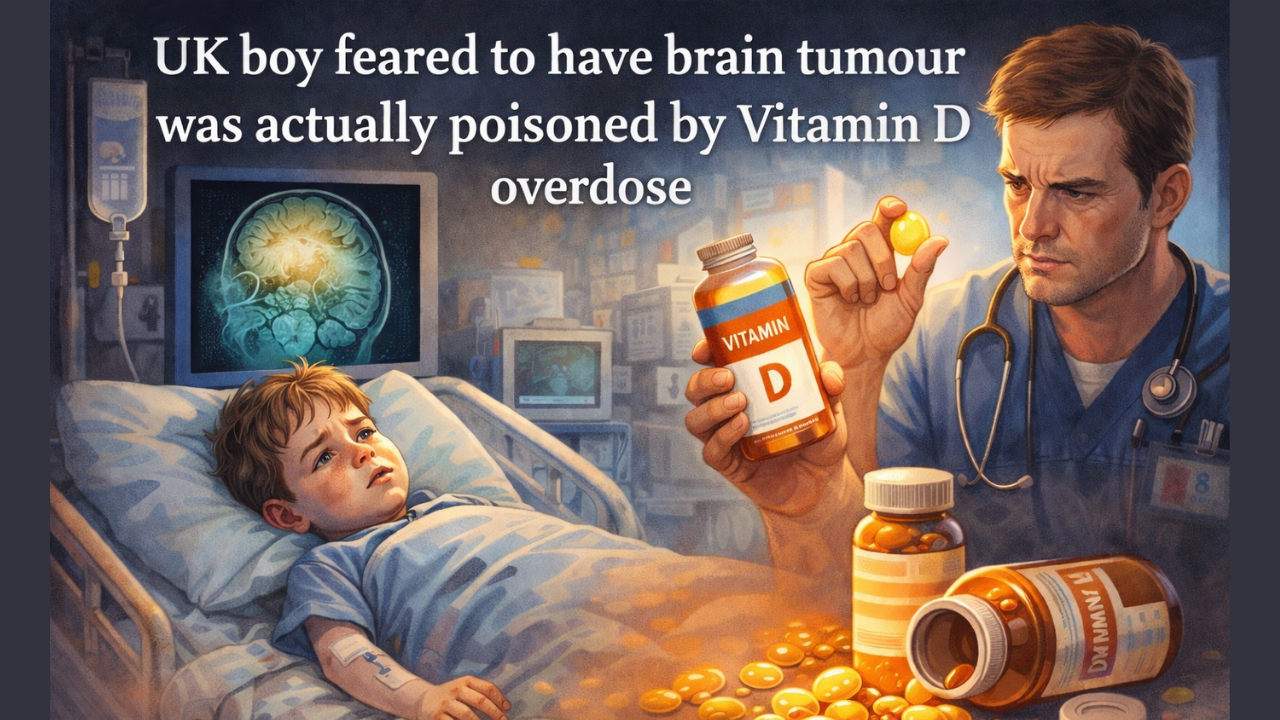
Image: AI
What the research actually shows
A 16-year retrospective study published in Laboratory Medicine found that vitamin D toxicity has been reported across multiple age groups and traced back to causes including manufacturing errors, incorrect dosing from liquid preparations, and sustained ingestion of megadoses, with incorrect dosing of supplements in children identified as among the most harmful.A separate review published in the British Journal of Clinical Pharmacology flagged something even more unsettling: manufacturing errors in unlicensed supplements have been exposing the public to doses far above stated amounts, with overfortification of vitamin D in food products having previously caused at least 56 cases of toxicity, 41 requiring hospitalisation and two resulting in deaths.
Adults aren’t off the hook either
Reported adult cases include a 45-year-old woman who received 6,000,000 IU of vitamin D via intramuscular injection over just two weeks following knee surgery, presenting with recurrent vomiting, abdominal pain, and dangerously high calcium levels.And 2024 guidelines from the Endocrine Society now state that healthy adults under age 75 don’t actually need vitamin D supplements at all, recommending them only for children aged 1–18, adults over 75, pregnant women, and those with high-risk prediabetes.
How much is too much?
As per NHS UKChildren: Safe upper limit is around 50 mcg per dayAdults: Generally safe up to 100 mcg (4,000 IU) daily; anything beyond needs medical supervisionInfants under 1 year: No more than 25 mcg (1,000 IU) daily
FAQS
Can you overdose on vitamin D from sunlight?
No. Your skin has a natural regulatory mechanism that prevents sunlight from producing toxic vitamin D levels. Overdose only occurs through excessive supplement intake.What are the first signs of vitamin D toxicity?
Nausea, loss of appetite, excessive thirst, and unusual fatigue are typically the earliest signs. Vomiting and confusion follow in more serious cases.How long does vitamin D toxicity last?
Because it’s fat-soluble, it can linger in the body for weeks or even months after you stop taking it. Treatment usually involves stopping supplementation, dietary changes, and sometimes medication to lower calcium levels.Can vitamin D supplements interact with medications?
Yes. Vitamin D can interact with steroids, weight-loss drugs, and cholesterol-lowering medications. Always inform your doctor about supplements you’re taking.Should I stop giving my child vitamin D supplements?
Not necessarily — but you should only use doctor-recommended doses and never self-prescribe high-strength supplements. If your child was recently on a prescription vitamin D product, check with your GP about any product recalls.