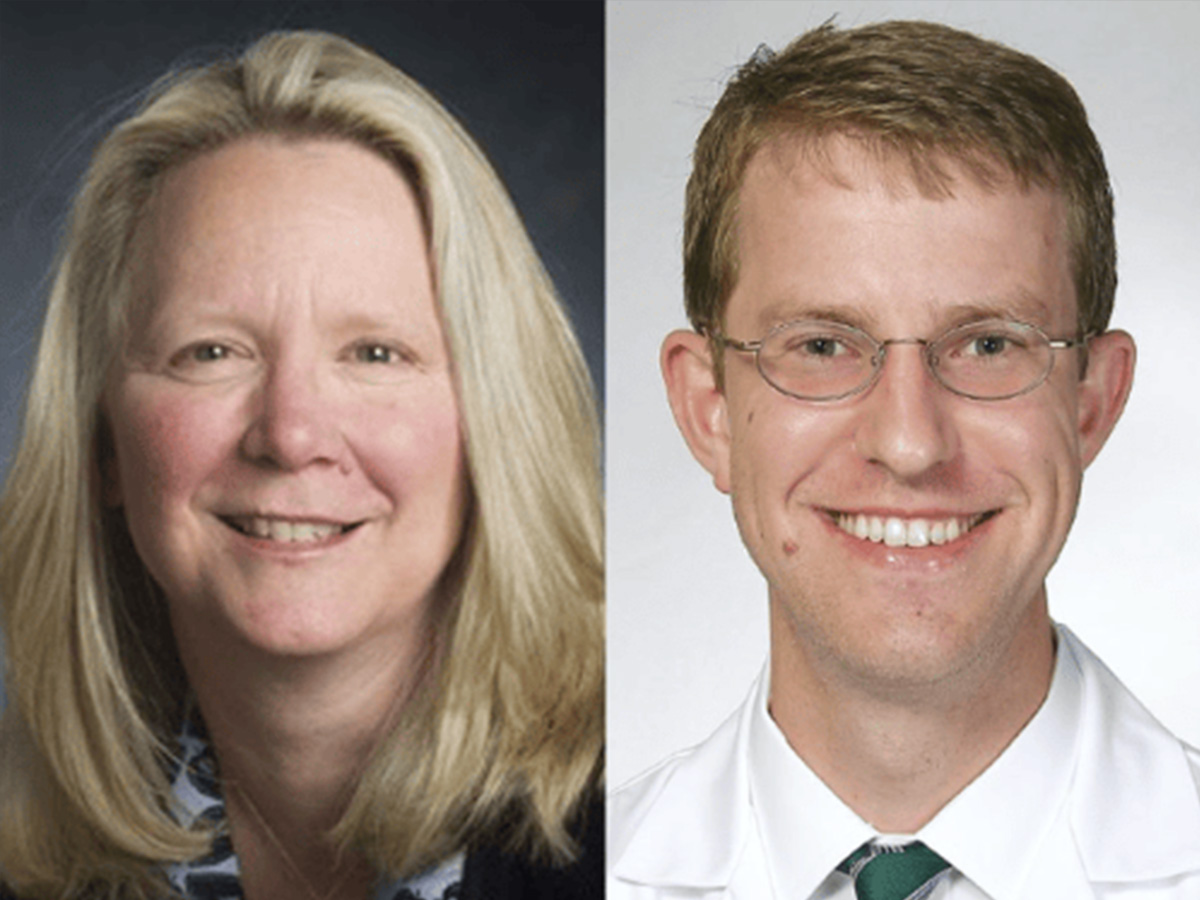
Fran Lund, Ph.D., and John T. Killian, M.D., Ph.D. When a patient undergoes an organ transplant, failure to match the donor and recipient can lead to the recipient’s immune system’s attacking the new organ, a process triggered by a specific human leukocyte antigen, or HLA, protein. In a recent study published in Immunity, researchers from the University of Alabama at Birmingham Marnix E. Heersink School of Medicine uncovered consistency in how the immune system decides which part of the foreign HLA protein to attack — information that could help improve transplant success.
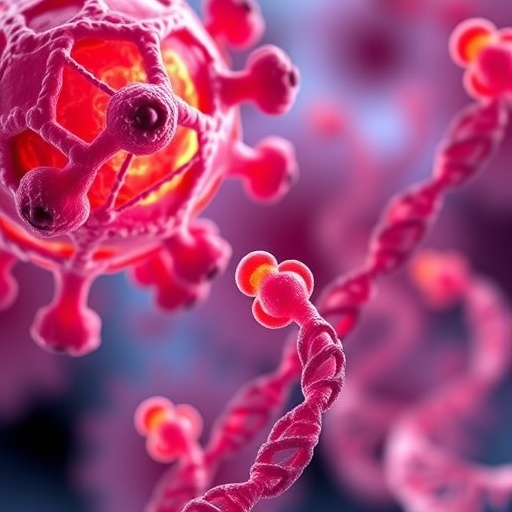
HLAs sit on the surface of cells and have enormous variability from person to person, serving somewhat as molecular fingerprints. When the body encounters unfamiliar versions of these proteins from a donor, it may produce antibodies that target the transplanted organ. This can cause serious injury known as antibody-mediated rejection, a leading cause of transplant failure.
“Although antibody responses against mismatched donor HLA are a leading cause of kidney transplant failure, we don’t understand how the immune system decides which pieces of the mismatched HLA protein are most important,” said John T. Killian, M.D., Ph.D., residency graduate of the UAB Department of Surgery, current abdominal transplant surgery fellow at Emory University and co-lead author on the study. “A transplant donor and recipient might have dozens of mismatched amino acids at locations across a given HLA protein, and so we hoped to learn if all mismatches are ‘created equal’ or if the immune system chooses to focus instead on a limited set of mismatched amino acids.”
The study, titled “Topography of the HLA-A protein enforces shared and convergent immunodominant B cell and antibody alloresponses in transplant recipients,” takes a closer look at exactly how the immune system decides which part of a foreign HLA protein to attack. Researchers from the UAB departments of Surgery, y focused on a commonly expressed HLA type, HLA-A*01:01, and examined how a recipient’s B cells (the body’s antibody-producing cells) responded after a kidney transplant.
“The transplant wait list to receive a donor kidney is very long, and many people each year die while waiting for a good match between the HLA proteins expressed in the recipient’s body and the HLA proteins expressed by the organ donor,” said Fran Lund, Ph.D., professor in the UAB Department of Microbiology and co-lead author on the study.
Lund explains how, ideally, three major HLA proteins need to be identical between a donor and recipient for a successful transplant.
“It is exceedingly hard to find donors that have this rare HLA match,” she said. “We hypothesized that, if we could understand exactly what the recipient’s immune system recognizes in the donor HLA, we might be able to better select matches that are not identical but are unlikely to activate the recipient’s immune system. This would increase the number of potential matches that could be made and might allow more people to receive a lifesaving organ transplant.”
A focused, repeatable immune response
The research team examined a kidney transplant recipient who developed antibody-mediated rejection. By analyzing both the B cells inside the transplanted kidney and the antibodies circulating in the patient’s blood, the team discovered that the immune system repeatedly targeted the same small region of the HLA protein.
This region, often referred to as the HLA protein’s “crown,” sits on top of the molecule’s structure and is highly visible to the immune system. Although it accounts for only about 20 percent of the total HLA protein, it consistently elicited the strongest antibody response.
Importantly, B cells found in the rejecting kidney were clonally related to those producing antibodies in the bloodstream, showing a direct link between local organ-specific immunity and the body’s broader antibody response.
Studying additional transplant recipients revealed shared patterns among patients who had received organs mismatched for HLA-A*01:01. All showed convergent immune responses, meaning their antibodies targeted the same HLA crown region despite each patient’s having a different genetic background and a different set of HLA proteins. This convergence suggests that structural features of the HLA protein itself, rather than recipient genetics, drive these highly focused immune attacks.
Implications for the future of transplant care
By pinpointing the exact region of the HLA molecule that triggers the majority of harmful antibody responses, this research opens the door to designing better-matching strategies, predicting which mismatches are most risky and creating new therapies that interrupt these responses.
“In the future, we hope we can generate ‘cocktails’ of modified ‘stealthy’ HLA antibodies that will bind to and cover the entire HLA crown but won’t activate the immune system,” Lund said. “We predict that this ‘shield’ of modified antibodies will block the binding of the pathogenic HLA antibodies that may be present in transplant recipients. We hope that, by treating transplant recipients with these antibody cocktail ‘masks,’ we will block binding of the pathogenic antibodies and will decrease the risk of transplant organ rejection.”
Killian adds that there is still work to be done to understand how to apply these findings to clinical practice, but the discoveries the study revealed are hopeful.
“We hope to build upon these insights to understand how kidney donors and recipients might be better matched and to develop therapies that could mask harmful mismatches,” Killian said. “Ultimately, we hope this work could help organ transplants last longer and facilitate the use of less intensive immunosuppression.”
UAB authors on the study include John Killian Jr. (Surgery), R. Glenn King (Microbiology), Aaron C. K. Lucander (Microbiology), James L. Kizziah (Microbiology), Christopher F. Fucile (Informatics and Data Science), Shihong Qiu (Microbiology), Aaron Silva-Sanchez (Medicine), Betty J. Mousseau (Microbiology), Kevin J. Macon (Microbiology), Amanda R. Callahan (Microbiology), Guang Yang (Microbiology), M Emon Hossain (Medicine), Jobaida Akther (Medicine), Julie A. Houp (Surgery), Frida Rosenblum (Pathology), Paige M. Porrett (Surgery), Song C. Ong (Medicine), Vineeta Kumar (Medicine), John F. Kearney (Microbiology), Troy D. Randall (Medicine), Alexander F. Rosenberg (Biomedical Informatics and Data Science), Todd J. Green (Microbiology) and Frances E. Lund (Microbiology).