
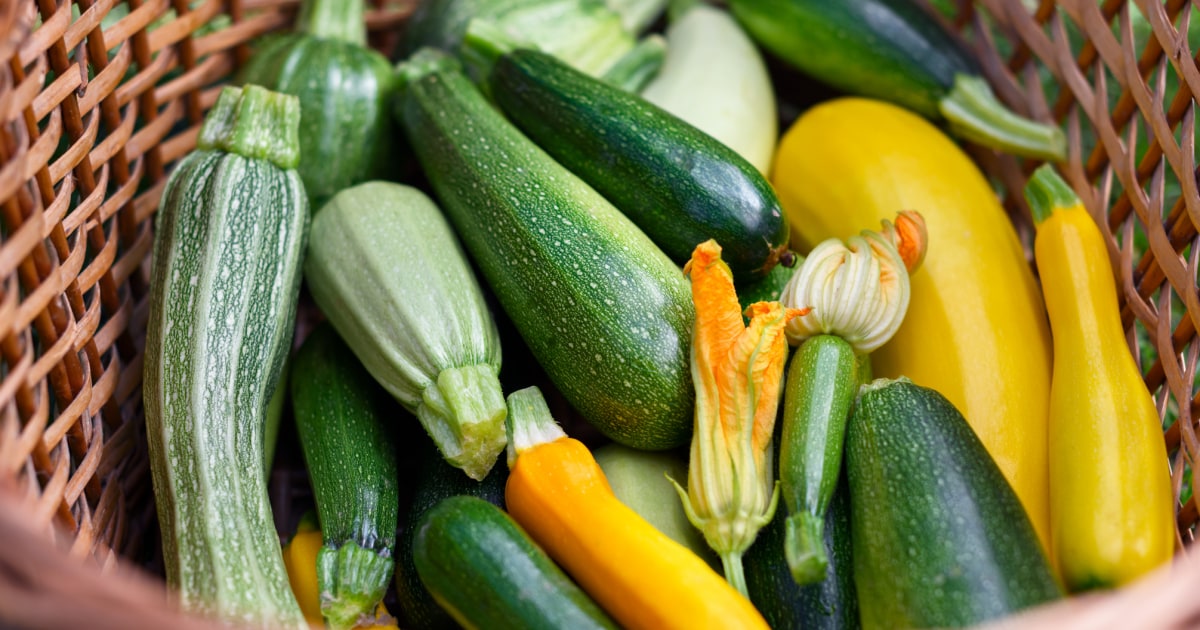
You can count on access to a bounty of squash during the winter and summer months, when various species of the fruit peak, and among them is the ever-popular zucchini.
Zucchini is a versatile choice that comes in a variety of shapes, sizes and colors. With edible skin and seeds, this low-cost fruit has a high water content, making it ideal for boosting hydration, says Erin Palinski-Wade, registered dietitian and author. It’s also low in calories, and free of saturated fat, sodium and cholesterol, making it ideal for anyone looking to reduce their blood pressure or improve overall health. It even rivals carrots for its eyesight benefits.
While it has many of the same vitamins and macronutrients as most squash, zucchini’s nutrient profile makes it worth differentiating from the rest.
What Is Zucchini?
Zucchini is a (usually) green type of summer squash. It consists mostly of water, which gives it its weight, subtle taste and firmness. Eat it raw, grilled, roasted, steamed or sautéed, recommends the United States Department of Agriculture. Though zucchini can grow to impressive weights, the most flavorful are usually the small- and medium-sized zucchini, it adds.
What Is Squash?
Squash is a fruit (because it has seeds and comes from the flowering part of the plant) but usually treated like a vegetable because it tends to be savory. Squash comes in two seasonal varieties: summer and winter/fall.
Summer squash, including zucchini, is often glossy with crunchy skin. It’s picked when it’s immature so the seeds are edible. Summer squash have benefits for heart health and lowering oxidative stress, which can damage cells, says Palinksi-Wade. Other summer varieties of squash include chayote, crookneck, pattypan and tatume.
Winter squash is less delicate and starchier because of its higher carb content, says Palinsky-Wade. The pumpkins, delicata and butternut squash that belong to the winter squash family tend to have firmer outer shells and skins, mature seeds and can be stored for several months, according to the USDA.
Zucchini Nutrition
Per 1 medium zucchini:
33 calories2 grams protein6 grams carbohydrates2 grams fiber1 gram fat5 grams sugarSummer Squash Nutrition
Per 1 medium summer squash:
31 calories2 grams protein7 grams carbohydrates2 grams fiber0 grams fat4 grams sugarWinter Squash Nutrition
Per 1 cup cubed winter squash:
39 calories1 gram protein10 grams carbohydrates2 grams fiber0 grams fat3 grams sugarZucchini and Squash Benefits
Both zucchini and squash are low-calorie and fiber-rich, Palinski-Wade says. Winter squash have slightly more carbs, giving them a denser bite and starchier taste.
And since they’re part of the same family of fruit, zucchini and squash’s micronutrient profiles are notably similar. In zucchini and squash, you’ll get a dose of vitamin C, vitamin B6, folate, potassium and manganese, Palinksi-Wade says.
The vitamin C in both zucchini and other squash can lower the risk of heart disease, support immune function, collagen production and protein metabolization. The inflammation-fighting properties of vitamin C can help destroy cancer cells, too.
Vitamin B6 plays a part in more than 100 enzyme reactions that happen in the body, most notably protein metabolism, according to the National Institutes of Health.
And since the body can’t produce folate on its own, getting this B vitamin from zucchini and other squash is a plus. Folate is responsible for cell growth, red blood cell formation, reducing the risk of birth defects, and it’s integral to brain and nervous system health.
The potassium in zucchini and squash is essential to blood pressure control and heart health. And manganese plays a role in metabolism, bone building and reproductive health.
Both zucchini and squash have riboflavin along with smaller doses of vitamin A, magnesium, iron, calcium and copper, too, says Palinski-Wade.
You can also count on these fruits for “antioxidants such as lutein, zeaxanthin and beta-carotene, which contribute to (squash and zucchini’s) nutritional values and helps to support both eye and heart health,” Palisnki-Wade adds. Winter squash, however, is the true eyesight hero thanks to the amount of these nutrients it offers, she says.
Is Zucchini or Squash Healthier?
Whether you pick zucchini or a different squash depends on your health goals and taste preferences.
“Zucchini is usually the better pick if you want a lower-calorie, lower-carb, lighter vegetable for weight control, blood sugar management or as a pasta substitute,” says Palinski-Wade. Squash, on the other hand, is better if you’re in search of more fiber and carotenoids, she adds.
When it comes to cooking, things differ, too. Unique to zucchini is its quicker cook time and simpler preparation, “because it softens fast and can be sautéed in just a few minutes,” Palinksi-Wade says. Other types of squash, “especially winter squash, often needs peeling, seeding and longer cooking.”