
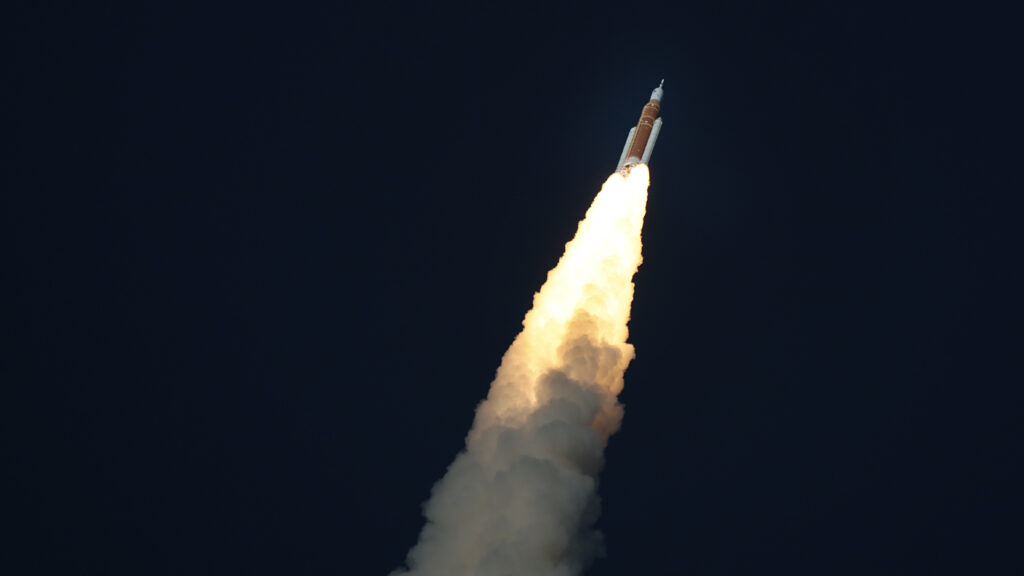
In the aftermath of the successful Artemis II mission, NASA is moving forward with the next steps of its plans to establish a base on the moon. According to NASA Administrator Jared Isaacman, crews will be operating at the lunar base within the next decade with an even more ambitious long-term goal: Mars.
Human health in the space environment will be an important factor in these efforts. Among the concerns NASA should consider is the potential impacts of immunology and infectious disease.
Being in space is known to affect the immune system. During the year that Scott Kelly spent in space as part of the NASA Twins Study in 2015-2016, the first study to examine human health using modern techniques during long duration spaceflight, researchers noted increases in markers associated with inflammation. Epigenetic changes, such as methylation of genes involved in the immune response, were also documented. Subsequent studies, including on a civilian crew that spent just four days in orbit, have corroborated these results and suggest that immune dysregulation happens quickly during spaceflight.
Perhaps as a result of the altered immune function, reactivation of dormant viruses has also been documented during and after spaceflight. These include the herpes viruses that cause chickenpox and shingles. Viral respiratory infections as well as bacterial infections of the skin and urinary tract have also been documented during spaceflight. NASA quarantines crew members for several weeks prior to launch to minimize the risk of crew members developing infectious disease outbreaks during missions, yet these efforts cannot completely eliminate the risk.
Indeed, studies on the International Space Station (ISS) have shown that bacteria and other microorganisms travel with people and cargo when they go to space. They include the components of the human microbiome as well as microbes on the surfaces of equipment, supplies, and food. Some of the bacteria that have been detected on the ISS have evolved during their time in space, including salmonella that have become more virulent and acinetobacter pittii that developed resistance to antibiotics. These changes suggest that some microorganisms could become more dangerous in space, especially if they are interacting with immunocompromised people.

Q&A: Solving astronauts’ health challenges in deep space could have payoffs on Earth
How different could space microbes become? At least one species of bacteria, methylobacterium ajmalii, that was found on the International Space Station is different from any species known on Earth. This suggests that it may have evolved from a species of methylobacterium, which are common in soil and on plants, that was transported from Earth and evolved into a new species during its residency on the ISS. While this species is not considered a human pathogen, the possibility exists that other microbes transported to space could evolve into potentially dangerous new species.
NASA should take into account the fact that microorganisms will become established on the moon once a base is built there and that these microbes are likely to undergo evolutionary changes. Among the goals for the lunar base is to develop technologies to enable in situ resource utilization, enabling crews to essentially live off the land. This includes food production, which will require growing crop plants. Any efforts to grow plants will necessarily lead to the introduction of bacteria, fungi, and other microbes — whether intentionally as useful symbionts or as accidental stowaways. Either way, we should expect these microbes to adapt to the conditions on the moon, and the potential will exist that some of them become capable of causing human disease.
Once human settlements are established on the moon and Mars, we should consider the risks that infectious diseases could pose for interplanetary travelers. If novel microbes evolve in settlements on the moon and Mars, their residents may develop resistance to any locally transmitted pathogens while new arrivals would likely be vulnerable to infection. Perhaps immunizations could be developed to boost immunity for immigrants.
If children are ever born in these settlements, however, they would likely not be so fortunate. While some microorganisms will certainly become established in these outposts, the number and diversity of microbes would be miniscule compared to the rich microbial life on Earth. How would the immune system of a child born and raised in an environment with low microbial diversity develop? Could they mount an effective immune response to the diverse microbial diversity of Earth? Could immunizations somehow be developed to protect against the vast richness of Earth’s microbes, much of which remains undescribed? If not, children born on the moon or Mars may find themselves stranded there.
That future may seem distant, but the first steps toward living in space are already being taken. To ensure we are prepared, research and development in the space sector should prioritize studies of immunology and microbiology.
Scott Solomon is teaching professor of biosciences at Rice University and the author of “Becoming Martian: How Living in Space Will Change Our Bodies and Minds,” published by MIT Press in February.