

For Earth Day 2026, we explore the importance of agroecological practices that drive enhanced nutrition through diverse diets while uplifting local and indigenous staples. With the theme of “Our Power, Our Planet,” we also examine the links between micronutrient supplementation in agriculture programs for healthy child growth and development.
World Neighbors flags the rising investment in “Green Revolution” industrial agriculture techniques, used in Europe and North America, which dramatically raise output and productivity, especially of commodities like soy and corn. However, they also mean merging land holdings and processing, mechanization, and increased chemical inputs.
Chris Macoloo, Ph.D., regional director for East Africa at the NGO, tells Nutrition Insight that a Green Revolution in Africa might reproduce the climate harms and nutrition gaps seen elsewhere.

“For instance, reduction or loss of biodiversity reduces ecosystem health and can be harmful to soil, water, and air due to increased use of chemical fertilizers and pesticides in crop cultivation.”
“The reduction in polyculture cultivation and promotion of monoculture of selected staples intended primarily for the market reduces the availability of varied food crops, which affects household nutrition.”
On the other hand, he highlights intercropping as a method of polyculture, which can heal the soil, particularly when nitrogen-fixing crops like legumes are intercropped with staples such as maize.
Local and indigenous food sovereignty
World Neighbors shares that for several farmers and international development organizations, food sovereignty has replaced food security as a primary goal.
According to Macoloo, food sovereignty can deliver better nutrition outcomes than commodity-focused Green Revolution crops for African family farmers. This is because the farmer is involved in decisions about how food is produced, processed, stored, and consumed.
“The farmer is at the center of decision-making on what type of seeds to grow and what cultivation methods to use — influenced in part by indigenous knowledge and practices.”
“The application of local or indigenous knowledge in crop cultivation minimizes or totally eliminates the use of chemical fertilizers and pesticides, which are toxic and hence affect both the health of the farmer and the safety of the food produced,” says Macoloo.
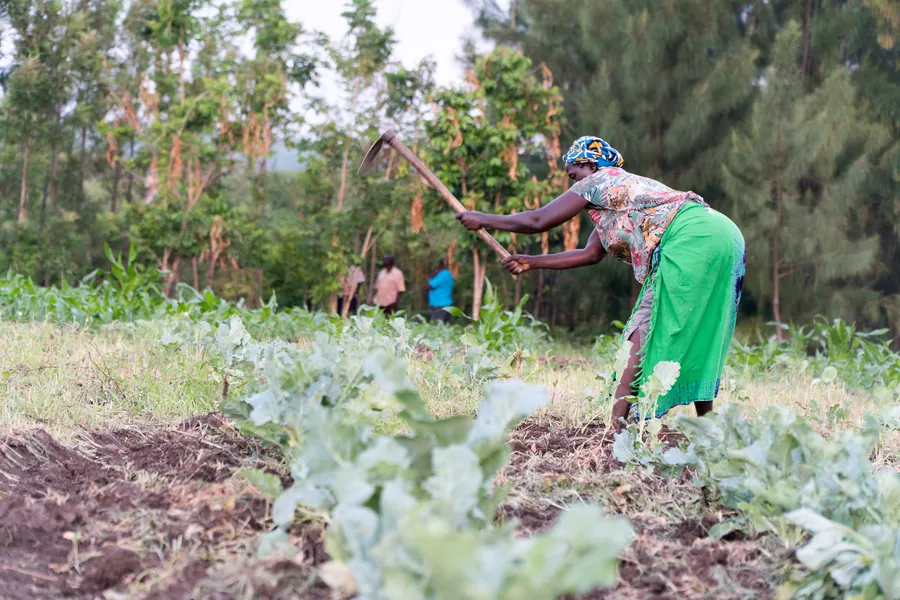 The application of local or indigenous knowledge in crop cultivation minimizes or totally eliminates the use of chemical fertilizers and pesticides, says Macoloo (Image credit: World Neighbors).He points out that commodity-focused Green Revolution crops are introduced from the top with little to no input from farmers.
“Food sovereignty reduces corporate capture and enhances the influence of local agriculture.”
Combating nutrient-poor foods
According to World Neighbors, foreign investors, such as China, are driving African commodity grain and meat consolidation.
Macoloo explains that food sovereignty protects local nutrition security and climate resilience as the farmer is empowered in decision-making about which nutritious foods to grow while minimizing consumption of non-nutritious foods, including and especially ultra-processed foods.
“These foods almost invariably accompany the adoption of Green Revolution techniques that focus on consolidated, industrialized commodity output. More commodity output controlled by transnational corporations and more industrialized food production and consumption.”
“The cultivation methods adopted by farmers empowered through food sovereignty principles, primarily organic, promote climate resilience and therefore increase the production of healthy foods.”
He adds that in Africa, food sovereignty practitioners and civil society have formed an Alliance for Food Sovereignty in Africa network, through which they protest the corporate takeover of African agriculture and influence all stakeholders to support agroecological practices.
Sustainable practices for better nutrition
Previous research has found that switching from conventional to organic crop consumption would result in a 20–40% increase in crop-based antioxidant or (poly)phenolic intake levels without a simultaneous increase in energy (for some compounds over 60%).
Macoloo notes: “The local crops with the strongest health benefits include sweet potatoes (the orange-fleshed variety, which is strong in vitamin A), African leafy vegetables (e.g. Gynandropsis gynandra or dek, Crotolaria brevidens or mitoo, Salanum nigra or osuga, Vigna unguiculata or boo), finger millet, tropical fruits, and bananas.”
Furthermore, specifying the sustainable practices for nutrient-rich foods, which the World Neighbors promotes, includes agroecological practices. Macoloo explains these practices restore soil health, support adaptation to the climate crisis, increase productivity, and minimize excessive inputs.
He spotlights another practice called seed bulking. “Indigenous seeds are sourced, and groups plant them in common (group) fields and share within the group so that every group member has access to the seeds.”
The third practice is a community-managed seed system where they stock seeds and promote sales and exchange, leading to seed sovereignty and reducing dependence on seed companies, says Macoloo. Communities can also pass on the seeds and livestock to each other to share the benefits.
Additionally, collective marketing involves the selling of surplus produce in groups to avoid exploitation of farmers individually by middlemen, he notes.
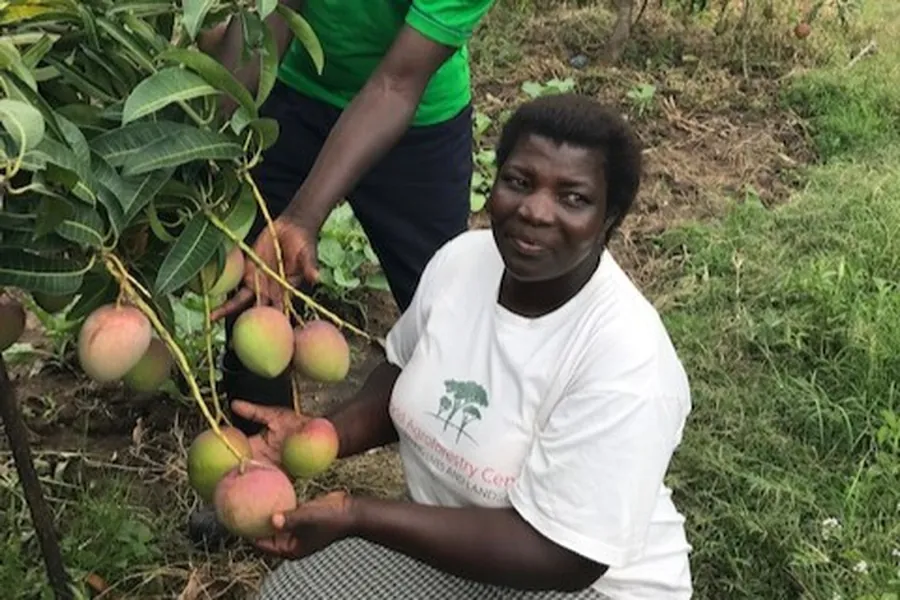 Kisumu, Kenya mangoes (Image credit: World Neighbors).Lastly, since the adoption of the cultivation of non-native crops such as maize and Irish potatoes, farmers began to neglect the traditional crops. “The key ones are cassava, millet, sorghum, and a variety of indigenous leafy vegetables. These became known as ‘orphan crops.’”
“World Neighbors is working with communities to reintroduce these neglected crops as a way of adapting to climate change in order to increase food security.”
Micronutrient supplements for children
New research in The Journal of Nutrition shows that integrating nutrient supplements and water, sanitation, and hygiene (WASH) interventions into agriculture programs improved child micronutrient status in Burkina Faso. Nutrition Insight asks the paper lead author, Lilia Bliznashka, a research fellow at the International Food Policy Research Institute (IFPRI), about whether the program is scalable to other regions.
“Our findings show that nutrition-sensitive agriculture can be a powerful platform for delivering targeted child nutrition interventions. In countries where many families rely on agriculture for their livelihoods and food access, this model is highly scalable.”
“However, agriculture alone is not sufficient to solve anemia, particularly among infants and young children who have high requirements for bioavailable iron and other essential micronutrients that are difficult to meet with family diets alone.”
She adds that the small-quantity lipid-based nutrient supplements (SQ-LNS) were designed to fill micronutrient gaps, providing iron and other micronutrients in palatable, child-friendly form.
“It is recommended that SQ-LNS be provided only during the critical six to 23 month window, when iron and other micronutrient deficiencies are most prevalent and could lead to irreversible long-term development delays. As such, SQ-LNS complements, rather than replaces, local food production.”
In this window, babies transition from exclusive breastfeeding to a nutrient-dense diet.
Bliznashka affirms that the study’s targeted approach is compatible with food sovereignty goals and can help achieve measurable reductions in child anemia while improving iron and vitamin A status.
“The findings support an integrated model in which investments in local food systems are paired with short-term, age-specific nutrient supplementation to protect child nutrition during periods when healthy diets are insufficient to meet all nutrient needs.”
Combined approach to nutrition
Previous research on homestead food production has had mixed micronutrient results. But Bliznashka explains that in another earlier study in the same context, they saw that homestead food production combined with social behavior change communication (SBCC) reduced child anemia.
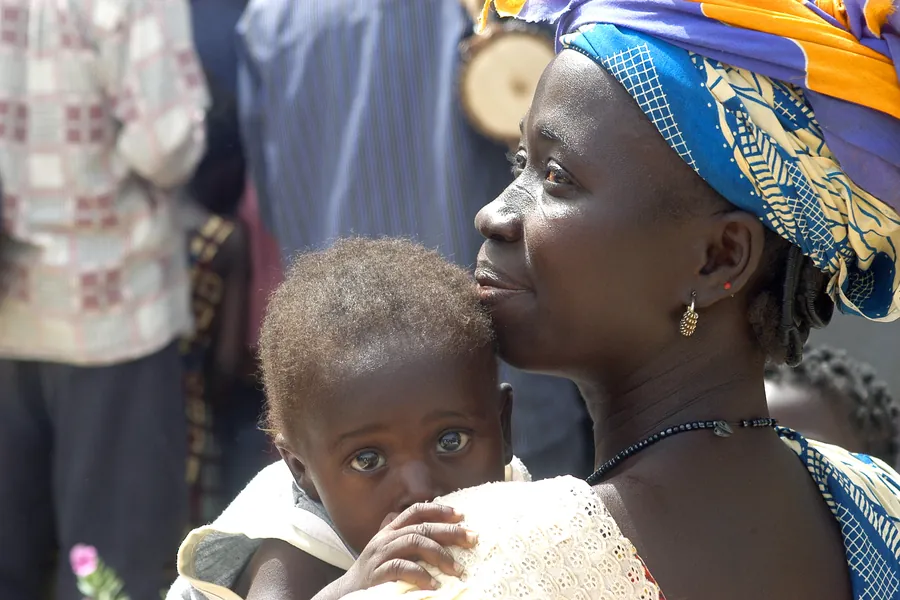 IFPRI suggests SQ-LNS be provided only during the critical six to 23 month window, when iron and other micronutrient deficiencies are most prevalent.“We examined whether longer implementation of these interventions in communities benefited children more than shorter implementation. We compared whether children in communities getting the program for four years had better anemia and micronutrient results than children in communities getting the program for two years.”
“Combining homestead food production with SBCC, WASH, and SQ-LNS interventions had the greatest potential to improve child nutrition and health because these interventions addressed all the key determinants of nutrition — food, health, and care — at the same time.”
She explains that SQ-LNS provided essential micronutrients for optimal child growth and development during the feeding period. Also, agriculture and SBCC contributed to improved diets and nutrient intakes. While WASH aimed to reduce contamination and infections that drive anemia.
Paths to improvement
Bliznashka underscores that infants should be exclusively breastfed in the first six months, but agriculture can improve maternal diets to support healthy breastfeeding. After this period, the study shows that starting SQ-LNS through to the 18th month can complement feeding.
“SQ-LNS is designed to supplement, not substitute, local foods, which remain essential but can be limited during dry seasons or food-insecure periods, and even in non-resource-constrained settings, it can be challenging for infants and young children to meet their micronutrient needs without micronutrient-fortified products.”
She adds that agriculture programs should prioritize diverse foods, more fruits and vegetables, and aquatic and animal-source foods.
“In many African countries, SQ-LNS is imported, so long-term scale requires reliable financing and efficient supply chains. Costs for the product, transportation, and distribution can vary greatly and can reach about US$70 per child per year — roughly 8–10% of annual income for an average household in Burkina Faso.”
“Another major challenge is coordination: this model integrates agriculture, nutrition, WASH, and SQ-LNS, yet governments often budget these sectors separately. Sustainable financing and cross-sector collaboration are essential,” concludes Bliznashka.