

US research has found that the FDA’s “healthy” food labels increase consumers’ selection of healthy foods and snacks and their willingness to pay when the trust in government is high.
The FDA updated its definition of healthy in 2024 for the first time since 1994. The definition was designed to align with nutrition science and federal dietary guidelines. The new study investigated the labels’ meaning to consumers and how it affects their purchasing decisions.
“Our main finding is that trust in government was an important part for people and that they were willing to pay more for that label,” says lead author Katherine Fuller, an assistant professor at Oregon State University.

To be able to put the healthy label on packaging requires the product to contain a minimum amount of nutrients while falling under strict limits for added sodium, sugar, and saturated fats.
Setting a real-world environment
The study, published in Food Quality and Preference, involved 267 shoppers across six grocery stores in Boston, US. They were given tablets displaying nine healthy and six unhealthy products to choose from.
To ensure their decisions had real economic consequences, they were given US$5 in cash to use for purchasing a product and U$10 as a gift card from the store.
 The participants filled in a survey with information about their knowledge of healthy food options, demographics, and their level of trust in the government.“Giving study participants purchasing power in a setting that mirrored a real shopping experience let us better observe how the labels might influence behavior,” says senior author Sean Cash, chair of the Division of Agriculture, Food and Environment at the Gerald J. and Friedman School of Nutrition Science and Policy at Tufts University.
Cash is also an economist studying food policy and consumer behavior.
The participants filled in a survey with information about their knowledge of healthy food options, demographics, and their level of trust in the government.
The study found that consumers generally chose healthy snacks over unhealthy alternatives. They also preferred products with the FDA’s healthy label when compared to other healthy icons or labels.
“Prior findings that consumers are willing to pay more for labeled healthy foods were confirmed, and, additionally, the new results showed that adding a healthy label increases this premium further. For example, consumers were willing to pay ¢59 more on average for a healthy product with an FDA-endorsed label compared to a product with no label,” note the researchers.
Impact of trust in government
The FDA label showed a stronger effect due to its perceived institutional credibility. The study authors note that these findings are consistent with previous research findings that similarly demonstrated how institutional credibility strongly influences consumers’ decision-making.
However, the study also found that the FDA healthy label’s effectiveness varied depending on the degree to which consumers indicated that they trust the government.
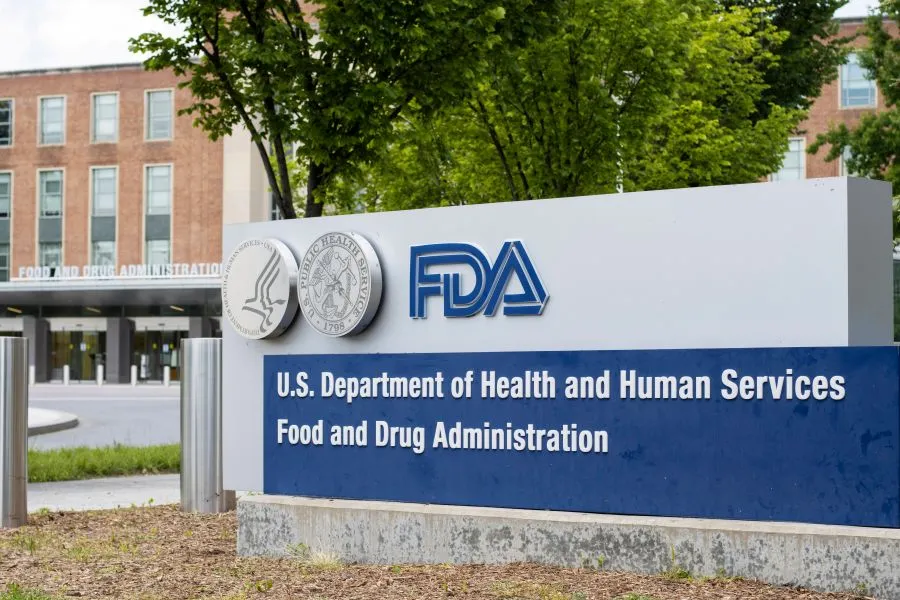 The study found that the effectiveness of the FDA’s healthy label varied depending on the degree to which consumers trusted the government.The study reveals that many consumers have varying levels of trust in food labeling due to deliberate mislabeling, fraud, and past food scares and scandals. Additionally, recent evidence also shows that US citizens have especially low trust in health-related food claims.
“Our findings demonstrate that labels act as signals for consumers, and policy can shape how well those signals work,” says Cash. “When labels are viewed as credible, such as when they have the endorsement of a government agency, they are more likely to influence eating patterns and purchasing habits.”
Fuller adds that there is currently a lot of misinformation about what is healthy and what isn’t healthy. “Having a clear label, supported by scientific research, saying this is healthy because we checked, is important.”
Prior labels from the FDA have been met with conflicting views. Recent research suggested that the FDA’s Nutrition Info Box, proposed last year — a front-of-package label containing information on saturated fat, sodium, and added sugars — may only be useful to consumers with high nutrition literacy.
In recent moves to improve food shopping decisions, California-based researchers designed a nutrition label to help consumers better identify healthier options than the Nutrition Info Box label. The new labels carry a simplified design with “high in” printed on product packaging with excess saturated fat, sodium, and added sugar levels, and also suggest potential health risks associated with these inclusions.