




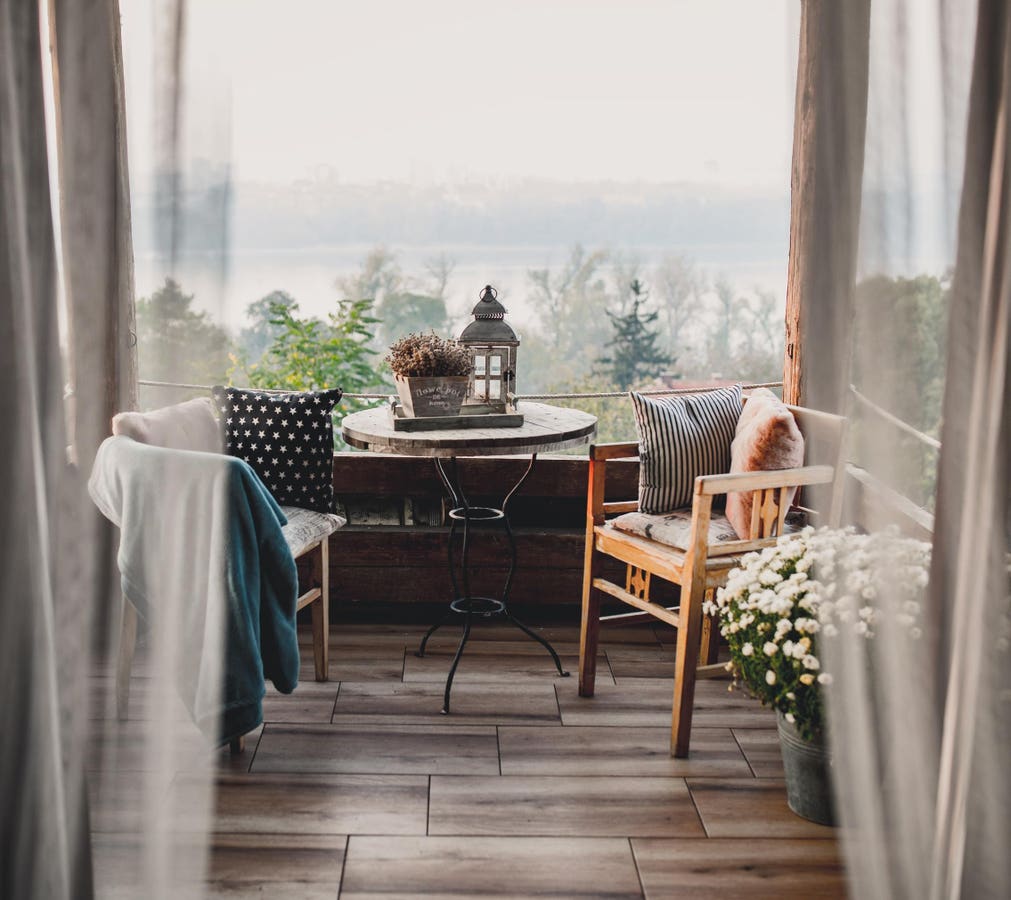
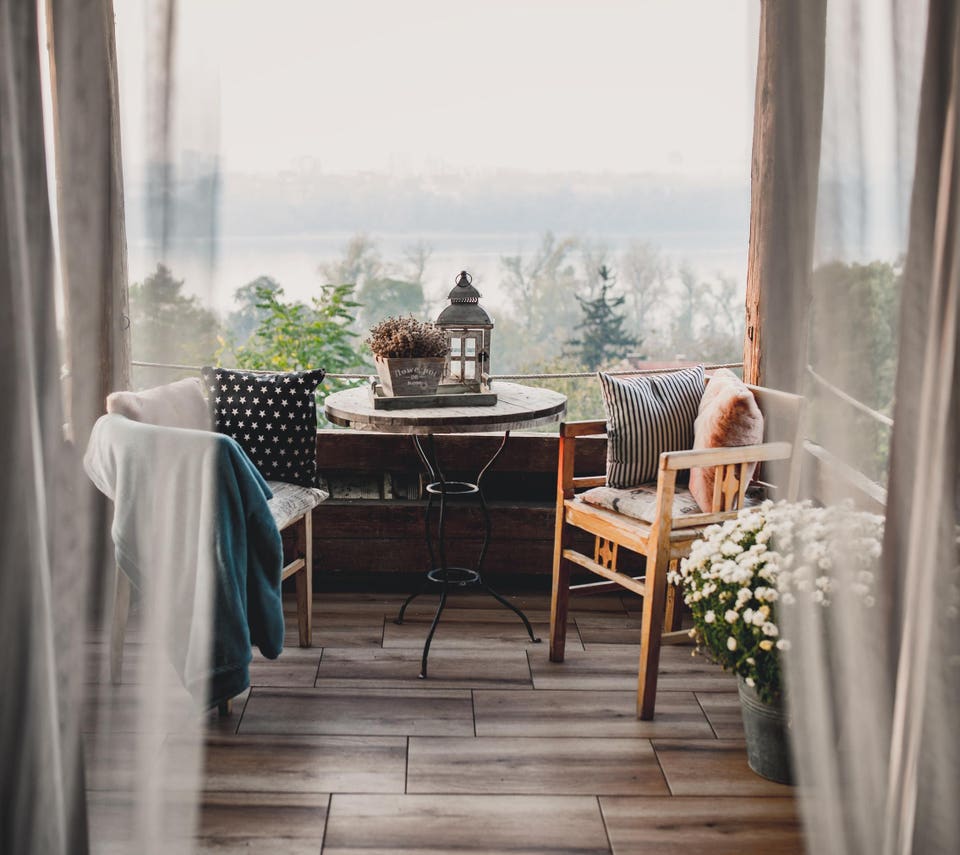
Outdoor living space is a top wellness feature sought by homeowners.
getty
“COGNITION Smart Data shows that consumers are prioritizing features that promote the three facets of wellness—physical, mental, and emotional well-being,” according to a post published last Wednesday on Green Builder Media’s blog. (GBM is the sustainability network that owns the research firm.) The four most-sought-after features, according to the research, are natural daylight, fresh air, filtered water and outdoor living spaces.
“Existing homes provide baseline features, but not necessarily advanced-performance systems,” the data shows, detailing unmet needs. These include healthier, non-toxic materials; more daylight; better water quality, and advanced air quality systems and ventilation. How can homeowners fill the gap in a resale home they own?
1. Add Daylight
This can be achieved by adding solar tubes or skylights that bring more light into dark rooms and hallways. Solar tubes can bring light deeper into a home than skylights can, providing options for first floor rooms in two story homes.
Another way to improve daylight is to change your window coverings or add sheers to drapery panels with double rods; the sheers let sunlight enter while providing privacy. (I did this successfully in my former townhouse’s home office.)
You can also choose a paint that reflects light, rather than absorbing it (like soft whites, creamy beiges and pale grays and blues), and placing large mirrors on the wall opposite the windows to reflect sunlight.
2. Improve Water Quality
Millions of households use the filtered water on their refrigerators for drinking and reverse osmosis systems for washing at the kitchen sink. Neither provides purification for the water you bathe in, brush your teeth and take your vitamins with, or use in your dishwasher or clothes washers.
There are now shower head filters on the market — including designer-friendly models for more upscale bathrooms — that help with hygiene, and a few for bathroom sinks. There are even filters for dishwashers and clothes washers.
By the time you invest in each of these, you might have been better served by choosing an NSF-certified whole house water purification system. Given federal research showing that half of the country’s tap water includes dangerous forever chemicals, this could be your best option for keeping yourself and your household safe. (If you’re building a new home, ask for a whole house system to be installed by the builder.)
3. Improve Indoor Air Quality
Many homebuyers, myself included, paint our rooms before moving in our furniture and appliances. In addition to choosing paints that complement your large pieces and flooring, choose formulations that don’t off-gas into the room. (You’ll identify them with “zero VOCs” on the paint can label and brochure.) You can also improve your home’s indoor air quality by buying new flooring, furniture, bedding and cabinetry that doesn’t off-gas. How do you know?
Here’s one helpful approach. California compels manufacturers selling products in the state to label any that expose buyers to potential harm with a Proposition 65 warning. You can find it on the product’s online description too, usually at the end of the specifications, and you’ll see them from wherever you shop online, not just in California. Many of the most stylish furniture items in big box stores unfortunately have them. Here’s their text: “Proposition 65 warnings advise of exposures to chemicals that may contribute to an individual’s overall lifetime risk of cancer or risk of birth defects or other reproductive harm.”
When it comes to bedding, I look for OEKO-TEX Standard 100 labels when shopping in person and online. Here’s an overview of the standard from the International Trade Centre’s Standards Map. A quick look shows, “OEKO-TEX® STANDARD 100 is one of the world’s best-known labels for textiles tested for harmful substances.” These aren’t fail-safes, as I’m sure a few bad items slip through, but are a time-saving way to shop for products that contribute to better indoor air quality.
Replacing your home’s air filters on a regular schedule also enhances your indoor air quality. (If you smoke, have a wood-burning fireplace and/or pets, that will be more frequent than if you don’t.) You can also buy portable air purifiers to keep in the rooms where you spend the most time. Consumer Reports published a helpful buyer’s guide last year.
4. Add Outdoor Living Space
One of the features that drew me to my San Diego area home was its outdoor living space, something I really missed in most of my previous residences. Having the space though isn’t the same as being able to enjoy it. Yours may lack cover, making gathering on summer afternoons uncomfortably hot, or it may lack privacy. It may not provide protection from insects, especially mosquitos, or be illuminated for nighttime use. Fortunately, all of these conditions can be remedied with easily acquired solutions.
Cantilevered umbrellas provide shade to large seating areas. Lighting can be trickier; solar lights often dim too quickly for extended nighttime entertaining. If you can add an outdoor-rated electric light fixture, hardwired or plugged in, you’ll be able to gather longer.
There are also outdoor-rated heaters and fans to make spending time outside more comfortable. (According to Bon Appetit magazine, the best way to keep mosquitos away from your outdoor dining space is a fan, so there’s a cool double benefit with that option!)
Fencing or freestanding dividers can provide privacy from neighbors’ eyes. If your space is small, as my townhome’s was, consider furniture that multitasks (like storage benches), that rolls away or folds up between uses, or that drops down from a railing, like a bistro table. Even a small balcony can become a delightful outdoor escape with the right furnishings. (Be sure to include plants if there aren’t any in sight!) Bonus if it’s next to your bedroom and you can step outside soon after waking up!
According to numerous sources, including mental health services provider Resources to Recover: “One tremendous benefit of morning sunlight is better mental health. The reason lies in our body’s serotonin and melatonin production. When we get a healthy dose of sun, our body produces more serotonin which eventually converts to melatonin.” Morning sun can help you sleep better at night too.
Last Words
Homeowners are catching on to what architects, builders and designers have long known: Your living space can support or sabotage your health and well-being. This became painfully clear during the pandemic, but it hasn’t waned since then. As GBM posted from a McKinsey report, 84% of consumers say that health and wellness are top priorities for them. “Better sleep, improved nutrition, and overall well-being are not just lifestyle goals. They are outcomes shaped by features within the home.”
If your house, condo, apartment or other living space doesn’t offer these features, know that you can add many for healthier living.