




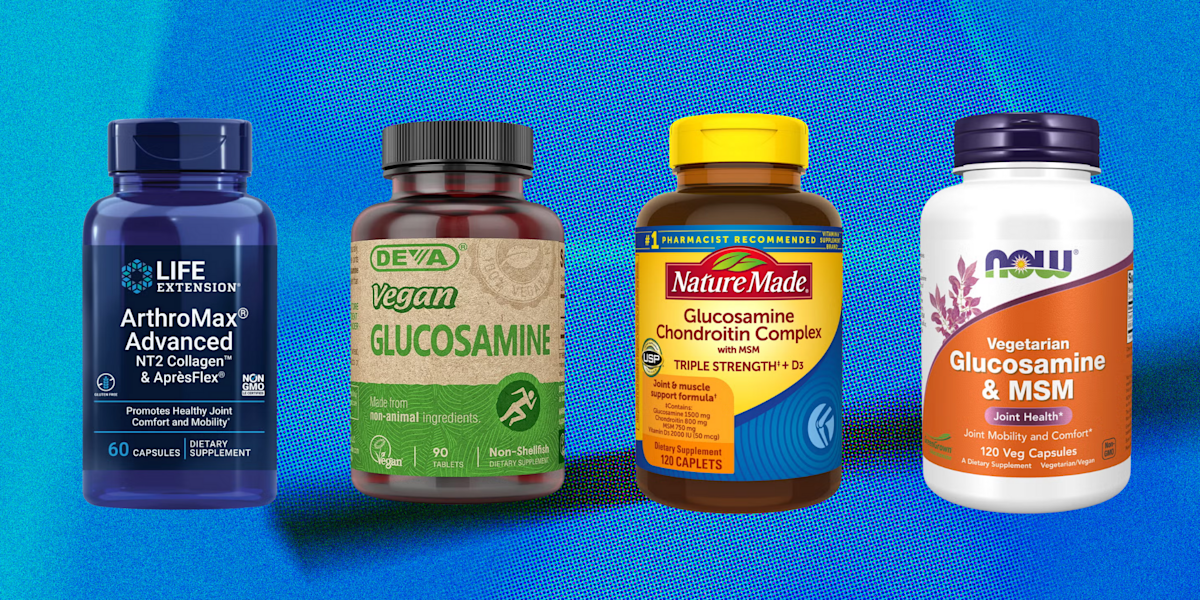
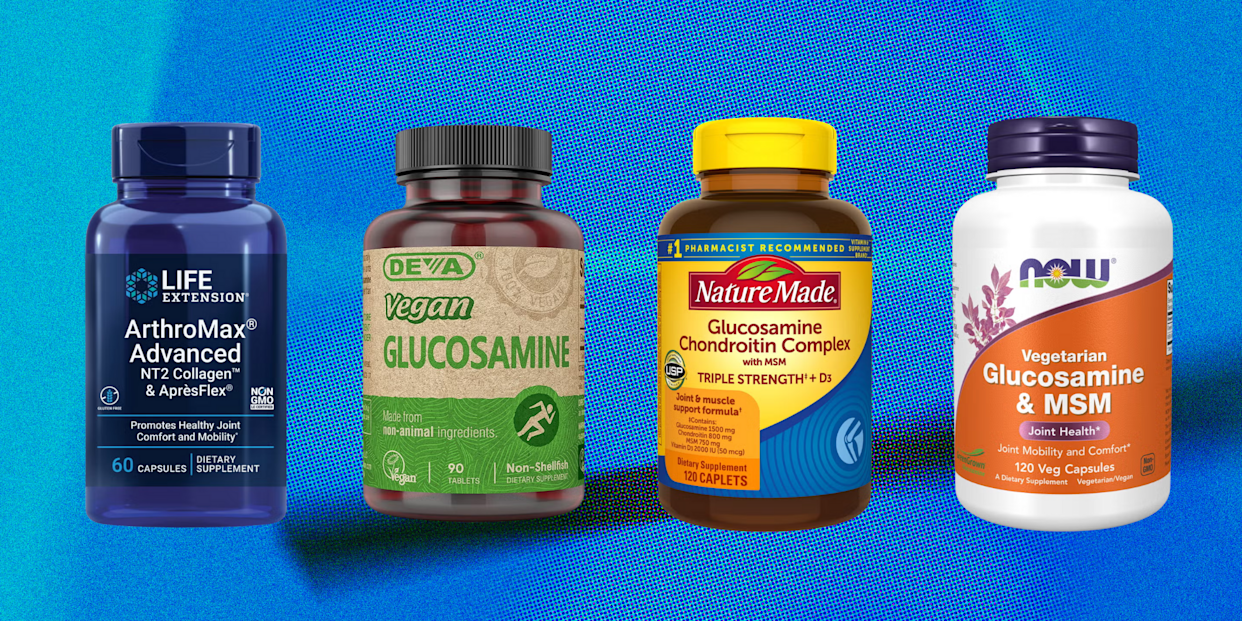
Achy Joints? 9 Supplements Dietitians Recommend
“Hearst Magazines and AOL may earn commission or revenue on some items through these links.”
If you’re dealing with chronic knee pain or stiff, achy joints, you’re far from alone. In fact, nearly 70% of adults over age 50 experience joint discomfort at least occasionally, according to a University of Michigan poll. Your joints are the points where two or more bones are joined together, and they are involved in a wide range of activities, from running and walking to jumping and playing sports.
While aging naturally takes a toll on joints, the good news is that nutrition can make a meaningful difference. A balanced diet packed with anti-inflammatory foods plays a significant role in maintaining your joints’ health and strength, and certain supplements may provide additional support.
The Good Housekeeping Institute Nutrition Lab conducted an expert review of labels, ingredients, dosage, third-party certifications and COAs to narrow more than 30 joint health supplements to the 10 best options below.
Our Top Picks
Though supplements like glucosamine, chondroitin, and methylsulfonylmethane (MSM) may help ease discomfort, they’re not a quick fix or miracle cure. Always speak to your healthcare provider before starting a new regimen–they can review your bloodwork and identify any nutrient deficiencies that might be contributing to joint issues. You’ll also find more details on how we evaluate joint health supplements, along with expert tips for choosing the right one for you, at the end of this guide.
Our registered dietitians in the Good Housekeeping Institute Nutrition Lab review and evaluate every single supplement we recommend in accordance with our dietary supplement methodology. We then have a registered dietitian on our Medical Review Board review each article for scientific accuracy. A supplement should do just that: supplement the diet, not replace high-quality, nutritious food and important healthy lifestyle practices. Check with your healthcare provider before starting any dietary supplement regimen.
How we chose the best joint supplements
Our registered dietitians and health experts in the Good Housekeeping Institute Nutrition Lab carefully evaluate and analyze supplements based on their nutritional expertise, label accuracy, ingredient quality, and available third-party testing data.
To select the best joint supplements, our experts reviewed more than 30 products, considering dosage, serving size, price, servings per container, ingredients, form, and whether the supplement can be taken with or without food. We included options at a range of price points and with different nutrients and compounds to meet a variety of needs. These picks reflect expert analysis rather than in-lab testing.
We prioritize supplements that have been independently tested for purity, potency, and safety by credible third-party organizations and those that meet our internal standards for ingredient transparency and manufacturing quality. Because dietary supplements aren’t reviewed by the U.S. Food and Drug Administration (FDA) for safety or effectiveness before they reach the market, it’s important to research each option carefully and speak with your healthcare provider before adding new supplements to your routine.

Philip Friedman
What to look for when shopping for a joint supplement
There are various types of joint supplements, and finding the right one for your personal needs can be challenging. Here are a few things to keep in mind while shopping:
✔️ Type: You’ll notice that joint health supplements range from single-nutrient ones like vitamin D to more elaborate complexes with functional ingredients. Consult with your healthcare provider to determine the best choice for you. They may want to conduct bloodwork to determine if any nutrient deficiencies are affecting your joints.
✔️ Form and size: Check the serving size and consider the size of the pill itself. Are you okay with one large pill daily, or would you rather take a few smaller ones throughout the course of the day to meet your needs? You’ll notice that many joint supplements have large serving sizes or large pills. Perhaps a powdered or liquid form is more practical for you. Determine what works best for you and your lifestyle.
✔️ Price: Joint supplements can significantly vary in price, and more expensive options aren’t necessarily better. Additionally, each bottle contains a different number of pills, and the serving size can vary. To facilitate accurate comparison, we have included information on the cost per dosage. Keep in mind that complexes containing more than one nutrient will likely be more expensive.
✔️ Quality: Check the ingredients to ensure there are no artificial additives in the supplement itself. It’s also essential to look for third-party testing by credible institutions, such as USP, NSF, or ConsumerLab.com, to ensure quality standards, and that what is on the product label is, in fact, what you’ll be consuming.

Hearst Owned
Which supplements are good for joints?
Joint health supplements typically include a variety of ingredients to alleviate joint pain and other symptoms of osteoarthritis. The major ingredients that you’ll see in most of these products include:
✔️ Glucosamine: A substance that naturally occurs in the body and is a building block for cartilage, the connective tissue that cushions the ends of bones within the joints.
✔️ Chondroitin: A substance found in cartilage around joints that helps the cartilage retain water.
✔️ Fish oil: Composed of two omega-3 fatty acids known as eicosapentaenoic acid (EPA) and docosahexaenoic acid (DHA), which are the two main fatty acids found in fish.
✔️ Methylsulfonylmethane (MSM): An organic form of sulfur that may reduce pain and swelling and improve symptoms in people with osteoarthritis.
✔️ Boswellia: Also known as frankincense, this is an extract derived from the resin of the bark of the Boswellia tree. Limited research suggests that it may relieve joint discomfort in as little as eight weeks.
✔️ Turmeric: A root vegetable that contains the polyphenol curcumin, which is the active compound that gives it its vibrant yellow color and offers anti-inflammatory benefits that limited research shows may alleviate joint pain.
✔️ Collagen: An abundant protein in the body that provides structure and support to muscles, bones, connective tissues, and more. There are different types of collagen, but type II has shown promise with osteoarthritis.
✔️ Hyaluronic acid: A gel-like substance that plays a role in lubricating joints and in the growth of cartilage and bone. It can even help reduce joint inflammation and is available in oral supplements and via injection.
Hearst Owned
Do joint supplements have side effects?
Most of the ingredients in joint supplements are generally recognized as safe. Still, you’ll want to speak with your healthcare provider to ensure the product you select is compatible with your current medications, medical status, and any relevant conditions. For example, if you are on blood thinners, your doctor may advise against joint supplements that contain glucosamine, chondroitin, and other ingredients.
Although these supplements are generally well-tolerated, some mild side effects may include nausea, heartburn, diarrhea, or constipation, particularly in supplements with glucosamine and chondroitin. Most of these options should be taken with food to optimize absorption and minimize digestive upset; however, please refer to each supplement’s instructions on the packaging for specific details on when and how to take it.
Another consideration is allergies, especially shellfish allergies, as many joint supplements are derived from these sources. Some vegan options are available, which we have included on our list.
Hearst Owned
Why trust Good Housekeeping?
As director of the Good Housekeeping Institute Nutrition Lab, Registered Dietitian Stefani Sassos handles all nutrition-related content, product testing and evaluation. She stays up-to-date on the latest research to provide evidence-based reporting on all things diet and nutrition. Stefani oversees supplement analysis for Good Housekeeping and has evaluated categories including multivitamins, vegan protein powders, and vitamin D.
Hearst Owned
You Might Also Like