




Background/Objectives
Carbohydrate-enriched diets and sedentary behavior contribute to diabetes risk. However, their impacts on glucose metabolism in abdominal (ASAT) and gluteal subcutaneous adipose tissues (GSAT), especially considering sex differences, remain unexplored.
Subjects/Methods
Twenty (median age 29.2 years, median BMI 23.1 kg/m2) healthy participants (10 females) underwent mixed-feeding trials lasting 320 min, with carbohydrate-enriched meals following either prolonged sitting (SIT) or interrupted prolonged sitting (ACTIVE) in a randomized crossover design. Continuous glucose monitoring (CGM) was inserted simultaneously at abdominal and gluteal fat depots. Body composition was quantified by dual-energy x-ray absorptiometry. Oral glucose tolerance test was performed for measuring insulin sensitivity and resistance. In vitro experiments using paired human abdominal and gluteal preadipocyte cell lines were conducted to investigate molecular mechanisms.
Results
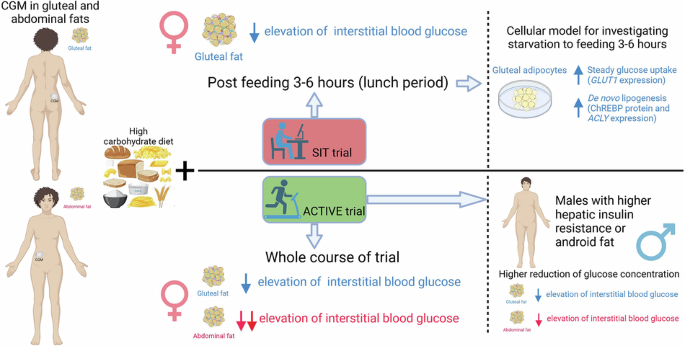
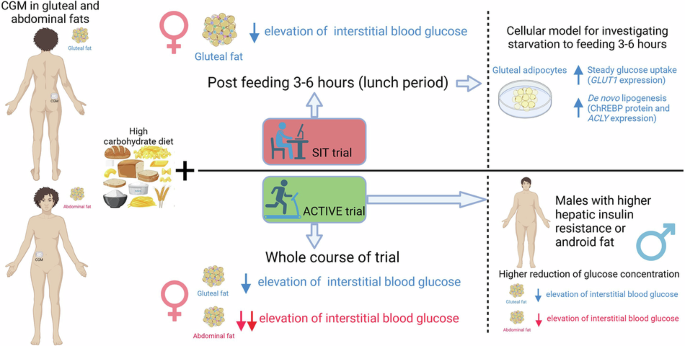
In the SIT trial, GSAT CGM showed a slower increase in interstitial glucose during lunch compared to ASAT CGM, particularly in females. In the ACTIVE trial, intermittent brisk walking led to numerically lower interstitial glucose levels in both ASAT and GSAT CGM, with the most significant impact observed in female ASAT CGM. While males with higher hepatic insulin resistance or android fat displayed a notable correlation with decreased interstitial glucose levels in the ACTIVE trial. Our in vitro experiments further revealed steady glucose uptake (GLUT1 expression) and de novo lipogenesis (ChREBP protein) were specifically enhanced in gluteal adipocytes during post-feeding 3–6 h.
Conclusions
Breaking up prolonged sitting improves postprandial glucose control. Whereas gluteal fat depot may play roles to stabilize carbohydrate-enriched diets-induced hyperglycemia.
 The alternative text for this image may have been generated using AI.