




Ratio Decidendi is a recurring series by Stephanie Barclay exploring the reasoning – from practical considerations to deep theory – behind our nation’s most consequential constitutional decisions.
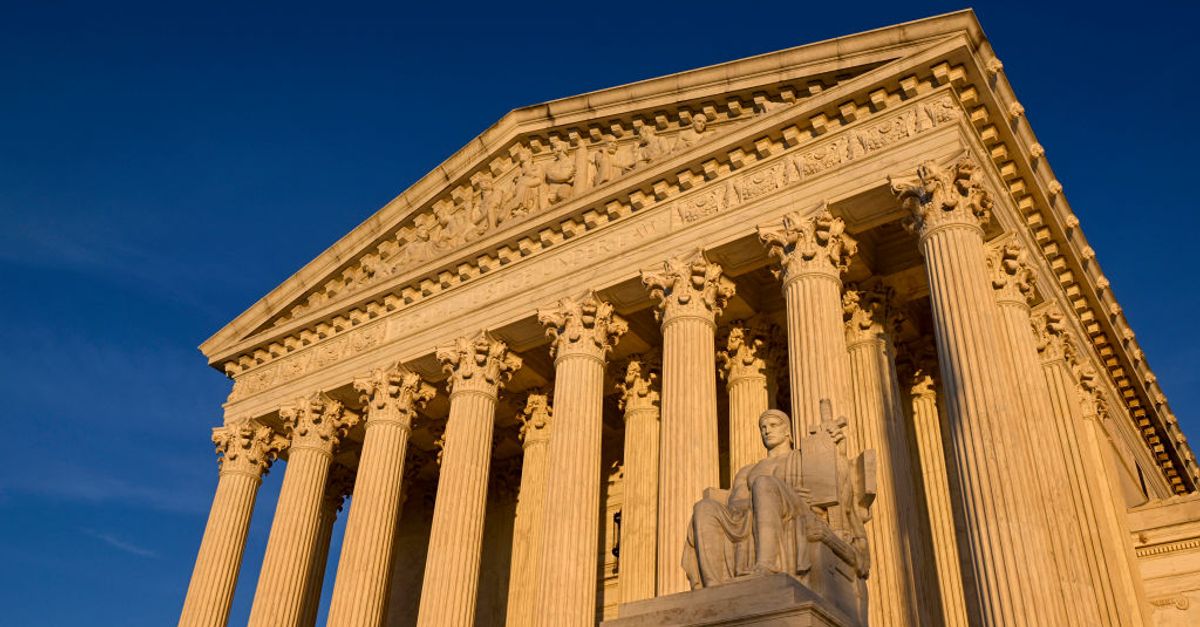
The Supreme Court will soon consider whether to grant cert in U.S. Conference of Catholic Bishops v. O’Connell, a case asking how broadly the First Amendment’s church autonomy doctrine – which prevents courts from delving into internal church affairs – reaches. The Supreme Court recently reiterated that the doctrine protects the “independence of religious institutions in matters of faith and doctrine” and “matters of church government.” This case concerns how much independence the doctrine actually guarantees.
The U.S. Court of Appeals for the D.C. Circuit held below that it provides very little. The lower court treated the doctrine as only a defense to liability instead of an immunity against intrusive merits proceedings; in other words, civil courts may not force churches to pay damages for a religious dispute, but they can require churches to spend their time and tithes litigating such disputes. Most other courts to consider the question disagree, as do 11 dissenting judges from the minority of circuits that have held otherwise, including Judges Neomi Rao and Justin Walker of the D.C. Circuit.
Based on its liability-only holding, the D.C. Circuit also denied immediate appeal of a church autonomy defense. That holding joins four other courts and deepens a split with six disagreeing courts, including the U.S. Court of Appeals for the 5th Circuit, which recently explained in an opinion by Judge Andrew Oldham that church autonomy can receive interlocutory (that is, immediate) review to prevent irreparable First Amendment harm. Again, 11 dissenting judges have agreed with the 5th Circuit.
Finally, the D.C. Circuit adopted a rule that allows courts to avoid the church autonomy doctrine entirely if a plaintiff plausibly alleges that the claims arise under “neutral principles of law,” a position that four courts accept, five other courts have rejected, and 16 dissenting or concurring judges have warned will render the doctrine a dead letter.
Each of those three issues – whether church autonomy provides a form of immunity from suit, whether it can receive interlocutory review, and whether it can be circumvented by the so-called “neutral principles” approach – is now before the Supreme Court.
And the underlying context here is striking. The questions presented arise from a putative class action that a Catholic parishioner filed against the United States Conference of Catholic Bishops. The parishioner donated to Peter’s Pence, an annual religious offering that Catholics around the world have given to for over 1,000 years to support the ministry of the pope. O’Connell claims a description he heard from the pulpit at Mass about the offering’s religious uses misled him into thinking it would be immediately and exclusively used for certain religious purposes and not invested or used for others. When he learned he was mistaken, O’Connell sued and requested that USCCB return both his offering and the offerings of millions of other Catholics nationwide. He also sought an injunction dictating how the Catholic Church describes and uses Peter’s Pence.
Given the apparent intrusiveness of such claims, the importance of the questions presented, and the sharp division among the lower courts, 15 amicus briefs – one of which I joined – urged the court to take the case.
Church autonomy as an immunity from suit
Reading the briefing, the parties seem to agree that the threshold issue in this case is whether church autonomy operates as an immunity from suit. An immunity means a constitutional, statutory, or common law protection that, when applicable, protects parties not only from being found liable in a lawsuit, but also from the burdens of litigating the case.
Supreme Court precedent indicates church autonomy provides immunity protections. In early church autonomy decisions like the 1872 case of Watson v. Jones and 1952’s Kedroff v. Saint Nicholas Cathedral, the Supreme Court held that religious organizations’ freedom from secular control necessarily includes freedom even from civil courts’ review of protected ecclesiastical decisions. And in the 1979 case of NLRB v. Catholic Bishop, the court explained that the “very process of inquiry,” not just “final decisions,” can violate the religion clauses by prying into such religious matters. These principles were reiterated in the Supreme Court’s more recent precedent, 2012’s Hosanna-Tabor v. EEOC and 2020’s Our Lady of Guadalupe v. Morrissey-Berru. There, the court reiterated that courts are bound to “stay out” of matters that fall within the First Amendment’s church autonomy doctrine.
The D.C. Circuit’s decision deepens a sharp existing split on this point. Judge Oldham recently authored a 5th Circuit opinion in McRaney v. NAMB concluding that church autonomy “is a constitutional immunity from suit” that protects from “all judicial intrusion.” Echoing the Supreme Court’s warning against the “very process of inquiry” of using judicial power as leverage in religious disputes, the 5th Circuit explained that churches cannot be “made whole by a take-nothing judgment months or years” after the state has already intruded into the church. That holding is consistent with the recent U.S. Circuit Court of Appeals for the 9th Circuit Court’s opinion in Markel v. Union of Orthodox Jewish Congregations, which described church autonomy’s scope as “prohibit[ing] merits discovery and trial.” The U.S. Court of Appeals for the 3rd, 4th, and 6th Circuits have similar case law recognizing church autonomy as a structural limit on the power of judges to interfere in religious matters. And several state high courts have repeatedly interpreted the federal constitution as providing an immunity from suit.
At a practical level, it seems those dissenters were prescient. One amicus brief here chronicled the results of cases that had denied threshold First Amendment review in the 2nd and 10th Circuits, showing how those cases resulted in extensive and unconstitutional church-state entanglement – including a district court’s successful pressure to settle to avoid the “very expensive” “discovery process, preparation for trial, [and] lengthy trial,” and a plaintiff’s religiously intrusive depositions of church senior hierarchs over matters concerning the election of a bishop. Even the 5th Circuit’s decision in McRaney expressed regret at an earlier decision in the case that let it proceed as far as it had, which resulted in irreparable harm to First Amendment rights via intrusive discovery into religious matters that should have been barred at the threshold by the church autonomy doctrine.
Wrongful denials of church autonomy and collateral appeals
If this “immunity from suit” language sounds familiar, it’s because the court recently addressed the interaction between collateral-order appeals and immunities. In GEO Group v. Menocal, the court stated that a party’s entitlement, if any, to a collateral-order appeal normally “turn[s] on whether the defendant has asserted a defense to liability or instead an immunity from suit.”
That makes sense. A collateral-order appeal is an immediate appeal from a lower-court order that does not finally resolve the full case, but does resolve a sufficiently important matter that, absent prompt review, could be irreparably harmed. The three-part test for collateral-order appeals asks whether the challenged order conclusively determines the disputed question, resolves an important issue completely separate from the merits, and would be effectively unreviewable on appeal from a final judgment. Where a defense operates as an immunity from suit, all three boxes are checked: the protection would be entirely lost if the party raises the immunity early in the case, the court wrongfully denies it, and the party has to go through the very suit the immunity exists to prevent before it can have the wrongful denial reviewed.
Because courts have split on the question of whether church autonomy operates as an immunity from suit, they have also split on whether wrongful denials of church autonomy defenses are entitled to collateral-order appeal. For instance, in an opinion written by Judge Edith Jones, the 5th Circuit reviewed an interlocutory order wrongfully denying a motion to quash a subpoena seeking the Catholic Church’s internal communications. By contrast, the same courts that have concluded that church autonomy is only a defense to liability have also concluded that the denial of a church autonomy defense isn’t entitled to an interlocutory appeal.
These latter courts have been less solicitous of First Amendment rights than they are of the comparatively “humdrum” orders they regularly accept for immediate appeal. The D.C. Circuit, for instance, recently recognized that an order allowing the disclosure of a single person’s private medical information was immediately appealable because of the privacy interests at stake. Yet, reasoning that church autonomy provided no similar protection for internal church governance interests, the D.C. Circuit had no similar concerns here over the words spoken at Mass about an ancient religious offering spanning a millennium.
The “neutral principles” approach and church autonomy
Finally, the D.C. Circuit avoided the Supreme Court’s church autonomy precedent in part by relying on the so-called “neutral principles” approach. That approach was developed in the church property context, where two schismatic factions argue that they are the one “true” church entitled to ownership of the house of worship. As a possible method to resolve such disputes, where it is impossible to identify which church is the “true” one without taking ecclesiastical sides, the Supreme Court’s 1979 decision in Jones v. Wolf allowed courts to instead consider “neutral” principles of property and trust law to determine which faction owned the property. But the court cautioned that the approach was narrow, and it has never applied it outside the unique church-property context. Yet the D.C. Circuit extended this approach to cover all church autonomy defenses, holding that focusing on “neutral” laws allows courts to avoid “doctrinal disputes” and thus “steer[] clear of any violations of the church autonomy doctrine.”
That was surprising. Not only has the Supreme Court never extended Wolf outside the property context, it rejected arguments that it should be extended in the 1976 case of Serbian Eastern Orthodox Diocese v. Milivojevich and 2012’s Hosanna-Tabor Evangelical Lutheran Church and School v. EEOC. In Hosanna-Tabor, the arguments were pressed not only by the solicitor general on behalf of the EEOC but also by the plaintiff-respondent’s counsel, Sri Srinivasan (now chief judge of the D.C. Circuit, and a member of the O’Connell panel below), who quoted Wolf as plaintiff-respondent does here to argue that imposing “neutral” requirements on matters of internal church governance was entirely unobjectionable. Hosanna-Tabor did not take up this invitation.
The U.S Courts of Appeals for the 5th, 6th, and 11th Circuits, along with two state high courts, have done the same. And where courts have begun accepting it more recently, such as in this case and in the 2nd Circuit’s Belya v. Kapral decision, 16 federal appellate judges have registered their strong disagreement, warning that adopting the Wolf rule will “eviscerate” church autonomy and render it “a dead letter.” These judges note that nearly every plaintiff relies on facially “neutral” legal principles in crafting a complaint, meaning adoption of the neutral principles approach ultimately swallows the constitutional rule.
Conclusion
Whatever else church autonomy means, it has to mean something before a liability determination. Consider what already happened in the lower court here. O’Connell’s counsel served discovery requests demanding USCCB turn over its private correspondence with the Holy See about Peter’s Pence, account for how the pope has used Peter’s Pence to lead the Catholic Church, and divulge the identities of each of the millions of Catholics that have donated to Peter’s Pence in the United States.
That is not idle litigation pressure. As O’Connell’s trial counsel noted at oral argument in the trial court below, he recently settled another class-action fraud case over religious offerings, Murphy v. Gospel for Asia. That settlement came after the district court allowed him to enforce over 1,000 requests for admission and related discovery demands over the religious defendant’s objection that the discovery burden alone would be crippling. Religious defendants facing comparable pressures routinely settle rather than open their internal deliberations to civil discovery – even when they have winning defenses on the merits. A doctrine that protects only against ultimate liability, and not against the suit itself, seems to protect the church from very little of what church autonomy was designed to prevent.
Justices Samuel Alito, Clarence Thomas, and Brett Kavanaugh recently underscored the point in their Cunningham v. Cornell University concurrence: the motion to dismiss is “the whole ball game” in cases like these, because once meritless claims survive that stage, the intrusion and burden of discovery does the plaintiff’s work for him. Church autonomy without a meaningful immunity from suit collapses into an after-the-fact damages defense – somewhat useful to the institution that survives the litigation, entirely useless to the institution that settles to escape it.
Those are the practical stakes. The doctrinal stakes run deeper. Each of the three questions in O’Connell – whether church autonomy is an immunity from suit, whether its wrongful denial supports interlocutory review, and whether plaintiffs can route around it by pleading “neutral principles” – turns on the same structural question: how the First Amendment allocates authority between civil courts and religious institutions over the internal life of the church. The D.C. Circuit and several other courts have given one answer to that question. Eleven dissenting judges, five other circuits, and the Supreme Court’s church autonomy decisions have given a better one.