




Julie Evanicky ’24 did what most 18-year-olds do when choosing a college major: she searched online. She’d known from young age she wanted to pursue a career in medicine. She just didn’t know which major would actually get her there and make her more competitive when entering the profession.
“I saw that nutrition had essentially everything that would encompass prerequisites for medical school,” she said.
That instinct is now paying off in ways she didn’t fully anticipate. Today, Evanicky is a master’s student in the Texas A&M Naresh K. Vashisht College of Medicine applying to medical school this spring and spending her evenings teaching anatomy labs to nutrition undergraduate students on the same path she followed.
The lab though, she is quick to point out, is the one she wishes had existed when she was sitting in their seats.
“If you’re unsure of what you want to do, but you know you want to do something healthcare related, majoring in the human health track of nutrition is the way to go. I’m incredibly proud of my nutrition degree.”
Julie Evanicky ’24
Texas A&M Department of Nutrition Former Student
Learning on humans, not hypotheticals
The Department of Nutrition’s anatomy courses were built in partnership with the College of Medicine gross anatomy faculty and mirrors elements of the medical school curriculum at the undergraduate level. Teaching assistants are recruited directly from the College of Medicine; students who have already completed medical gross anatomy. Evanicky is one of four and is now in her second semester leading the nutrition labs.
She took anatomy and physiology as an undergraduate in a different department, where students studied cats. The nutrition lab focuses solely on the human body. The difference, she said, is significant.
“We have muscles that cats don’t have and cats have muscles that we don’t have,” she said. “Having a human model is really great because everything’s very interconnected. You really can’t focus on one thing at a time in the body because it really is all related.”
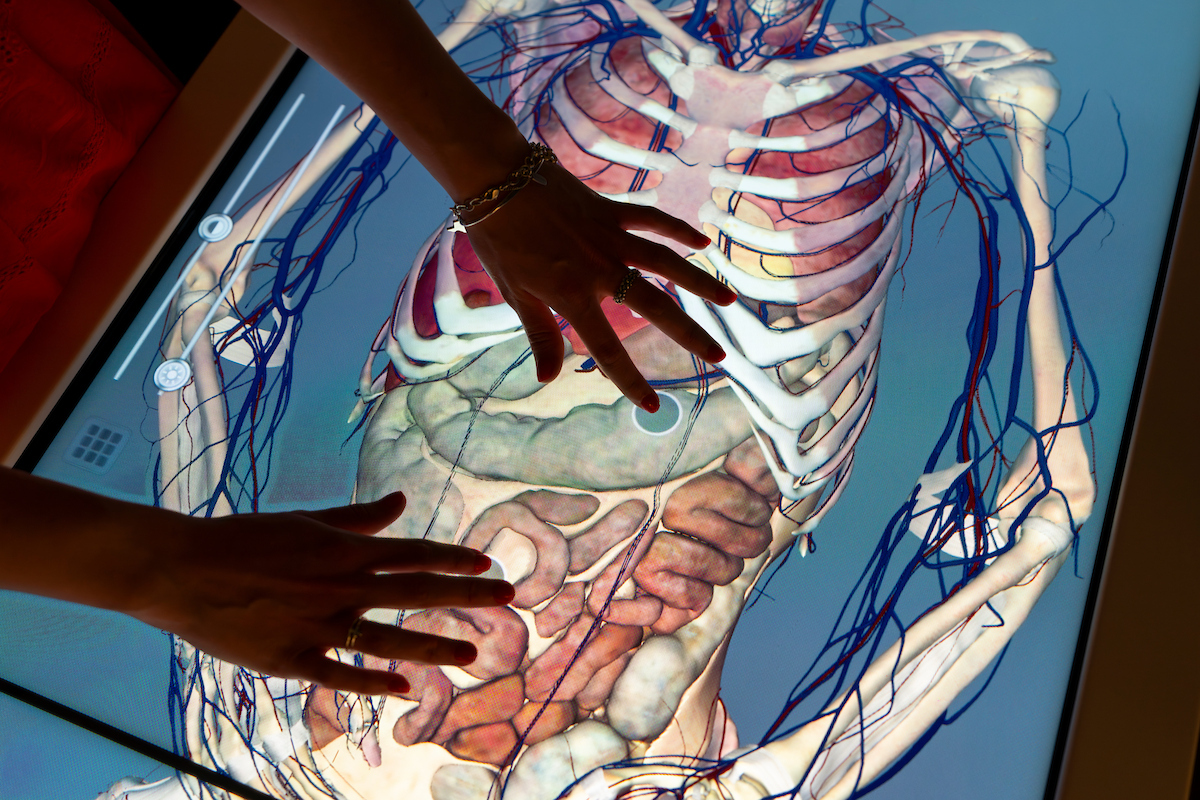 The Department of Nutrition’s anatomage tables allow students to learn from one of five real 3D digitalized human cadavers in real time, complimented with human skeletal models. (Michael Miller/Texas A&M AgriLife)
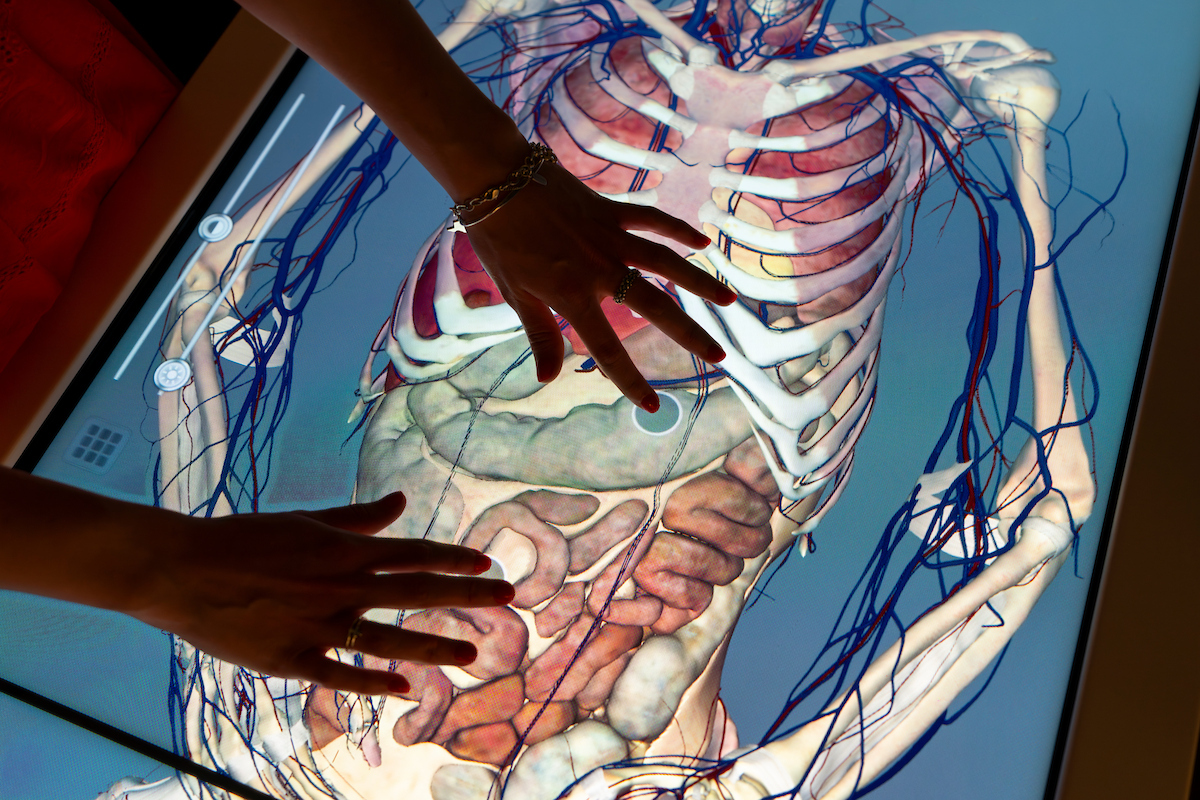
In the nutrition department’s labs, students work on anatomage tables, 6-foot interactive displays that let them learn from one of five real 3D digitalized human cadavers in real time, complimented with human skeletal models. While studying the heart, students pull up electrocardiogram, or EKG, readings and even watch blood flow. Quizzes and learning modules are built into the tables to keep the energy high during three-hour lab sessions.
“Being hands on with real human systems is truly the most important, and honestly really fun, aspect of this class,” Evanicky said.
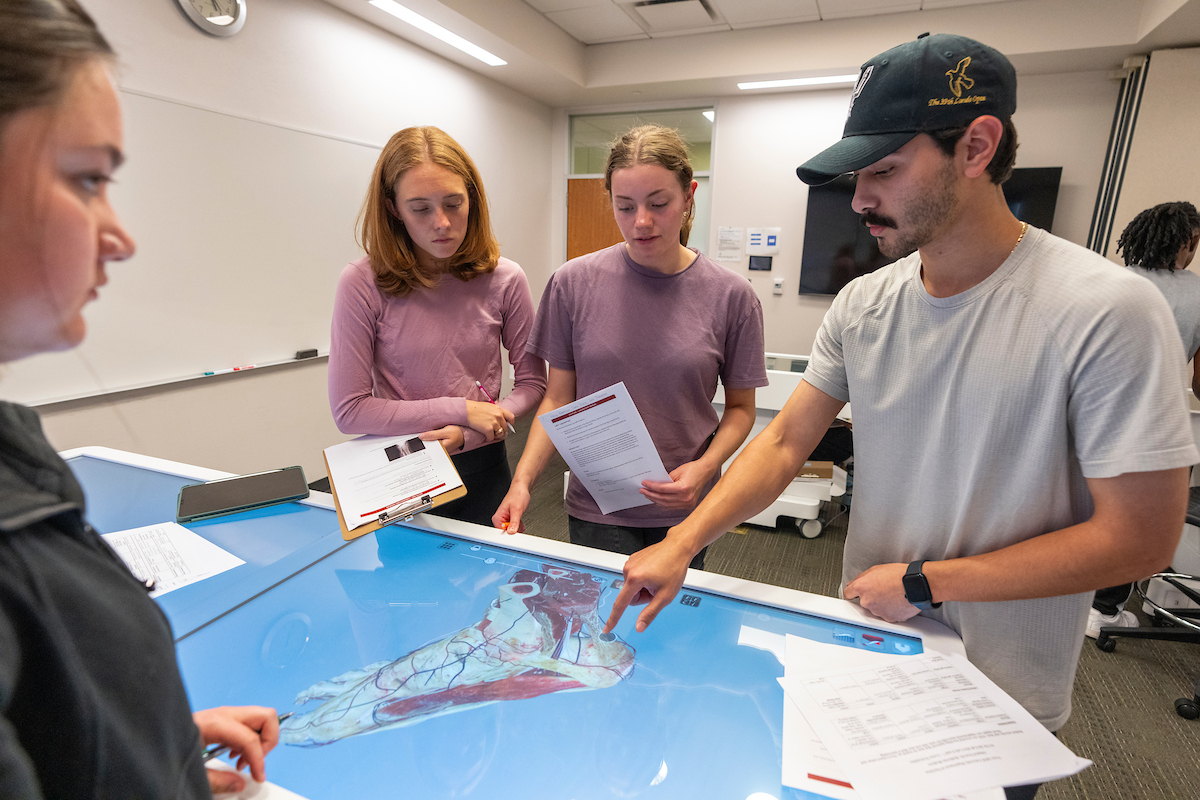 Graduates of the Department of Nutrition have a 67% medical school acceptance rate, which is well above the university’s average of 46%. (Michael Miller/Texas A&M AgriLife)
The experience sometimes leads to unexpected learning moments for the students. One lab, she recalled, featured a cadaver with an unusually enlarged spleen. Seven different student groups raised their hands, each asking the same question: am I looking at what I think I’m looking at?
“They were all so curious and said, ‘Oh my gosh, this is so applicable,’” after she explained various reasons why the spleen might be enlarged, she said. “It was a nice ah-ha moment to witness for them.”
A head start most programs don’t offer
The advantage extends beyond learning anatomy. The department’s curriculum weaves chemistry, physiology, genetics and microbiology through the lens of human health, including a nutrition-focused human biochemistry course that ranks among Evanicky’s favorites from her time as a student.
“My medical biochemistry class was essentially a nutrition-focused biochemistry course credit for my degree,” she said. “There’s a lot that I saw in undergrad because I was a nutrition major that many of my peers were learning for the first time.”
Could nutrition be your path to medical school?
The human health track in the Texas A&M Department of Nutrition is built to take you further, whether your goal is medicine, PA school, dentistry or beyond.
Those friends, pursuing medicine from other pre-health tracks, are encountering content in graduate school that Evanicky covered as an undergraduate. She arrived at the College of Medicine already familiar with the science and systems, and she reflected upon how much easier the transition into her graduate program has been.
The department reports a 67% medical school acceptance rate for nutrition graduates. Roughly half of students in the nutrition anatomy course are on a track toward a health profession school, with goals ranging from medicine and dentistry to physician assistant and nursing programs. One student was recently accepted to her first-choice medical school.
For students aspiring to go to medical school or other human health programs, Evanicky’s advice is as straightforward as it gets.
“If you’re unsure of what you want to do, but you know you want to do something healthcare related, majoring in the human health track of nutrition is the way to go,” she said. “I’m incredibly proud of my nutrition degree.”

Share or print this post: