





You don’t have to conquer a marathon to experience the many benefits running can bring. And nor, it might surprise you to learn, do you need to be notably fit to start the sport. You just step out of your front door and set off.
If you’re currently a walker who wants to progress to running, exercise physiologist and OneTrack Club founder Anthony Fletcher is the man to help you do it. Here are his tips on everything you need to know before you lace up your trainers.
How to start
If you are starting from zero, Fletcher recommends a simple run-walk protocol to ease yourself in and build up the strength and fitness running requires – provided there is no medical reason you ought to avoid the sport.
You might start by jogging or power walking for 30 seconds, then immediately following this with a relaxed 60-second recovery walk. Repeat this sequence five times.
When you feel comfortable doing this, you can progress the power walking portions to a run, or up the number of repetitions.
Another non-negotiable Fletcher prescribes for new runners is plyometric exercises. These are explosive movements – jumping is the best-known example – that develop the tissue tolerance needed to handle the rigours of running. Running is, after all, just a series of small jumps.
“Your muscles and tendons repeatedly go through the stretch-shortening cycle while running – they lengthen when you land then contract to generate force,” Fletcher explains. “If you run a kilometre, that could be 1,000 steps, or 1,000 jumps. Plyometric exercises prepare you for this.”
Start by doing five to 10 small jumps on the spot. Then, when you feel confident doing this, you can build up to performing pogos for 10 seconds, then 20, then 30 and so on, while also increasing the height of your jumps.
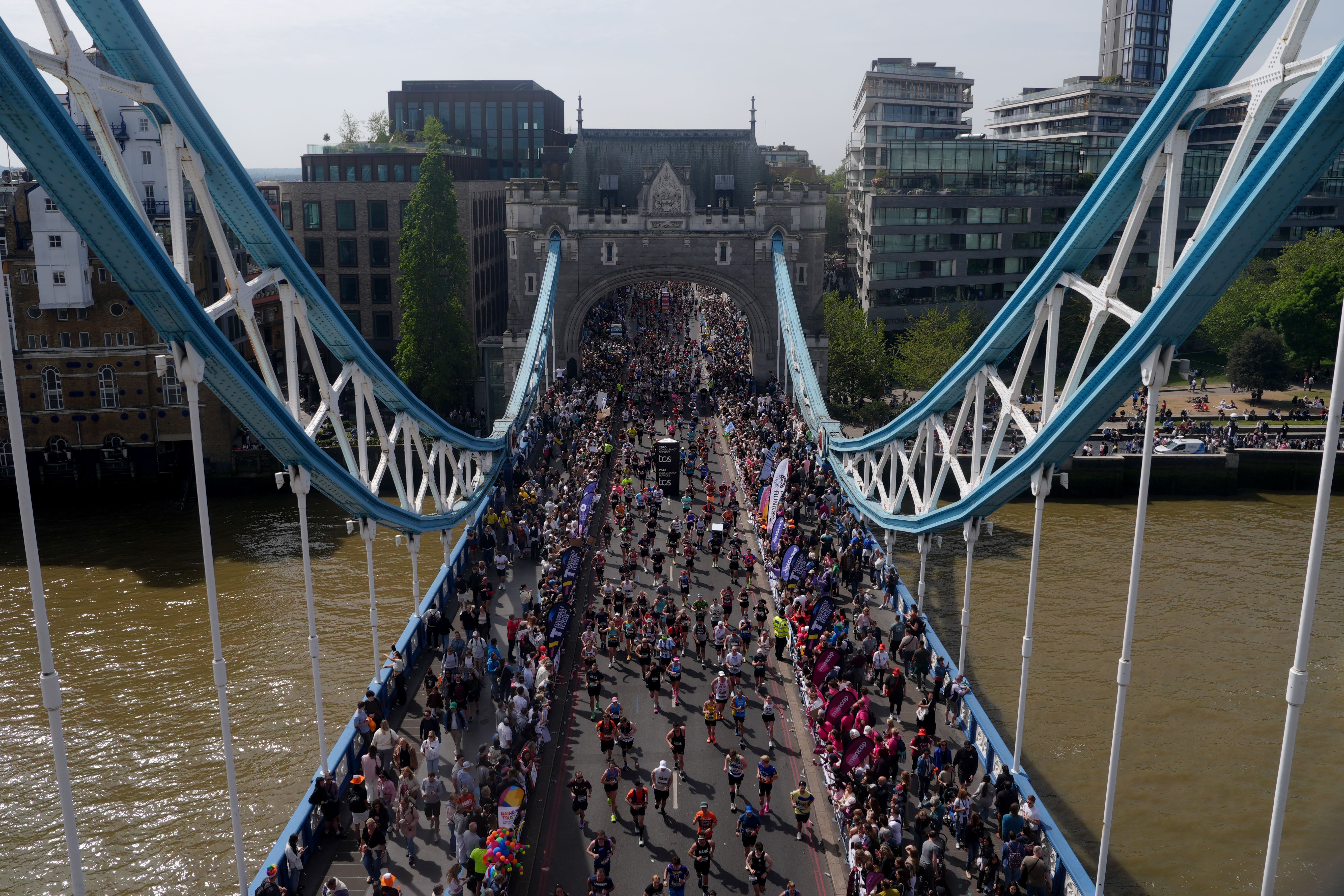 Nearly 60,000 people took part in this year’s London Marathon, and even more could participate next year with plans for a two-day event in 2027 (PA)
The next step
Once you have introduced more movement into your week, Fletcher recommends identifying where you are currently with your running, where you want to go – then a timescale for achieving that goal.
Be realistic: if you can currently do five jumps on the spot and you want to run a marathon in 12 weeks, the rate of progression is probably too steep. This approach will likely leave you disappointed at best, and at worst it could lead to a serious injury.
Your body can adapt to handle many challenges, but it needs time to do so. That is why it is important to identify a realistic timeframe for achieving your goals.
A good barometer for an appropriate rate of progression is OneTrack Club’s couch to 5K programme, which is designed to take at least nine weeks.
For most recreational runners, four or five months of dedicated preparations are usually recommended to prepare for a marathon.
Read more: Don’t make these critical mistakes during your first London Marathon, expert warns
 Running can be one of the most affordable and accessible forms of exercise (Getty/iStock)
Choose your run
There are many different types of run, and each one has different benefits. Beginners only really need to concern themselves with easy runs, and occasionally some interval formats. Running types include:
Easy run: A manageable distance at a manageable pace; easy enough that you are able to hold a conversation throughout. This allows you to practice the skill of running without tiring yourself out too much.
Long run: A run longer than you are typically used to, intended to develop endurance at a manageable pace.
Tempo: Tempo runs involve maintaining a pace you find challenging for a relatively short time period – shorter than the race or distance you are aiming for. This can develop speed.
Threshold: These are a little bit faster than tempo runs and cover similar, shorter distances. You should be breathing hard on these runs. This intensity will help increase your lactate threshold, or the point at which lactate accumulates in the bloodstream faster than it can be removed – in layman’s terms, the point at which exercise starts to feel significantly harder. Increasing this allows you to run faster for longer with less fatigue.
Intervals: A run where your speed fluctuates throughout. You might alternate between running fast, jogging, walking and resting. Intervals are shorter than the other runs on this list, but can be more demanding due to the increased intensity of the faster-paced portions. Doing interval sessions can increase your speed, VO2 max (the maximum amount of oxygen your body can take in and use during exercise) and work capacity.
Read more: The gym wasn’t for me – now I’m a fitness coach. Here’s what changed
 There is usually an uptick in runners following the London Marathon (AFP/Getty)
An interval workout for beginners
Even the best runners don’t train by running their race distance of choice over and over. Instead, they break it into smaller chunks to develop speed and stamina.
“Interval sessions allow you to accumulate quality work,” Fletcher explains.
For example, if somebody has a 5K PB of 30minutes, they will be physically spent after doing this. But if they were to run at this pace for two minutes, rest for one minute, then repeat this sequence 16 times, they could rack up 32 minutes of quality running rather than tapping out at 30. This will lead to improvements in fitness over time.
“It’s all about finding the amount of recovery you need between the periods of work to repeat your effort [and maintain your pace] on each interval,” Fletcher explains.
As you progress, you will be able to make the work periods longer and the recovery periods shorter. You could also increase your speed during the work periods. Eventually, you will find you are able to run 5K faster than you could before.
For beginners, interval sessions can also be a great way to build work capacity by fleshing out a session.
If you can run for five minutes before needing a rest, you might run for three minutes, walk or perform technique work for two minutes, then repeat this sequence six times. This way, you have a 30-minute session, rather than running for five minutes and then stopping.
Read more: The nutritious snack that has 30 per cent fewer calories than you think
 Jogging offers plenty of health benefits (AFP/Getty)
Three common beginner running mistakes – and how to avoid them
Thinking you need to be fit before you start
“With physical activity and sport people often believe they have to become fit before they start or ask for help,” says Fletcher. When exercise is the thing responsible for improving your fitness, this approach stops many people from ever starting. Instead, Fletcher recommends finding a qualified coach to provide support and direction.
Running through injury
For the vast majority of people, there is minimal return on investment from pushing through an injury. But some people will follow a running plan and feel they can’t miss a single session, regardless of any aches or pains they have. Instead, it pays to get to the root of the problem, then use supporting activities such as strengthening exercises to banish it for good. Time is also an effective healer in many cases, so giving yourself a few extra days to recover can be helpful.
Trying to use running to lose weight
Exercise uses energy. We draw the vast majority of our energy from the things we eat and drink. If you are trying to diet and aggressively cut calories to lose weight, while also starting to run, you are limiting your body’s energy supplies for your workouts – and for fuelling fitness perks in the aftermath.
“You can’t burn that many calories in a single session, running makes you hungry, and there is a lot of gravity and impact involved so the risk of injury if you are not properly fuelled is quite high,” Fletcher adds.
In short: a nutritious diet with an appropriate calorie content is key for optimal running progress.
Read more: The easiest way to strengthen your entire body, according to this expert coach
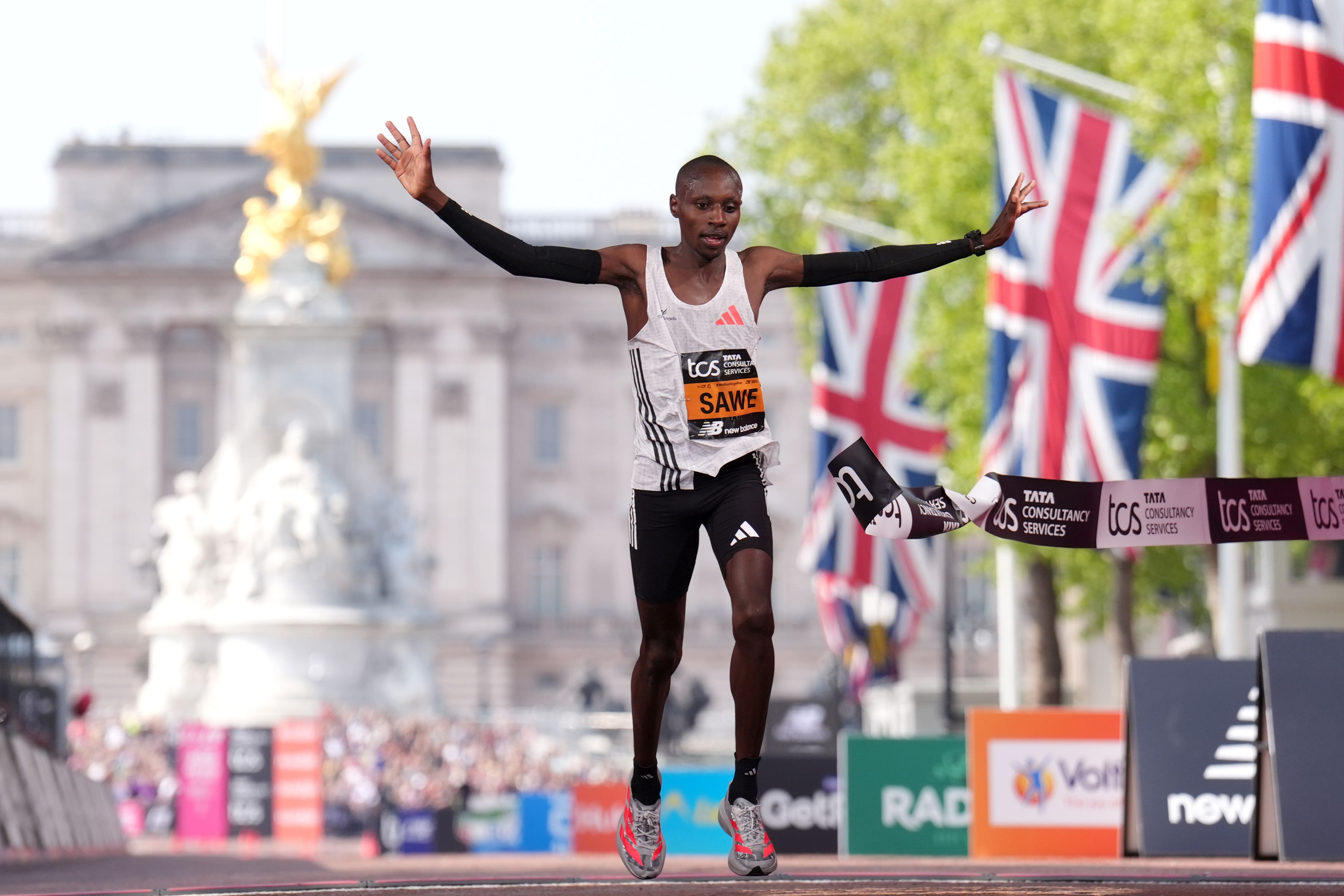 Sabastian Sawe won the 2025 and 2026 London Marathons (PA)
What do you need to start?
Shoes: Comfortable footwear is Fletcher’s number one recommendation. However, this comes with a caveat.
“Pretty much every running shoe will feel good when you try it on in the shop,” he warns. “But 10K into a long run something might play up.”
He recommends trying on as many different pairs of shoes as possible in the store to try and get a feel for different brands and how they fit. The aim is to find one that works for your unique feet – there is no best shoe for everyone.
If you can afford to, he also recommends a trial and error system. If a shoe does play up, retire or re home it and try another one until you find one that works for you.
Clothing: Comfort is key here. A double-lined pair of socks can help prevent rubbing, while shorts with zippered pockets give you somewhere to stash your valuables while running. A softer, breathable top will spare men’s nipples from chafing on longer, hotter runs, while for women, finding a well-fitting, supportive sports bra should also be high on the priority list, Fletcher says.
OneTrack Club has created a free zero to 5K plan to help Independent readers begin running.
Read more: The great posture myth – and why slouching might not be as bad as you think