




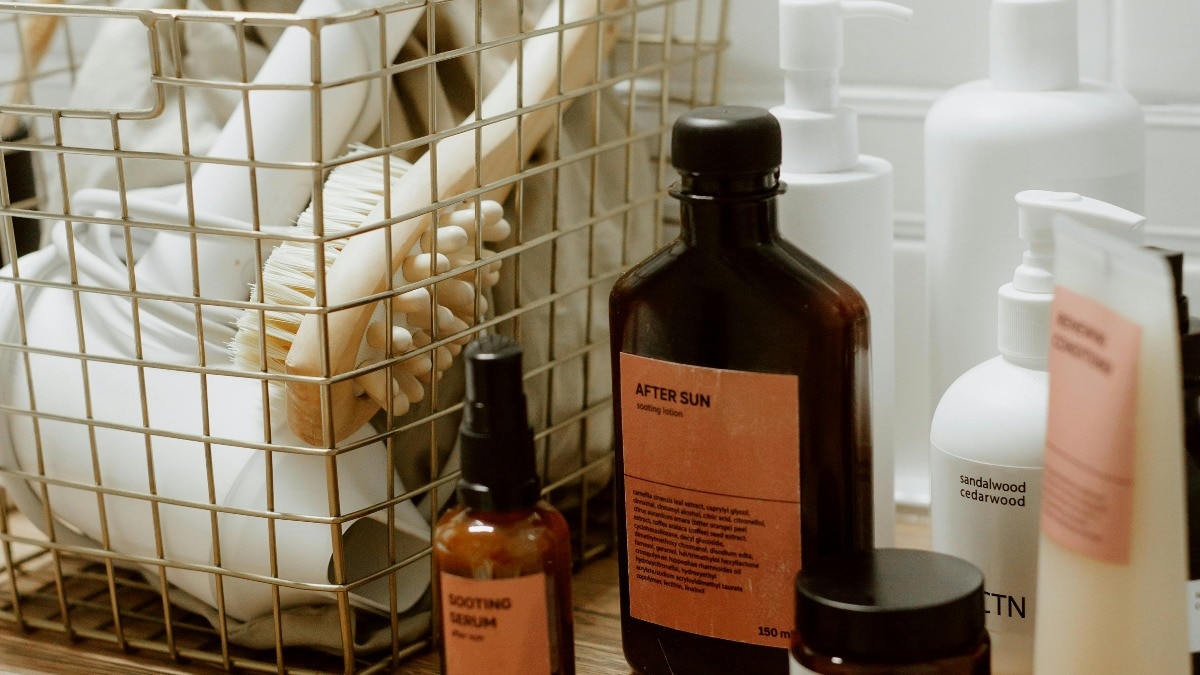
The beauty industry has always been very good at making you feel like you are one product away from something out of the world. One more serum, one more step, one more ingredient you had somehow never heard of until thirty seconds ago when your Instagram algorithm decided you needed to. For a while, it worked. People built routines that kept growing. A cleanser became a double cleanse; a moisturiser became a moisturiser, plus a barrier cream, plus a sleeping mask; a simple SPF became a whole conversation you were apparently supposed to be having with yourself every morning.
There was an entire period where a ten-step routine was something you would end up showing off, where the “shelfie” became a thing on the internet, where spending ten thousand on skincare in a single month felt less like a problem, and more like a quality you were proud of.
The brands did not stop, of course. A hero ingredient, a new category, a founder with an origin story about how conventional beauty had failed them and how they made something better, it came, and kept coming, and at some point, the person on the receiving end of it all just ran out of bandwidth to care.
The inbox full of product alerts, the influencer in a ring light telling you this one is different, the fourth serum drop of the year from a brand that already had three. Consumers who had spent years being told their routines were complete started asking questions the industry genuinely had no good answers for: what if I just stopped? What if less was always the answer, and the whole time someone had just been very good at making more feel like self-care?
The skincare cart is getting smaller, on purpose
Somewhere in the last two years, people started genuinely bragging about how little they were buying. A 2024 NielsenIQ report found that nearly 60 per cent of beauty consumers globally were cutting back on the number of products they used, and the interesting part is that most of them were not doing it because they had to. They were doing it because it finally felt like the smarter thing to do.
In India, where prestige skincare had been growing at double digits for three straight years, brands started running into a consumer they had never really planned for, someone who had done the research, read the ingredients, watched the reviews, and decided she was fine, actually. We are collectively done with a new launch every other week, done with being told that the routine was almost perfect but needed one more thing.
It does not look like giving up. Behavioural expert Sumir Nagar says it looks like something else entirely. “People aren’t cutting back,” he explains, “they’re curating what they can’t afford to lose.” Which sounds like a small distinction until you sit with it. The ₹5,000 serum that made the cut did not make it because someone had talked themselves out of wanting nice things. It made it because it had proved itself, and the person buying it had decided, consciously and deliberately, that this one was worth it.
Nagar thinks that choice, that very specific act of deciding, is doing a lot more work than it looks like. “When life feels chaotic, people don’t chase control; they shrink the battlefield,” he says. The bathroom shelf, of all places, becomes somewhere you can still make a call and have it mean something. A world where a lot feels out of your hands will do that to a person—make the small decisions feel surprisingly loaded. “Small luxuries are rarely about pleasure,” Nagar says. “They’re about preserving identity.” So when something gets cut from the routine, it does not always feel like being sensible. Sometimes it just feels like losing a small piece of who you were.
Dermatologists have been saying this for years
Dr Mikki Singh, board-certified dermatologist and founder of Bodycraft Clinics, has been watching people walk into her clinic for years carrying routines that were doing more damage than good. “The more you add, the harder it becomes to know what your skin actually needs,” she says. And the skin, it turns out, had been trying to say exactly that for a while, just not in a language anyone making a haul video was particularly interested in hearing.
In addition to this, Dr Sagar Gujjar, dermatologist and founder of Skinwood Luxury Aesthetics Centre, says he has seen a clear rise in patients coming in with skin that had simply had enough, because they were piling on too many things at once, following routines they had found online, with no real sense of what was working against what. “In practice, one of the first steps we take is to simplify the routine and reduce the number of actives,” he says. The irony is not small. People had spent years doing more in the name of taking care of themselves, and their skin had spent those same years paying for it.
Three products. That’s genuinely it.
According to Dr Singh, most people genuinely only need three things. A cleanser, a moisturiser, and a sunscreen. Everything after that is for a specific reason, and optional if that reason does not apply to you. “Those alone will take you very far,” she says.
Dr Gujjar agrees to this. The skin, he explains, can only handle so much at once, and when it is overwhelmed, even the things that are supposed to help stop doing their job. None of this is new information inside a dermatology clinic. What is new is that the person sitting across from the doctor is finally ready to hear it, and in a lot of cases, has already started figuring it out on their own.
“A focused routine often performs better,” says Dr Gujjar. “Skin responds best when the products used are compatible with each other and suited to the individual.”
Dr Singh adds something worth sitting with: “When you use fewer products, it’s actually easier to see what’s helping and what isn’t.”
For years, the long routine gave people somewhere to hide. Ten products meant ten possible explanations, which meant you never really had to reckon with what was actually going on with your skin. A shorter routine takes that away. It asks you to pay attention, to be honest, to stop buying things because someone told you that you needed them and start asking whether you actually do. And that, more than anything else, might be what skincare budgeting really is about: spending less on what was never working, and finally being willing to look at what is.
The industry is being asked a question it never prepared for
The smarter brands are starting to figure out that the rules have changed. A consumer who is actively curating their shelf is not going to be moved by a new launch for the sake of it. They want to know why this one, why now, and what it does that nothing she already owns can do. “We don’t just buy products, we buy permission to feel in control,” Nagar says.
Which means the brand that wins this moment is the one that makes them feel like the decision to buy was theirs alone. The ones still betting on volume, on newness, on the sheer force of being everywhere at once, are going to find that a consumer who has already decided ‘less is more’ is very hard to talk back into ‘more is more’.
The question the industry was never prepared for turns out to be a simple one: if you took away the noise, would your product still be worth it? For a lot of brands, that answer is going to be uncomfortable. For the ones where the answer is ‘yes’, this moment might be the best thing that has ever happened to them.
Lead Image: Pexels
Also Read: Beyond the surface: How cellular skincare and longevity science are transforming beauty
Also Read: The skincare edit for lightweight, effortless radiance