



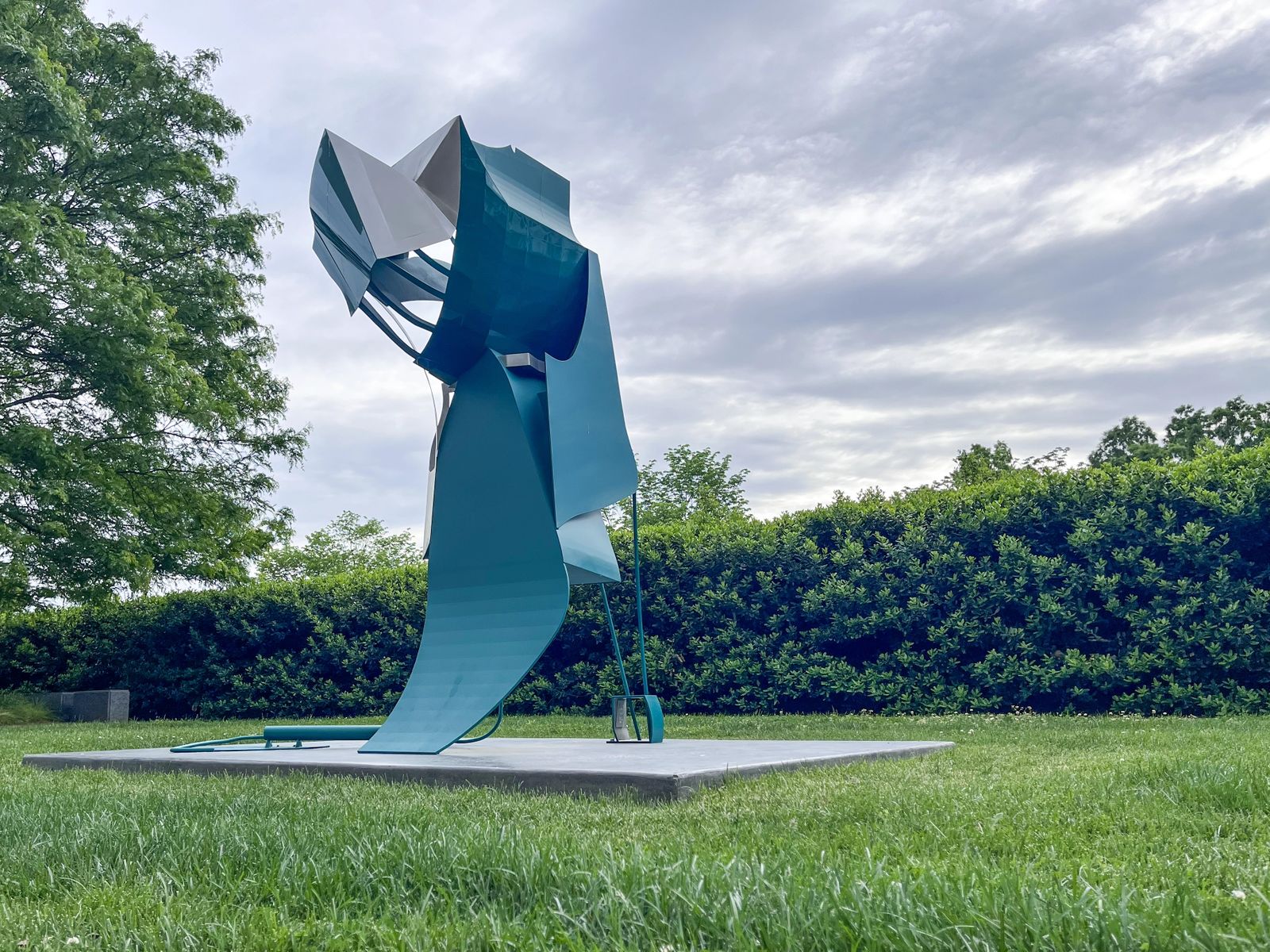
Artist Arlene Shechet’s recently installed aluminum work now occupies the grounds of the Smithsonian’s Hirshhorn Museum and Sculpture Garden

| Museums Correspondent
April 29, 2026
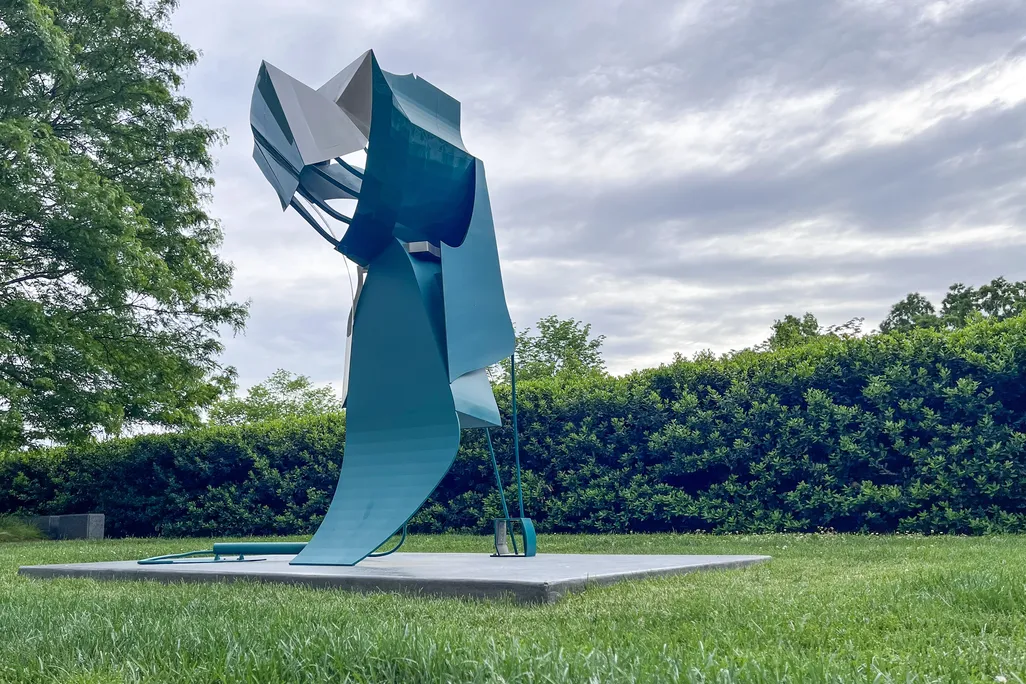
Maiden May, Arlene Shechet, aluminum, stainless steel and paint, 2023
Donny Bajohr
Arlene Shechet’s elegant 12-foot abstract sculpture evokes the green of spring as it stands on the grounds of the Smithsonian’s Hirshhorn Museum and Sculpture Garden.
Shechet created the aluminum piece, called Maiden May, in 2023, and it was featured in a 2024 show at the Storm King Art Center in New York. Its current place on the grass just outside the Hirshhorn building pleases its creator. “I love it here,” Shechet said during a visit in March. “It actually has more space.”
The artist is primarily known for her ceramic works, one of which, the five-foot Ripple and Ruffle, is in the Hirshhorn collection. “She’s especially recognized for having helped catalyze a contemporary resurgence in ceramics,” said Hirshhorn curator Anne Reeve. “Her approach as a sculptor is predicated on finding and harnessing a kind of tension in the studio where she is navigating between structure and intuition, material, pressure, balance, color.”
Shechet first gained attention in the 1990s with hand-molded plaster sculptures of seated Buddha figures before moving on to making ceramics in wild, unexpected shapes.
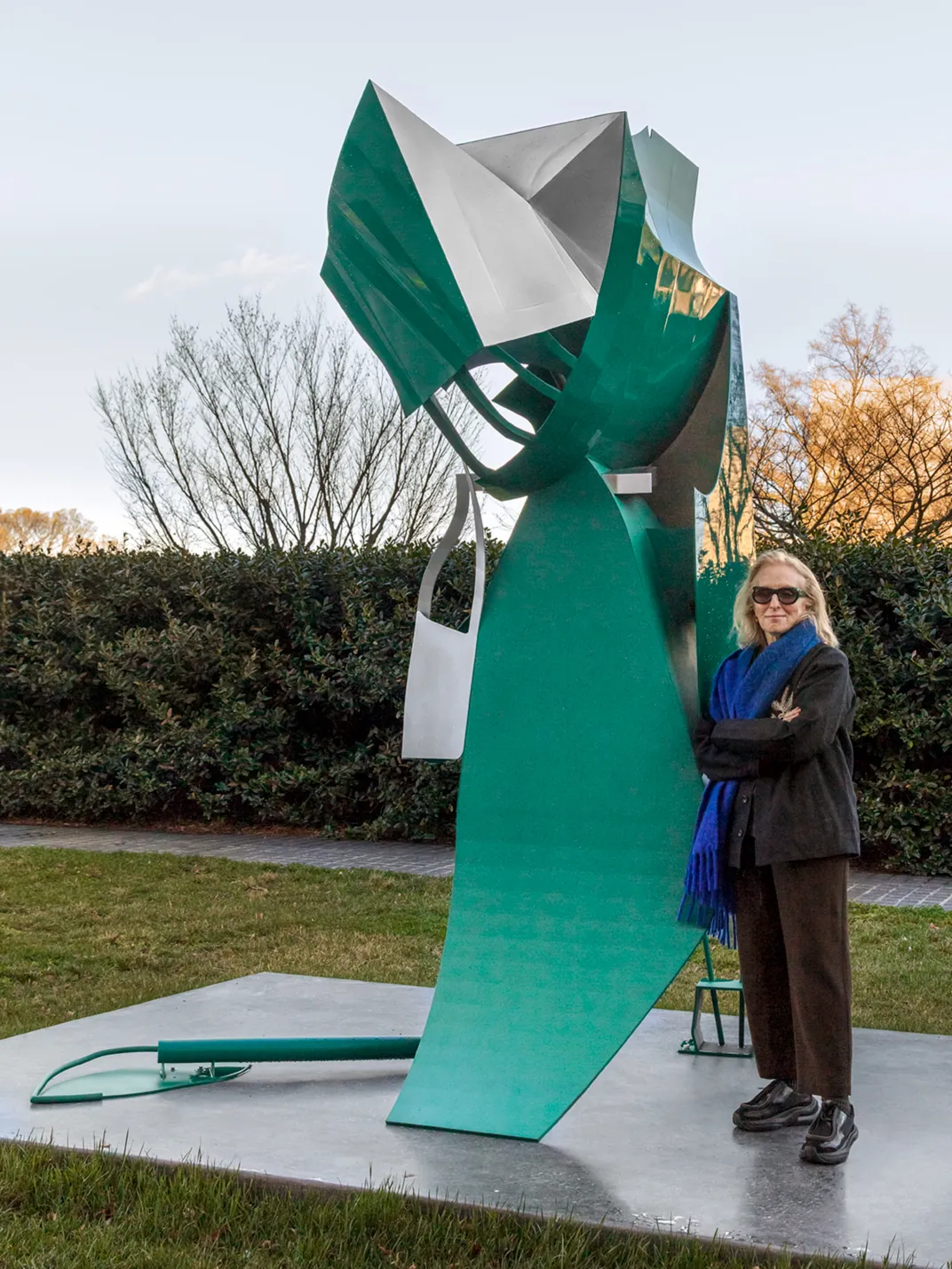
Artist Arlene Shechet stands with her sculpture Maiden May.
Rick Coulby / Courtesy of the Hirshhorn Museum and Sculpture Garden
Fun fact: The artist’s use of clay
Shechet said that when she began working with clay in the 2000s, it “was a very outcast material in the art world, very frowned upon.” Because of this perception, she aimed to be subversive in her use of clay. “I loved the idea of making things that were uncomfortable,” she said.
Throughout her career, she’s been open and versatile when it comes to materials, scale, surfaces and finishes for her unique creations. “People are always questioning how I use different material or change from ceramics to metal,” Shechet said. “It’s all to keep my imagination alive. It’s all to make life exciting.”
On Maiden May, she painted one side of the aluminum glossy, and the other side matte, making the sculpture dynamic. The gloss “soaks in and reflects out the environment,” the artist said.
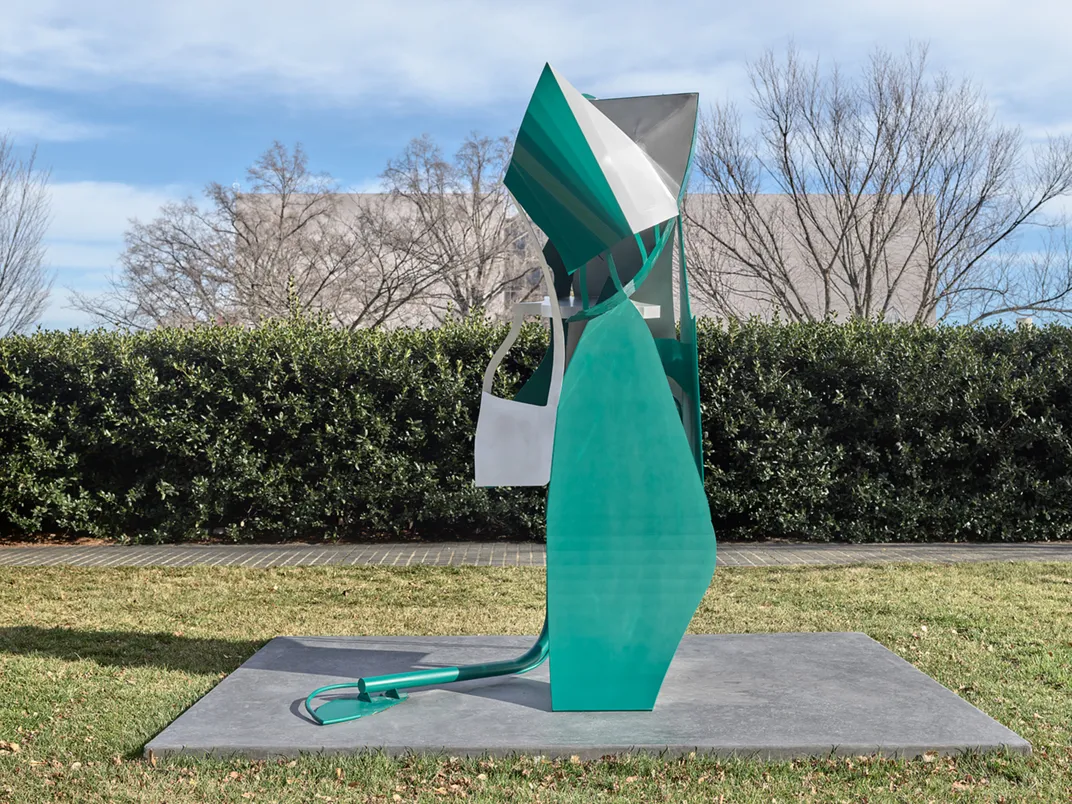
Maiden May, Arlene Shechet, aluminum, stainless steel and paint, 2023
Rick Coulby / Courtesy of the artist and Pace Gallery
Outdoor art pieces are often designed to be hardy and endure the elements. Maiden May was meant to become part of its environment, whether in the sun, shade, wind or rain. At the time of her visit, the sculpture had “these little magic droplets of water on it, like little magnifying glasses,” said Shechet. She added that she appreciates making work that people can encounter while out and about, living their lives, sometimes stumbling upon it “by mistake, almost.”
The sculpture’s size naturally invites viewers to move around it. Shechet calls the piece a “choreographer” of its audience. Indeed, the Storm King installation that it was a part of inspired a dance piece choreographed by Annie-B Parson, with costumes designed by Shechet.
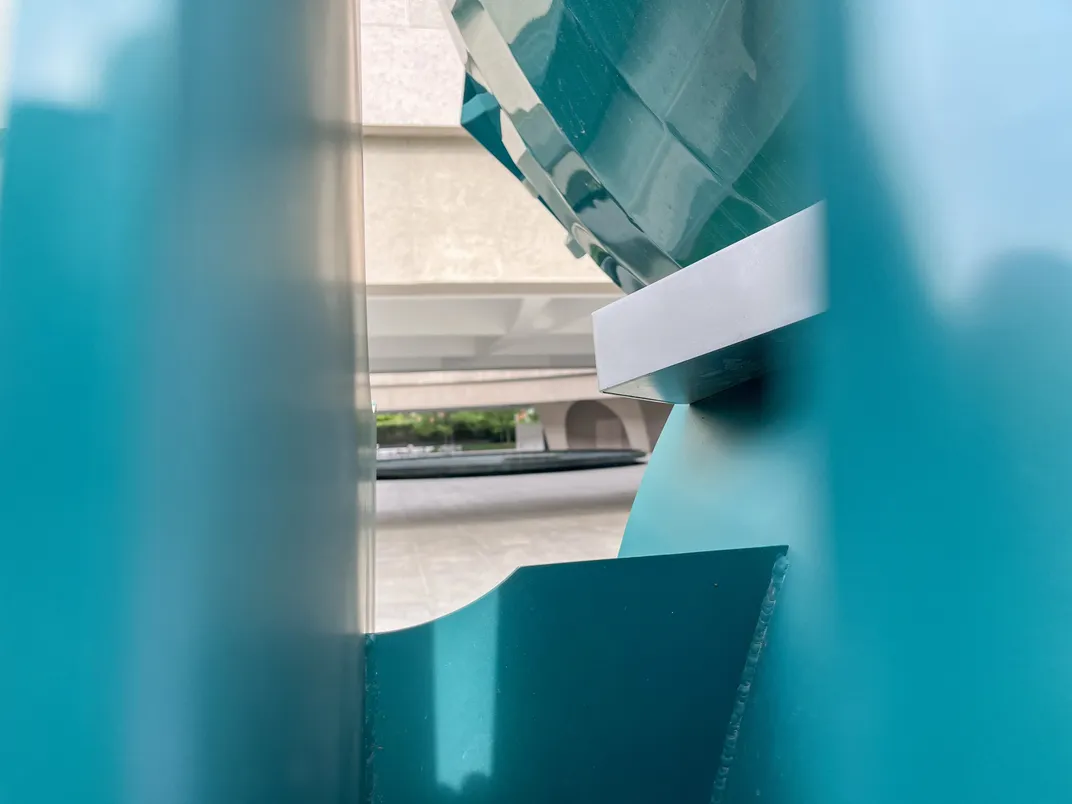
A detail shot of Maiden May
Donny Bajohr
Using aluminum for her sculptures allows for the pieces to be lighter in their environments.
“They don’t need massive cranes to install,” Shechet said. “They’re just easier to deal with, and yet they’re very, very sturdy. And steel, I’ve learned over time, is something that rusts, no matter how much paint you put on it.”
Shechet’s approach as an artist was informed by her teaching. She taught sculpture at the Rhode Island School of Design after graduating from the college in 1978 and went on to teach at the Parsons School of Design in her native New York City in the 1980s.
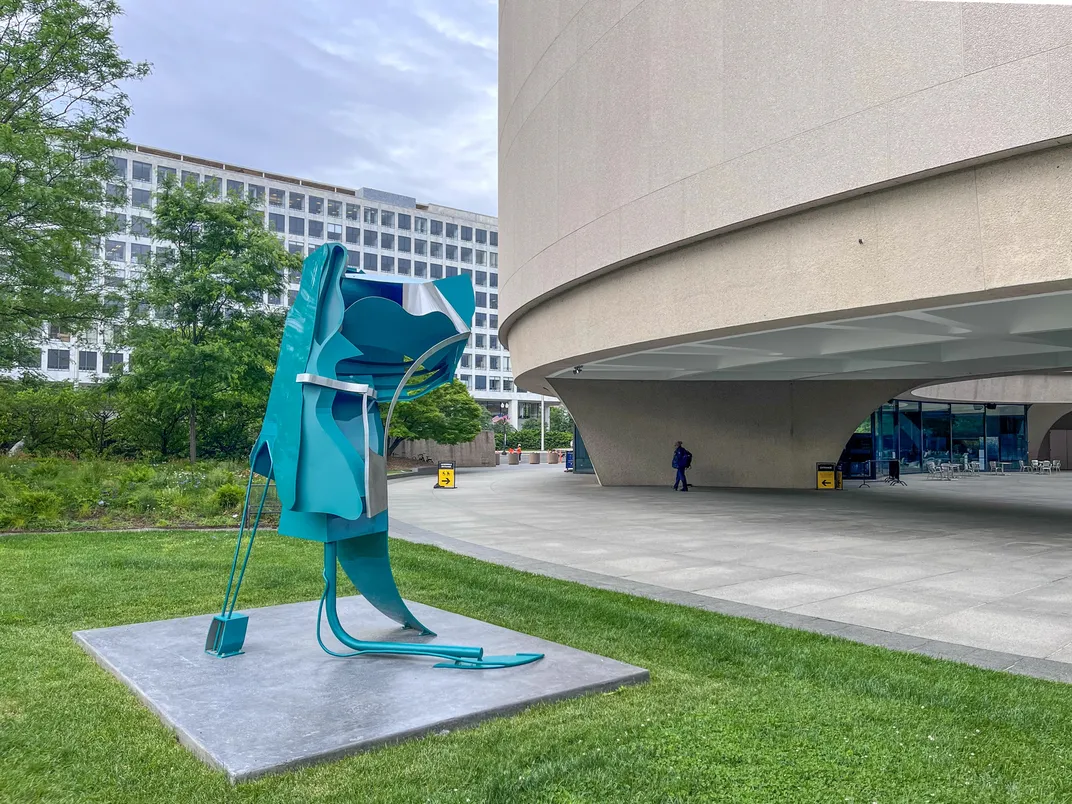
Maiden May, on the grounds of the Hirshhorn
Donny Bajohr
“In teaching, I could see that people got stuck in their heads with how they couldn’t do something, but really one thing is so similar to the next,” Shechet said. “I’m working big and small now, and I was working big and small before. And I will continue that.”
The sheer variety of her art helps feed a yearning for endless possibility. Now, as Maiden May stands at the Hirshhorn, Shechet enjoys the balance it presents: “It has this nice grass, but not an overly rich environment. It’s outdoors, but it’s winking toward indoors. I like those in-between, liminal spaces.”
Get the latest on what’s happening At the Smithsonian in your inbox.