




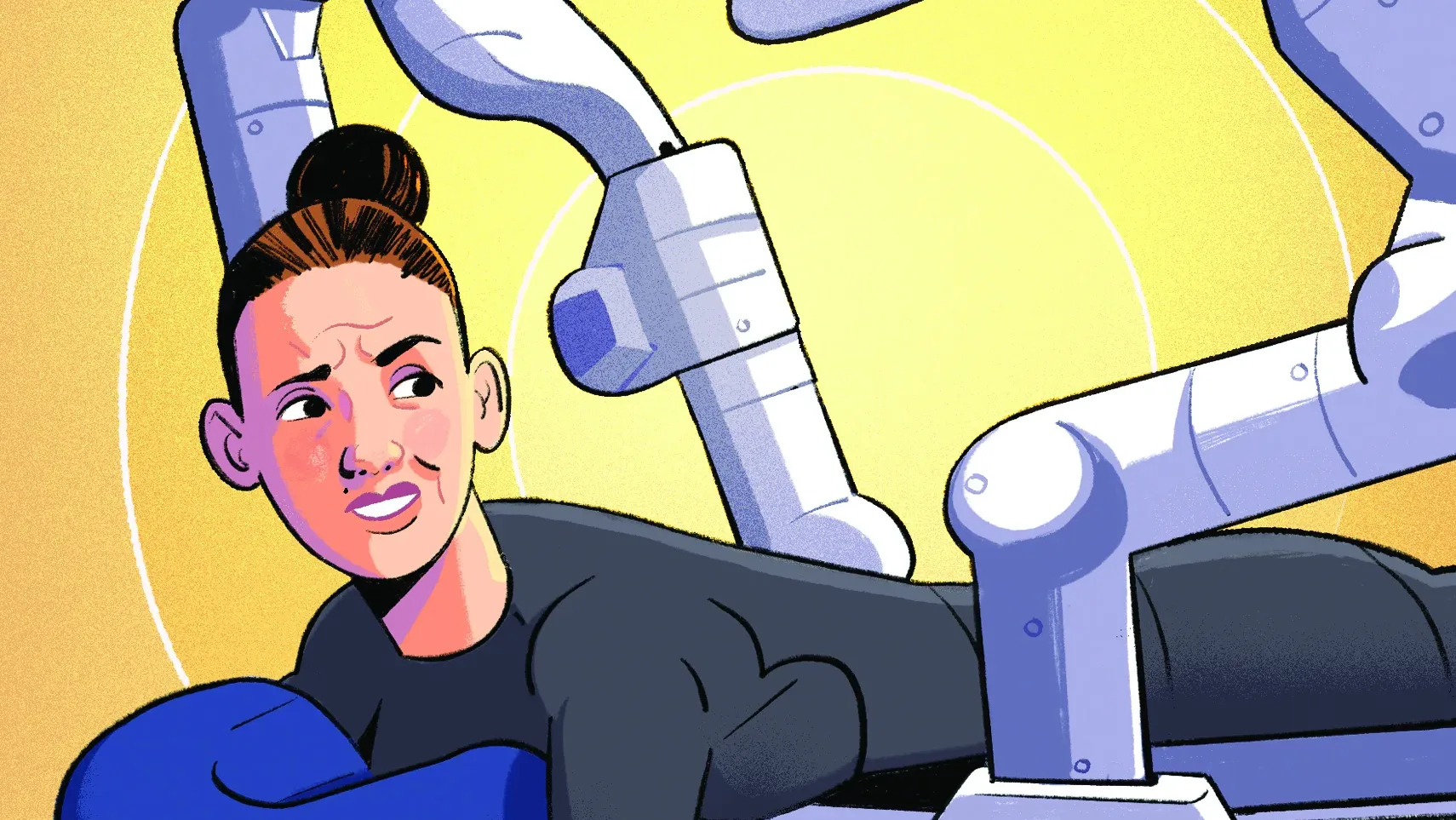
I was undeterred. How different could an AI robot massage really be?
Turns out, very.
At The St. James fitness complex in Springfield, I was offered not a plush robe but a sleek, skintight suit—something between superhero costume and scuba gear—so the robotic arms wouldn’t snag on loose fabric. The atmosphere was curious: I was with my “masseuse,” and also, alone. But the solitude wasn’t a sour point. No one to judge my mirror selfies in the supersuit or my compulsive table readjustments (two, three, okay—seven times). There was joy in doing it my own way.
I felt vindicated as I settled in for Aescape, offered at just a handful of spots in the mid-Atlantic, including here at The St. James, Equinox in Tysons Corner, and Feel Better Lounge in Richmond. It wasn’t scary—actually, it felt thrilling to be on the cutting edge of a new self-care movement. The robotic arms stood poised, guided by a body scan and an AI-customized plan, all controlled by a tablet beneath the face rest. I answered questions about tension, pressure, and pain tolerance, then chose my soundtrack (classical piano) and visual theme (falling snow). I could get used to this, I thought.
Then, in the screen’s reflection, I saw two robotic arms rise behind me, hovering like something out of Star Wars. I’ll admit—a chill ran through me. But when the plastic-coated “hands” pressed onto my back, the sensation was familiar. Like a massage chair, but horizontal. At times, relaxing. At others, amusing—particularly when the robot struggled to locate my hamstrings, sliding off my legs onto the table and recalibrating multiple times. Still, I appreciated the snow scene, the quiet, and, if I’m honest, the novelty.
AI has officially entered the wellness space, and it’s not leaving. Its crown jewel is its power of personalization. Think of every self-care ritual in your wheelhouse—skincare, muscle recovery, morning smoothies—AI now promises to optimize each one. There are AI-powered skin scans, AI-generated nutrition plans, and even the ARTAS iX Robotic system for hair transplants, which uses AI imaging to identify the best grafts and placements—something available at Salt Spa & Wellness Center in Virginia Beach.
Naturally, my own foray into AI pampering had to extend to beauty. So I visited GLO30 in Old Town Alexandria, a DMV-founded skincare brand offering advanced facials, skin therapies, and aesthetician expertise. There, an aesthetician guided me through an AI-powered digital skin analysis that determined my skin type (normal), flagged areas of concern, and generated a personalized product plan.
This time, human presence made all the difference. When the AI flagged me for hyperpigmentation, my aesthetician calmly said, “That’s probably your makeup, I don’t see any.” She also helped translate the AI’s product suggestions—EyeDew Retinol + Niacinamide Eye Cream and Velvet Touch moisturizer—into an approachable plan: start with Velvet Touch (gentle for a skincare beginner like myself), save retinol for later.
“There’s a little bit missing with AI in that there’s an aspect to taking care of your skin and the way it makes you feel about yourself and promotes your own self-confidence that AI can’t address,” says Janice Nichols, owner of the Alexandria GLO30 location. “The human factor takes everything into consideration. AI might make a recommendation for your skin care routine based on what is absolutely perfect for you. But if that doesn’t fit into your lifestyle or address what your personal concerns are, it’s not going to be as effective for you.”
That’s the formula for now: AI plus human guidance equals a pretty solid self-care routine. Still, the best part of my robotic massage? The blessed absence of a stranger asking, “So, how’s the pressure?”
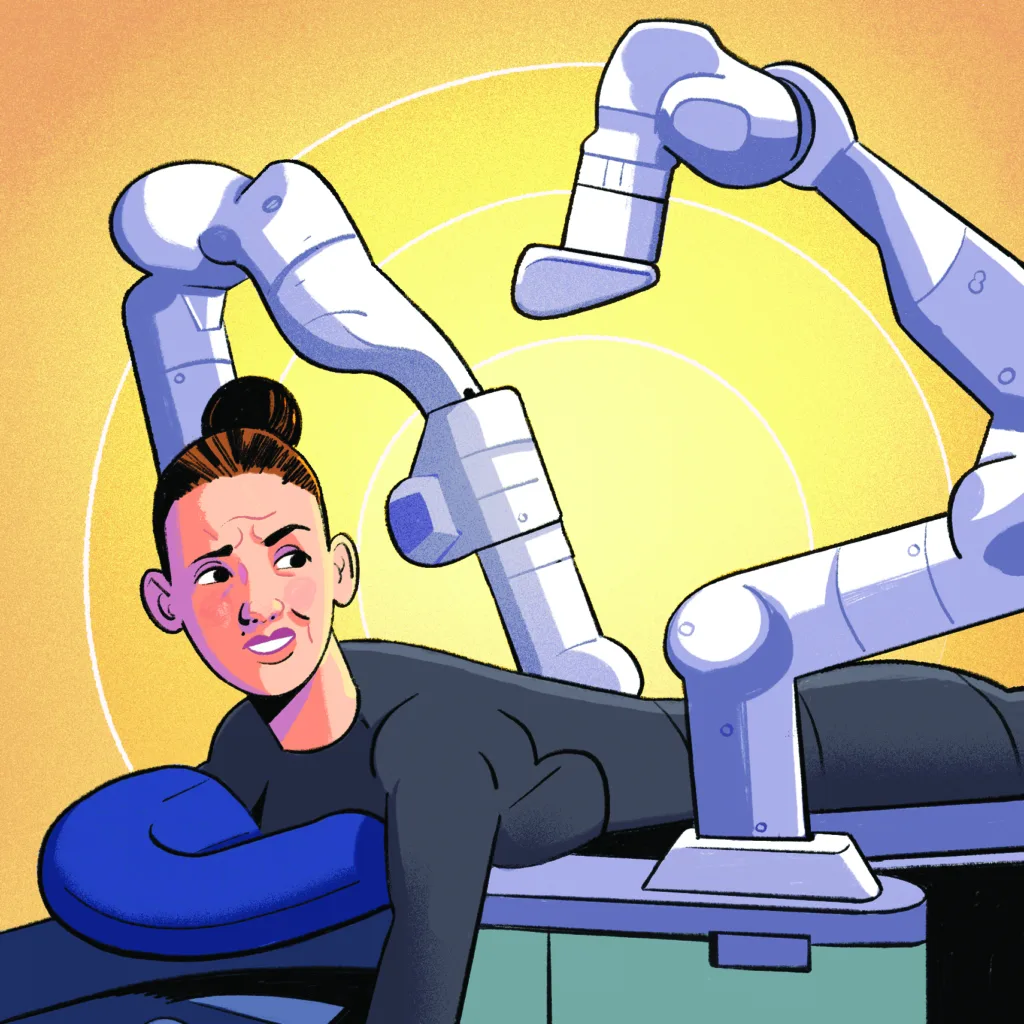 Illustration by Chris King
This article originally appeared in the February 2026 issue.