




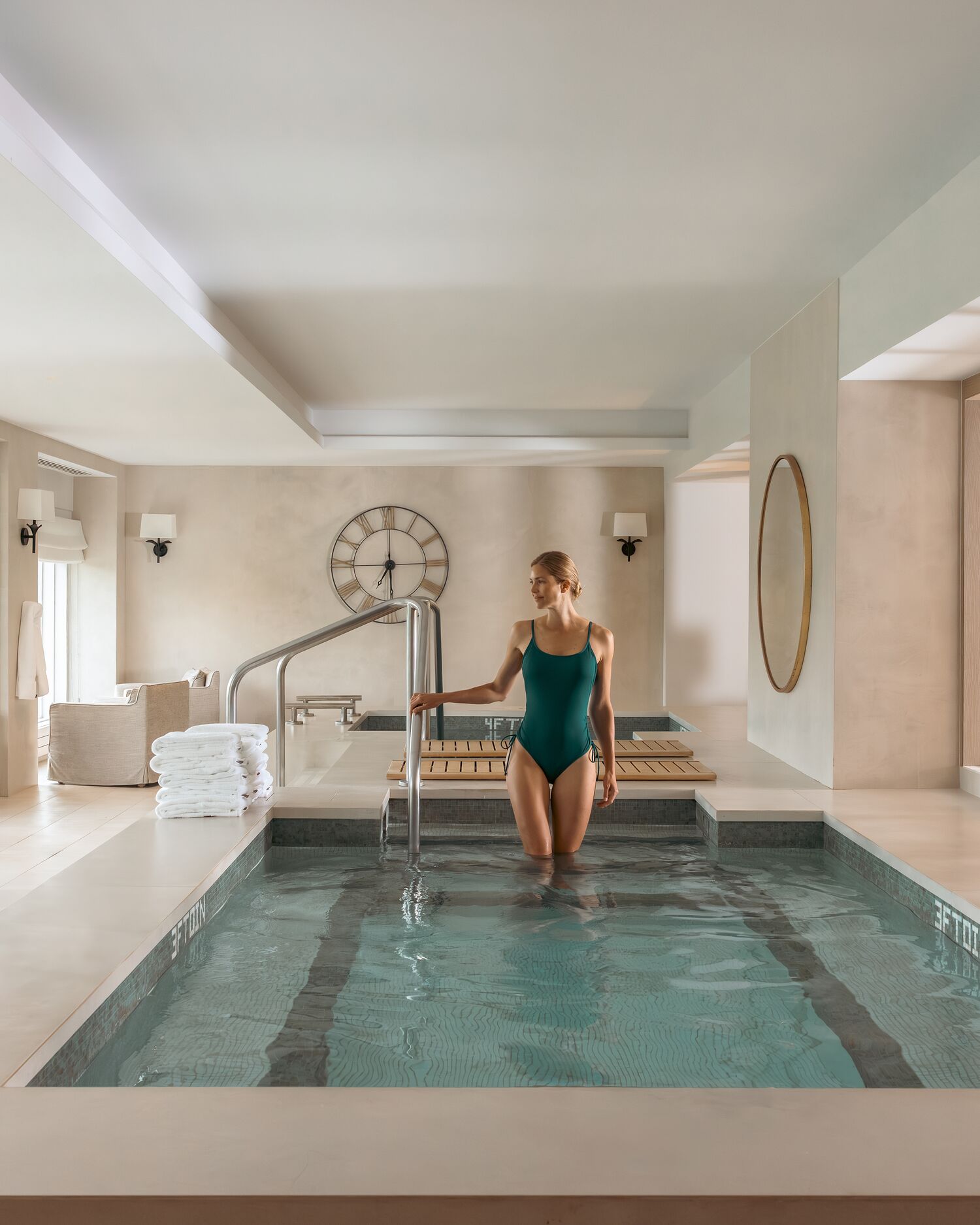
From Six Senses to Canyon Ranch to Carillon Miami, destination spas are building dedicated programming for women in perimenopause — and the offerings go far beyond a standard spa day.
The hot flash that woke you at 3 a.m., the brain fog that hasn’t lifted in years, the joint aches that your doctor chalked up to stress — if you have been managing these symptoms on your own, the wellness travel industry has finally caught up to you. Perimenopause, the transitional phase that can begin as early as a woman’s mid-30s and stretch until her early 50s, is having a cultural moment. And the world’s most serious destination spas are building programming around it.
Over one billion women worldwide are estimated to be in perimenopause, and the menopause wellness economy is projected to exceed $600 billion. Despite those numbers, 80 percent of OB/GYNs remain undertrained in menopause care, and just 49 percent of perimenopausal women have ever discussed their symptoms with a health professional. Wellness travel, it turns out, is moving into the space that traditional medicine has been slow to occupy.
Last year, Six Senses — the brand that has long set the standard for immersive destination wellness — launched its inaugural Female Wellness program, designed specifically for women navigating perimenopause, menopause, and hormonal fluctuation across the monthly cycle. Available as three-, five-, or seven-day journeys, the program debuted across five properties: Six Senses Douro Valley, Six Senses Rome, Six Senses Kanuhura, Six Senses Ninh Van Bay, and Six Senses Crans-Montana. Developed in partnership with Dr. Mindy Pelz, a wellness expert and bestselling author specializing in female hormonal health, it goes considerably deeper than a standard spa menu. Guests undergo a non-invasive biometric screening on arrival, then follow a personalized protocol that incorporates continuous glucose monitoring, fasting cycles designed around hormonal phases, body composition analysis, and sexual wellness support.
“All that I do is about giving women the power back when it comes to their health,” Dr. Pelz said in a statement. “There are life-changing tools within us that are massively underutilized. But when we bring our bodies back into alignment with our own biology, we can unlock all that our body is capable of.”
Why wellness travel, and why now
A 2025 study published in npj Women’s Health found that perimenopause symptom burden — including hot flashes, anxiety, and significant cognitive disruption — is substantial even in women as young as 30, a finding that has reframed who this conversation belongs to. The industry has taken notice. Canyon Ranch at its Lenox, Massachusetts property, launched M/Power, a multi-day retreat that pairs hormone and bone density scans with one-on-one expert coaching and personalized movement plans. Carillon Miami Wellness Resort’s Inner Glow retreat, led by cardiologist Dr. Martin G. Bloom, addresses weight changes, sleep disruption, brain fog, and low libido through an integrative medicine lens. Amilla in the Maldives has offered five-day perimenopause retreats grounded in naturopathy, stress reduction, and nutrition. Platforms like Me Time Away now aggregate retreat options globally for women at this life stage.
The through-line across all of these programs is something conventional medicine has historically been reluctant to provide: dedicated time, personalized attention, and a room full of women who understand exactly what you’re going through. “Historically, women have not been given a voice in their own care, have not been listened to, have not been given the right information,” Alicia Dunable, founder of Our Essential Wellness, told AFAR. That isolation — medical and societal — is precisely what these retreats are designed to dissolve. “Now there’s so much more education out there, and women are learning to advocate for themselves,” Dunable said.
What happens at a menopause retreat?
The programming has moved well past robes and eucalyptus steam. At Six Senses, the perimenopause track cycles guests between fasting, ketosis, and hormone-stimulating foods rich in healthy carbohydrates and fibers, while a continuous glucose monitor tracks how the body responds in real time.
Canyon Ranch layers clinical diagnostics — hormone panels, bone density screening — with therapeutic movement and expert-led group workshops. These programs share a deliberate, evidence-informed approach that treats perimenopause not as a condition to be endured but as a physiological transition that, with the right information and support, can actually be navigated with intention.
The cost of entry is considerable — multi-day destination spa programs run from a few thousand dollars upward — but the demand reflects something deeper than a luxury trend. Fifty-four percent of women aged 35 to 54 report that menopause has affected their sex life or relationships, and roughly half wait six months or more with life-disrupting symptoms before seeking any professional support at all. For women who have spent years receiving inadequate care, or none at all, a week somewhere that takes the conversation seriously carries a different kind of value.
“With these retreats, it’s about women giving themselves permission to focus on themselves,” says Dunable. “And it goes way beyond just saying you’re doing self-care on a girls’ weekend. It’s intentional. It’s like, ‘I’m going to learn and practice how to transform my life.’”
Related on Ethos: