




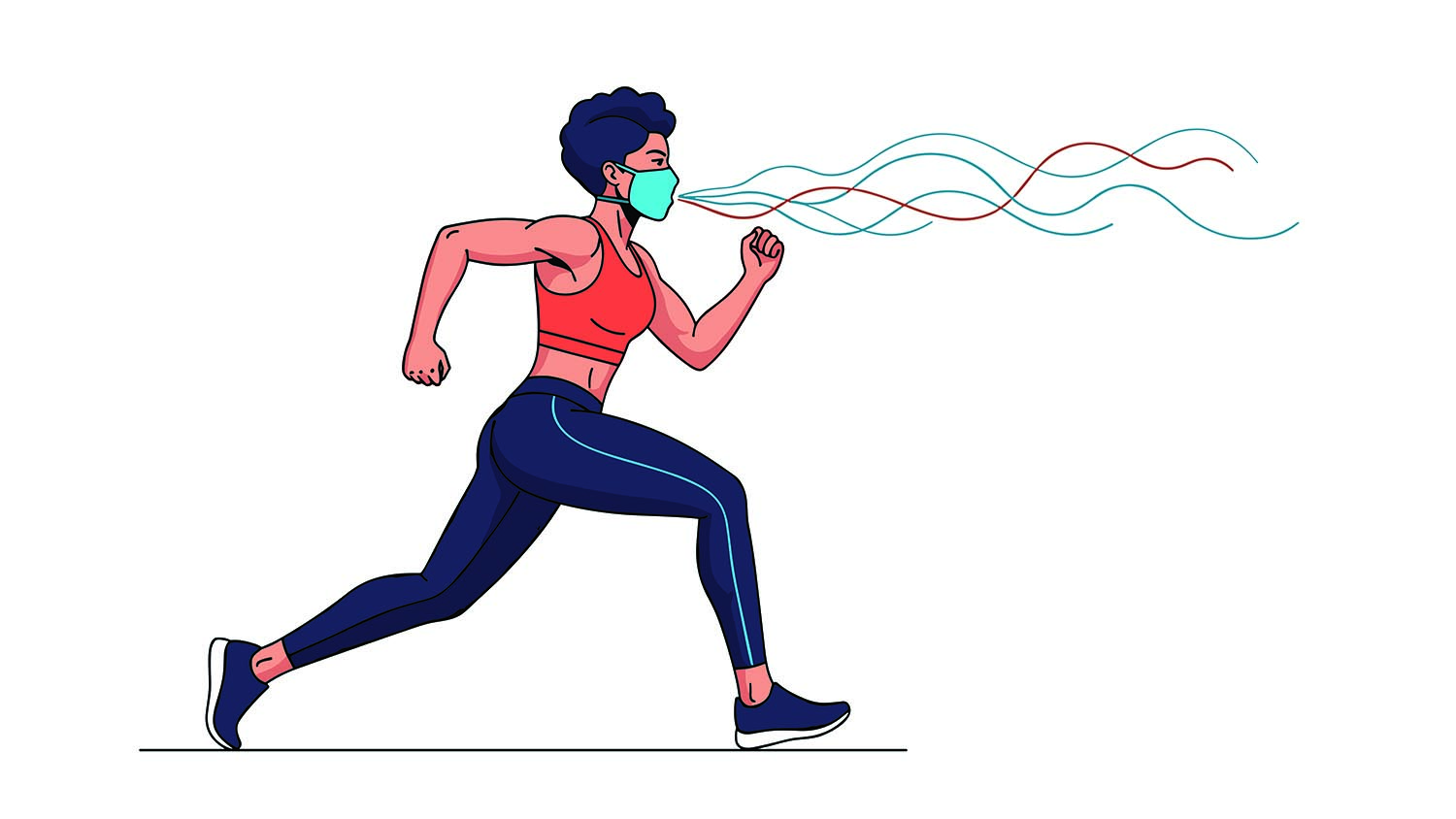
Outdoor fitness has long been associated with better health and well-being. However, the rising pollution levels are complicating the relationship between exercise and health.
Kabita Kharel, a 27-year-old certified fitness trainer, entrepreneur, and advocate for health and wellness, is the founder of Revive Fitness and the owner of Revive Supplements. She elaborates on rising AQI numbers and exercising outdoors.
When someone steps outside for a morning run, and the AQI (Air Quality Index) is in the red, what kind of impacts will it bring?
A morning run in red-zone AQI (typically an AQI of 151–200 is considered unhealthy) is generally more harmful than beneficial, especially for outdoor exercise.
During exercise, our breathing rate increases significantly. When we take deeper, faster breaths, which means more polluted particles and gases reach deep into our lungs.
For people with asthma, allergies, heart conditions, or other respiratory issues, the risks are even higher. It can trigger asthma attacks, worsen bronchitis, or place extra strain on the heart.
Regularly exercising in heavily polluted air may contribute to reduced lung function over time, increased risk of cardiovascular disease, higher levels of oxidative stress and systemic inflammation and slower recovery from workouts.
When we look at the beneficial part, running itself is excellent for cardiovascular health, mood, and fitness. But when AQI is in the red, the pollution can outweigh many of those benefits—especially during prolonged or intense exercise outdoors.
At what point does air quality require people to exercise indoors?
Air quality matters for exercise, especially for running, cycling, or any intense outdoor workout where you’re breathing deeply.
When the Air quality index is around (0-50), it’s usually safe to exercise outdoors. AQI from (51-100) is considered a moderate /safe level to work out. AQI ranging from (101-150) is considered to affect people with sensitive health issues, and AQI that ranges from (150+) is considered unhealthy. Currently, Kathmandu is in a moderate-to-unhealthy zone, depending on the weather and on heavy traffic.
Are there documented cases of athletes or regular exercisers developing respiratory issues directly linked to training in polluted environments?
Yes, there is strong evidence that repeated training in polluted air can contribute to respiratory problems.
This isn’t just theoretical. Sports medicine and environmental health researchers have documented measurable changes in lung function, airway inflammation, and breathing symptoms in athletes who regularly train outdoors in polluted environments.
Even a single workout in polluted air can cause symptoms like coughing, throat irritation, chest tightness, wheezing, shortness of breath, and reduced exercise performance.
In one recent study, ozone exposure significantly reduced maximal cycling performance and cardiorespiratory capacity in endurance athletes.
But comparatively, those at more risk are endurance athletes (runners, cyclists, triathletes), people training near heavy traffic, those exercising in cities with frequent smog or wildfire smoke and individuals with asthma, allergies, or prior respiratory conditions.
Cities around the world are recording more pollution every year. Are marathons, boot camps, and cycling clubs becoming a public health risk?
It’s not that outdoor fitness itself is becoming a public health risk. It’s that the environment in which we exercise is changing, and our habits need to change with it.
Running clubs, cycling groups, and outdoor boot camps are beneficial. They improve cardiovascular health, mental well-being, metabolic fitness, and social connection. Those benefits are real and substantial. But also, air quality matters.
Recent reviews show that exercising in polluted air can temporarily reduce lung function, increase airway inflammation, and modestly raise cardiovascular strain—especially during high-intensity or long-duration sessions.
But can we consider outdoor workouts the answer? Usually, the answer is no. In fact, for most people, regular exercise still outweighs the risks of moderate air pollution. Even in somewhat polluted environments, being active is generally healthier than being sedentary.
Outdoor fitness is not becoming dangerous by default. But ignoring air quality can make it so.
The goal isn’t to stop running marathons or cancel cycling clubs. It’s to build a culture where clean air is considered part of training, just like hydration, recovery, and proper footwear. In the 21st century, the best athletes may not just train hard—they’ll train smart enough to know when the air itself is part of the workout.
People in lower-income neighbourhoods often lack access to gyms and face far higher levels of pollution. Does this mean the most vulnerable communities are inadvertently being pushed to exercise in the most toxic conditions?
Yes—this is exactly the concern, and it’s a major environmental justice issue.
In many cities, the people who would benefit most from safe, accessible opportunities for physical activity are often the same people who face the greatest barriers: fewer gyms, fewer well-maintained parks, less tree cover, heavier traffic, and higher levels of air pollution.
When outdoor exercise happens in polluted environments, the health benefits are still present—but they can be diminished. Long-term exposure to polluted air can reduce some of exercise’s protective effects, particularly for cardiovascular and respiratory health.
Recent research shows that parks in less advantaged neighbourhoods are often more polluted and provide fewer of the protective environmental benefits that parks are supposed to offer.
The answer isn’t to tell people to stop exercising outdoors. It’s to ensure that healthy movement is safe for everyone, which means investing in community recreation centres, expanding affordable access to gyms, creating cleaner, greener parks, reducing traffic and industrial emissions in residential areas, and prioritising tree cover, shade, and walkable streets.
Exercise should not require choosing between fitness and clean air. Access to safe physical activity is as much a public health issue as access to clean water or nutritious food.
A truly healthy city is one where your ZIP code doesn’t determine whether a morning run helps your lungs—or harms them.
What is the equivalent of exercising outdoors when the pollution becomes excessive? What is the preventive measure?
When outdoor pollution is high, which is especially common in Kathmandu, we don’t need to stop training; we just need to control the environment and intensity. The goal is to achieve the exact effect without straining our lungs. Something that can be equivalent to outdoor exercise is treadmill walking or running (on an incline), a stationary bike or spin bike, or indoor circuits (burpees, jump rope, mountain climbers). Keep intensity slightly lower than outdoor days if the air feels heavy indoors.
For functional, fat-loss workouts, cross-training or circuit training indoors, gym-based functional training, low-impact options (best for bad air days), yoga flows, pilates, mobility, and core training can serve as replacements.
The preventive measures can be smart indoor training. We can use air purifiers if possible and choose well-ventilated gyms. We can avoid crowded hours, use an N95 or KN95 mask when going outside, and avoid high-intensity workouts with a mask, which can limit oxygen intake.
Pollution is usually worse in the early morning and evening. The best time to train is late morning or early afternoon. Breathing training has helped me a lot as well. We should practice diaphragmatic breathing, which helps the lungs work more efficiently even in suboptimal air quality.
For someone who simply refuses to let pollution disrupt their outdoor training routine, what can be the long-term consequences of that choice?
If someone insists on training outdoors regardless of air quality, the likely outcome isn’t immediate. It’s something that can be seen in the long term.
The body can adapt, but it is not immune to repeated exposure to polluted air, especially during exercise.
Respiratory effects include persistent airway irritation, increased risk of exercise-induced bronchoconstriction, higher likelihood of developing or worsening asthma, gradual decline in lung function and chronic cough or wheezing. Cardiovascular effects include elevated blood pressure over time, endothelial dysfunction (impaired blood vessel health), increased oxidative stress and systemic inflammation, higher long-term risk of heart disease and stroke.
And lastly, performance effects include reduced aerobic capacity, slower recovery between sessions, lower training quality and endurance, and greater susceptibility to respiratory infections.
But working out is still beneficial as exercise remains one of the most powerful tools for health. But chronic exposure to high pollution can erode some of those benefits. It’s a bit like eating a healthy diet while smoking: one good habit helps, but it doesn’t fully cancel out a harmful exposure.
Ignoring pollution won’t make it any tougher—it may simply make your lungs and cardiovascular system work harder for less gain. Fitness is about building resilience, not testing how much preventable damage our bodies can absorb.