





LookFantastic’s 2026 Spring/Summer trend report has revealed that “skinification” is here to stay, with advanced skin care ingredients continuing to be highlighted in hybrid makeup products and peptides as the “backbone” of the trend.
In tandem with the emphasis on skin health, the fastest-growing category across skin and body products in 2025 was SPF. The online retail platform underlines that consumers are increasing their investments in long-term skin protection to avoid sun damage as a well-aging strategy.
Meanwhile, the K-beauty category is continuing its trajectory as a beauty industry front-runner with almost one million units from the segment sold on LookFantastic in 2025.

The trend report also flags that beauty technology is contributing to the stream toward skinification, as LED masks were a trending and fast-growing category. With longevity and wellness continuing to trend in 2026, LookFantastic is anticipating product innovations and more portable designs for the segment in the coming year.
Peptide backbone
The focus on advanced skin care is showing no indication of slowing down, with 2025 seeing a “huge increase” in interest. Consequently, consumers are becoming particularly well versed in the functions and intricacies of active ingredients, says LookFantastic.
LookFantastic reports that peptides were the fastest growing and trending ingredient in 2025, with a 79% increase in searches, retinal followed with +49.6%, and niacinamide with +33.7%. The company does not “see this slowing down for 2026.”
Fatma Shaheen, CEO and founder at Skin Design London, says that peptides are the “backbone of high-performance skin care.” She adds that the ingredient is moving past single peptides and into multi-functional peptide engineering — “systems that activate firmness, recovery, and skin energy simultaneously.”
According to Shaheen, the 2026 ingredient trend trajectory indicates a continued momentum toward performance without compromise and underlines the importance of formulating products that allow for daily use without irritation or barrier disruption.
“Consumers are becoming fluent in the language of peptides, lipids, and ectoin, and are now seeking out next-generation complexes that combine firming, barrier support, and brightening in a single, highly targeted formula,” says Lillie Ellis, buying director at LookFantastic.
“Looking ahead, expect to see growing excitement around sophisticated pairings like PDRN (polydeoxyribonucleotide) with hyaluronic acid and advanced peptide blends, as beauty lovers prioritize clinically inspired, multi-tasking serums that deliver visible results without sacrificing skin comfort.”
Clean girl base layers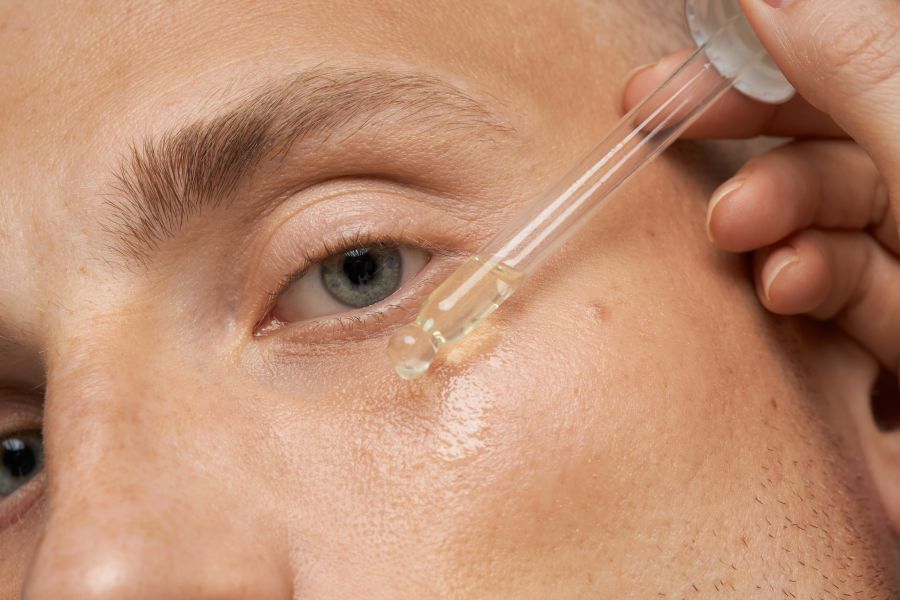
Skin-first beauty routines are reshaping makeup product formulations.
According to LookFantastic, the “clean girl” aesthetic that favors a minimalist approach to makeup is rumored to be on the way out. However, the skin-first approach that it ushered into toiletry bags across the globe seems to have remained.
In response, makeup giants are reimagining and reformulating staples to be more versatile and multifunctional.
People are seeking lightweight baselayers in the form of BB and CC creams, with searches for “Kylie skin tint” up by 450%, “Korean BB cream” up by 100%, and “Erborian CC cream” up by 50%.
Legacy brands like Estée Lauder and Giorgio Armani’s reactions to the “your skin but better” base-layer trend indicate that it will persist, says LookFantastic. Estée Lauder is updating its 24-hour-wear foundation to make it more breathable and to contain more “skin-loving” ingredients.
Similarly, Armani’s Luminous Skin has revamped its formulation to include more diverse shades and include skin care ingredients like niacinamide.
K-beauty efficacy and efficiency
South Korean skin care has moved from a trend to an “entire industry.” The movement has influenced formula shifts by impacting the ingredients consumers search for. K-beauty was the fastest-growing category in skin care, with Laneige, Anua, Biodance, and Medicube leading the charge.
In 2025, 10 new K-beauty brands joined LookFantastic’s portfolio, bringing its K-beauty brand offerings up to 16. Revenue from the segment was up 174% compared to 2024. The segment’s momentum is visible across all categories — from sun care to serums and masks.
“A K-beauty trend catches our attention, but unlike fleeting viral moments, it earns lasting consumer loyalty through proven efficacy,” says Lauren Starkey, senior buying manager at LookFantastic.
K-beauty has garnered a reputation for rapid innovation, tapping AI for efficiency. “The essence of K-beauty is its overwhelming speed and relentless innovation,” Kei Chun, CEO and co-founder of Trendier AI, previously told Personal Care Insights.
“While global brands might launch one or two major products yearly, the K-beauty market sees hundreds of new products monthly. On top of that, K-beauty consumers are among the fastest and most demanding worldwide when giving feedback directly to brands.”
Superior SPF
Peptides are the foundation of advanced skincare in 2026.
The fastest-growing category across skin and body was SPF, highlighting the focus on skin-first beauty. Searches related to skin health and UV exposure concerns, such as “sun damage,” were up by 66.6% from 2024. With this rise in demand, the product offerings are becoming more diverse and efficacious.
“Education around SPF has been exponential, with more and more people using it daily,” says Millie Kendall, founder and CEO at the British Beauty Council. “Now is the time to invest in new, exciting, easy-to-use formats.”
She adds that the British Beauty Council is working together with LookFantastic on a UV Safety Initiative to increase sun safety literacy and access to products to help prevent skin cancer.
K-beauty is also dominating in the sun care category with over 19% growth in six months and is forecast to continue its growth with +0.88%. LookFantastic predicts that “Korean sunscreen” will be a “key battleground” for brands in summer 2026.
“Swavoury” and gourmand
In fragrance, LookFantastic is predicting layered and dynamic scent profiles to be the star of the segment in the coming year.
In 2025, scents with edible notes or gourmand fragrances were a continuing trend. Previously, the Future 100: 2026 report noted that while food-flavored cosmetics used to be novelty products, they are now substituting for the sensory experiences consumers seek in an era of appetite suppression.
Citing the 17% global use of GLP-1 medications such as Ozempic, the Future 100 report attributed the rise in decadent food flavoring in beauty products to consumers’ desire for sensory satisfaction. According to the report, perfume sales to US GLP-1 users rose by 23% in 2025, while one in three new product launches features flavor-based profiles.
LookFantastic reports that the key olfactory notes in 2025 were raspberry, coconut, vanilla, pistachio, passionfruit, and plum.
K-beauty continues to dominate the global skincare market.
Pinched cheeks and luscious lashes
The report has found that after lash treatments, blush was the second fastest-growing cosmetics category in 2025. “Blush blindness,” or the idea that people were over-applying the product, is rapidly fading into the past as the “flushed, blush-heavy looks” stay in the spotlight.
The company attributes the trend’s longevity to innovating blurring formats and celebrity influences like that of singer Sabrina Carpenter, who wears a signature, blush-heavy look.
Ipsy also spotlighted the blush boom in its 2026 Beauty Discovery Report and said that the product is “now an arsenal” in itself. According to the company’s data, Ipsy members bought US$2.1 million worth of blush last year — 34% more than in 2024. Shoppers also purchased more blush per order in 2025, signaling a multi-blush mindset.
Although lash treatments were the fastest-growing product type in 2025, LookFantastic reports that bold lashes are steadily slowing down in popularity. The company says that, while consumers still place importance on full, healthy lashes, they are now focusing on the “low-maintenance” characteristic in the category.