




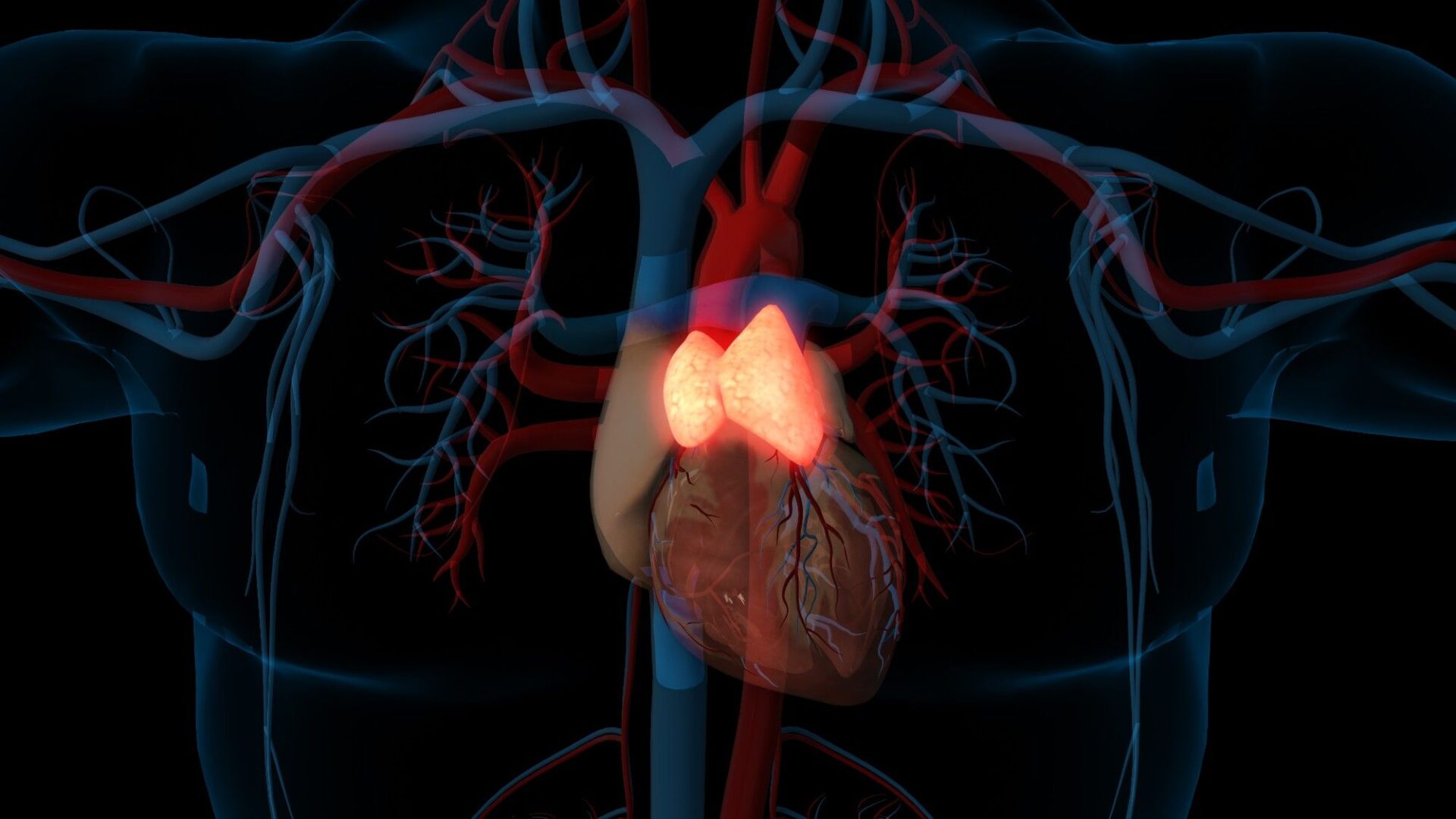
The thymus is a small organ behind the breastbone that helps to establish the body’s immune system early in life. Since it shrinks with age, the organ was once thought to become mostly inactive over time. Many people have also had their thymus removed altogether, primarily as a treatment for myasthenia gravis.
But it turns out the mini organ may be mightier than expected. Two different studies published in the journal Nature, one connecting the long-term health of adults with their thymic health and the other analyzing cancer therapy outcomes and thymic health, pointed to the thymus playing an important role in wellness. The “thymus has been overlooked for decades and may be a missing piece in explaining why people age differently and why cancer treatments fail in some patients,” Hugo Aerts, a corresponding author on both studies, said in a press release.
T-cells and immunity
The thymus’ main function is to “generate a diverse T-cell repertoire, which provides adaptive immunity throughout life,” said the Nature study on thymic long-term health consequences. While the “relevance and abundance of the T-cell repertoire at a young age are well documented,” it is likely that the thymus “retains a continued role in T-cell production throughout adulthood and that the pattern of decline of thymic function in adults is associated with poorer health outcomes.”
Article continues below
You may like
The Week
Escape your echo chamber. Get the facts behind the news, plus analysis from multiple perspectives.
SUBSCRIBE & SAVE
Sign up for The Week’s Free Newsletters
From our morning news briefing to a weekly Good News Newsletter, get the best of The Week delivered directly to your inbox.
From our morning news briefing to a weekly Good News Newsletter, get the best of The Week delivered directly to your inbox.
Higher thymic health scores were “associated with laboratory markers of continued T-cell production, greater T-cell diversity in blood and tumors and stronger activity of immune pathways, supporting thymic health as a proxy for immune competence,” said the press release. “When thymic health and T-cell diversity decline, the immune system becomes less able to respond to new threats, like cancer or other diseases.”
A surprising health indicator
People with better thymic health had “about a 50% lower risk of premature death, 63% lower risk of cardiovascular death and 36% lower risk of developing lung cancer compared to those with low thymic health,” said the release. Researchers saw “similar patterns across many other causes of death, suggesting that thymic health may reflect overall immune resilience.”
A healthy thymus was also “associated with reduced risks of progression and all-cause mortality” in cancer patients, said the Nature study on thymic health and cancer. The outcomes were especially positive for those with lung cancer. “People with healthier thymuses were more likely to respond to cancer immunotherapy drugs, which trigger the immune system to fight cancer, but don’t work for many patients,” said The Washington Post. Because of the T-cells’ role in immunity, those with their thymus removed can also have an “increased risk of autoimmune disease,” said a 2023 study published in The New England Journal of Medicine.
Future solutions
The general health of the thymus can be influenced by “lifestyle and metabolic health measures, such as smoking, physical activity or HDL levels,” said the long-term health consequences study. Thymic decay is “highly individualized even in presumed healthy adults, indicating that thymic function can also be substantially reduced in individuals who did not have their thymus surgically removed.” While the thymus cannot be directly attributed to better health outcomes, there are clearly “new leads to be explored,” the Post.
In the future, it “might be possible to engineer a thymus from an organ donor, to help people who receive transplants tolerate their new organ without taking harsh anti-rejection drugs,” said the Post. There is also interest in “probing whether there are ways to slow down the thymus’ natural deterioration,” which could “have many applications in autoimmune diseases, improving people’s responses to vaccinations as they age or improving how people respond to cancer immunotherapies.”