


The Indian Ministry of Ayush continues to raise the international profile of ayurvedic ingredients, most recently with the participation of a cabinet-level minister at a botanicals conference in Mississippi.
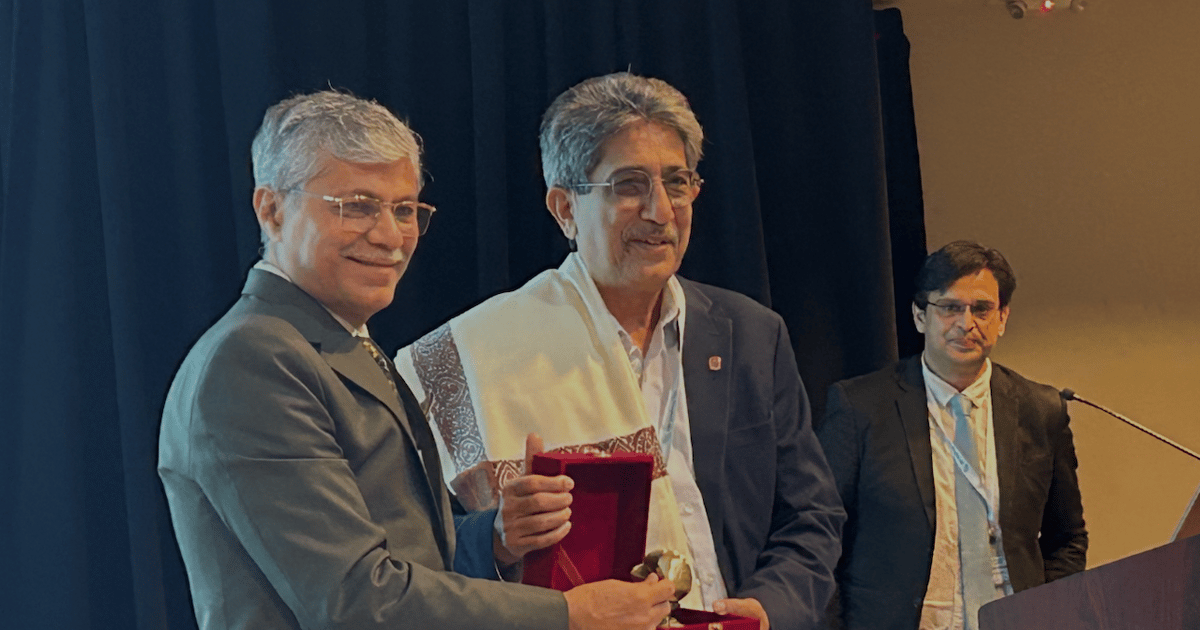
Rajesh Kotecha, the current Secretary of Ministry of Ayush, recently spoke at the International Conference on the Science of Botanicals at the University of Mississippi in Oxford, Mississippi. The annual conference is put on by the National Center for Natural Products Research (NCNPR).
Ayush and NCNPR have had a memorandum of understanding (MOU) in place for some years now. But Kotecha’s in-person presentation marks a new level of emphasis on the part of Ayush to spread the gospel about the healing powers of Indian traditional medicines and what his ministry is doing to modernize the standardization and regulatory compliance of those ingredients and the science behind them.
Ayush brings several traditions under one roof
While ayurveda is a medicinal tradition stretching back to the second century B.C., its formal recognition is much more recent. In 1995 the Department of Indian Systems of Medicine and Homeopathy (ISM&H) was created. When Narendra Modi was first elected prime minister of India in 2014 this governmental department was raised to the ministry level and adopted the name Ayush in 2021
Ayush gathers under one roof authority over various healing modalities, namely ayurveda, yoga, naturopathy, unani, siddha, and homeopathy. Naturopathy and homeopathy will be familiar to readers of SupplySide Supplement Journal, but unani and siddha are less well known. Unani is a traditional medicine system introduced into India as Islam spread in the region in the 1200s. Siddha is an ancient medicinal system that originated in southern India, which had a history distinct from that of the northern part of country right up to the consolidation of British rule in the 1850s. Of the three, ayurveda is the best known worldwide.
Ministry’s expanding budget reflected in market growth
The accelerating emphasis on ayurveda is reflected in the steady increase in the ministry’s budget, from $12.8 billion INR (Indian rupees) in 2014-15 to $39.3 billion INR in 2025-26 ($416 million). When expressed in purchasing power parity (PPP, a rough calculation of how much each unit of currency buys within a given economy), the 2025-26 budget equates to about $1.6 billion to $2.1 billion. That reflects an almost 11% annual rate of budget growth.
Ayush says it has now signed 25 MOUs at the country level and an additional 52 institute-level MOUs (of which the NCNPR agreement is one). These agreements will help to bring the level of scientific rigor in ayurvedic studies up to international standards in terms of study design and statistical analysis, a process which is still ongoing.
Industry sources say the support from the ministry has been helpful in driving the strong growth of ayurvedic ingredients in the global market. According to the ministry, the biggest export market for Ayush-regulated products is the NAFTA region (the United States, Mexico and Canada) followed by Europe. In 2022-23, India exported more than $2 billion worth of Ayush products into NAFTA, followed by about $1.75 billion into Europe.
Ayush initiatives showing on-the-ground benefits
This strengthening level of government support could go a long way toward unleashing the true health potential of ayurveda for U.S. consumers, said Roy Upton, founder and head of the American Herbal Pharmacopoeia (AHP). (Upton is also a diploma-holding Ayurvedic practitioner.)
“Considering that ayurveda is the oldest system of medicine on the planet, it only makes sense to use the tools of modern science and pharmacognosy to bring it into the 21st century,” Upton said. “In my opinion, we have only invested in botanical medicines from the perspective of drug development rather than recognizing their full potential for health benefits.”
Kantha Shelke, Ph.D., head of the Chicago-based consulting firm Corvus Blue, said the concerted effort by the Ayush ministry to modernize and standardize the manufacturing conditions of ayurvedic ingredients is starting to show real benefits for supplement formulators in the North American market.
“What’s most striking about Ayush’s global push is its deliberate pivot from cultural ambassadorship and nostalgia to regulatory infrastructure, which is a consequential shift that is bankable,” Shelke said.
Shelke noted that Ayush has made rapid strides in calibrating ayurvedic tradition with global initiatives, including modernizing its systematic reporting and incorporating predictive and recent technological advancements such as the World Health Organization’s recent technical brief on the use of AI in traditional medicine.
“For U.S. supplement companies sourcing ayurvedic ingredients, that scientific scaffolding matters more than any awareness campaign, because it begins to translate ayurveda into the regulatory vocabulary that global buyers require,” she said.