




Mindfulness is described as a way to center us, calm us and make us happier and more present.
Northeastern University religion professor Liz Bucar, author of the new book “Beyond Wellness: How Restoring the Religious Roots of Spiritual Practices Can Heal Us,” thinks of mindfulness in the opposite way.
“Mindfulness drives me a little crazy,” said Bucar, laughing.
Bucar noted that sometimes mindfulness means intentional, sometimes it means focused, and sometimes it is slapped onto daily tasks — mindful parenting, driving mindfully, eating mindfully, etc.
“It’s everywhere, so it means everything,” Bucar said. And by that token, “It means nothing.”
Mindfulness, whose benefits are touted by CEOs, celebrities like Gwyneth Paltrow and LeBron James and social media influencers, has become part of the multi-trillion-dollar wellness industry.
But its growing demand suggests that modern wellness may not quite be hitting the mark.
Northeastern Global News, in your inbox.
Sign up for NGN’s daily newsletter for news, discovery and analysis from around the world.

Bucar also notes that, even if your mind is present and you take the correct supplements to optimize gut health, brain function and whatever new fad the wellness industry has chosen as its latest target, you aren’t immune to death, disease and misfortune.
“Wellness, I feel, is a very anemic idea of what human flourishing looks like,” Bucar said. “We’re chasing something that is not the whole picture.”
Religions, on the other hand, have considered the whole picture, Bucar said.
She acknowledges that religion, particularly organized religion, can make people uncomfortable.
“I like to say religion has a public-relations problem,” Bucar said. “But that doesn’t mean that the reason that religion and religions exist is gone.”
But in her new book, Bucar argues that understanding the religious histories of “spiritual” or “wellness” activities provides not just essential context but also makes their practice more meaningful.
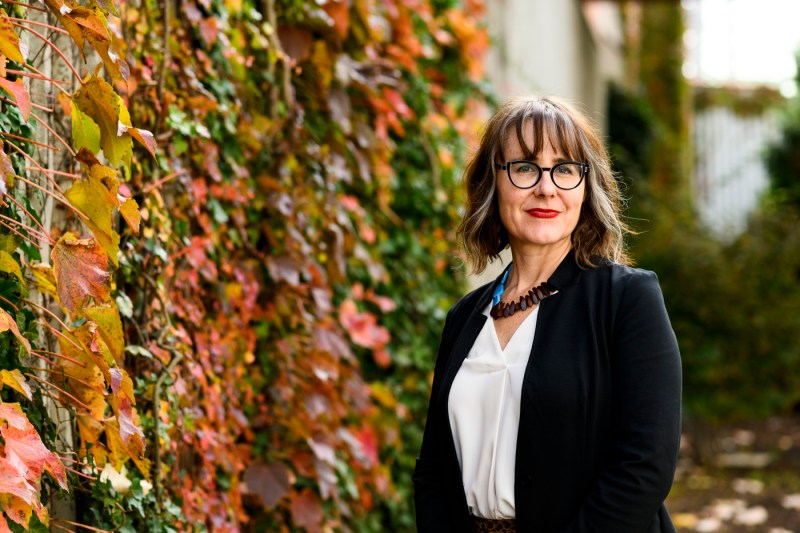 Liz Bucar, professor of religion and dean’s leadership fellow at Northeastern, is the author of “Beyond Wellness: How Restoring the Religious Roots of Spiritual Practices Can Heal Us.” Photo by Alyssa Stone/Northeastern University.
To develop this idea, Bucar writes about her own experiences with seven wellness practices — from mindfulness to taking psychedelics to soundbathing, a meditative experience where participants are immersed in sound waves and vibrations from instruments. Bucar then explores each of these practices’ religious roots.
In the chapter on mindfulness, for example, Bucar discusses her “Selling Spirituality” class at Northeastern — which she nicknames her “mindfulness killjoy class.” She traces modern mindfulness from its roots in Buddhist Vipassana meditation to its current “translation” of having been “mainstreamed and secularized and domesticated” into a practice that can be used in hospitals, schools and therapy sessions.
The book also discusses how understanding these religious contexts can improve modern wellness practices and our understanding of the world.
In a chapter discussing sound baths and sound, Bucar discusses how the Sikh community uses kirtan chanting and raags, or music associated with different emotions like happiness, tranquility, sorrow and even panic, to train practitioners to “improve the taste of [their] ears.” This elevation of listening skills can inform emotional intelligence, and help us understand conflict, misunderstandings and more, Bucar added. It can also lead to a more holistic and deeper experience compared to a modern sound bath, which emphasizes feeling positive and comfortable, she said.
Bucar cautions that providing religious context and history doesn’t mean that every single wellness practice will suddenly become more meaningful for everyone.
The book is also “very personal and very vulnerable,” as Bucar wrestles with her unique feelings about certain spiritual practices. For instance, she writes about her late father, who was an alcoholic, and how her attendance at Alcoholics Anonymous meetings after his death helped her deal with all the related trauma. She also describes how the hymns and liturgy surrounding taking ayahuasca with a Santo Daime community enabled her to relax enough to process trauma from her father’s passing.
“Not all practices are good for everybody given what their core values are or their worldview or their goals,” Bucar said. For instance, she described seated meditation as “not my jam,” because she has trouble sitting still.
“I know people love it,” Bucar said of seated meditation. “It’s just not part of my practice.”
Even if readers cannot directly relate to Bucar’s experiences, she hopes that, ultimately, the religious history and evolution of thought involved in spiritual practices can provide not only context but also make the practices more meaningful.
“The idea today is that you can [engage in] these spiritual practices without getting involved in the mess of religion – that they can be completely secular and safe,” Bucar continued. “But maybe the mess, maybe some of that context and content, is what makes them work.”
Sara Hendren, an associate professor of art, design and architecture at Northeastern who is involved in the university’s Sacred Space, an area for prayer, contemplation and meditation, said that the book comes at a good time, particularly as higher education debates how best to support students at a formative time of their lives.
Hendren said she applauds the attention to student wellness at universities, but echoes Bucar’s concerns about wellness’s limitations.
“Wellness is framed almost exclusively in therapeutic and psychological terms for understanding our everyday suffering and challenges,” Hendren said, while insights from different faiths and traditions “often get treated as secondary therapeutic benefits.”
“When our only language is psychological, we miss an enormous and rich repository of poetry, wisdom, literature, philosophical debates and devotion practices that invite us to a much deeper experience of the world,” Hendren said.