




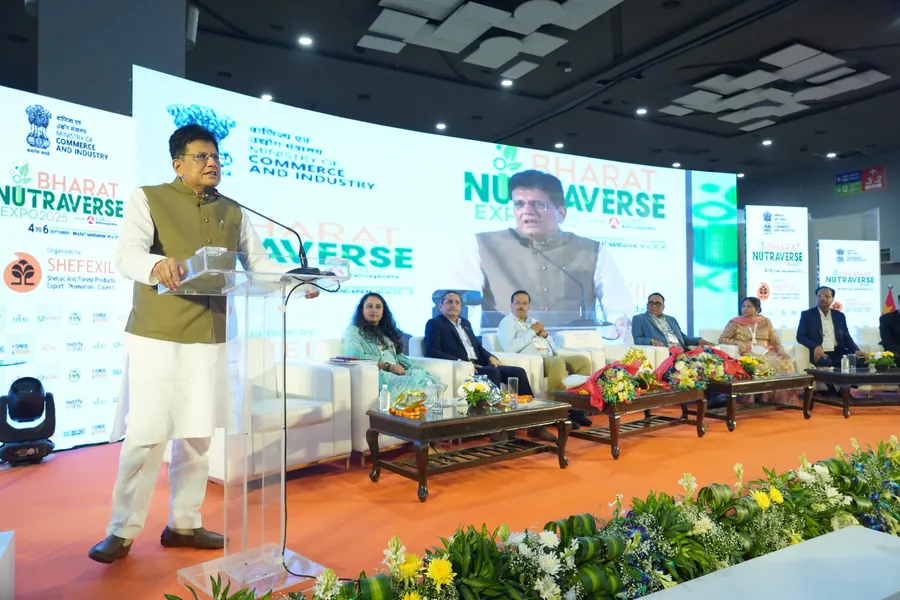
India is hosting its second annual Bharat Nutraverse Expo 2026 (Sept 7–9) and is seeking eligible international delegates to attend the event in New Delhi. Nutrition Insight speaks with a government representative to discuss ambitions for the nation’s nutraceutical sector, particularly for trending Ayurvedic botanicals that hold global commercial potential in key markets.
The discussion also taps into the advantages the country has to offer in terms of advancing cost-effective innovation alongside integrating pharma with nutrition amid the GLP-1 boom.
Global brands are now familiar with Ayurvedic ashwagandha and turmeric’s health benefits that are substantiated by evidence. However, Dr. Debjani Roy, executive director of Shellac & Forest Products Export Promotion Council (SHEFEXIL), notes there are several lesser-known Indian botanicals that have yet to reach global markets.

He points out: “India is one of the 17 megabiodiversity-rich countries with around 15,000 medicinal plant species, of which 8,000 are used in Indian medicine, making it one of the world’s most important hubs for medicinal and aromatic plants.”
“Its centuries-deep Ayurvedic tradition has given the world some of its most commercially potent and globally recognized botanical actives: ashwagandha, turmeric, Boswellia, and moringa, all now backed by rigorous clinical science and in surging demand from finished goods brands across North America, Europe, and the Asia-Pacific region.”
Underrated Ayurvedic botanicals with global potential
Roy claims that the next wave of growth in India’s nutraceutical sector will bring forward the nation’s lesser-known botanicals, which carry deep traditions but come with different levels of scientific validation. He shares the emerging botanicals with widespread potential:
Guduchi: For immunomodulatory and anti-inflammatory benefits. Early clinical work exists but needs large-scale human trials.Kutki: For liver health and metabolic support. It has strong traditional backing but limited global clinical datasets.Bacopa monnieri, or Indian pennywort, is already gaining traction for cognitive health with robust clinical evidence, one of the most export-ready.Amla is a potent antioxidant that supports metabolic and skin health, with increasing clinical validation.
On the question of whether these plants are commercially ready for global distribution, Roy points to strengths including manufacturers’ standardization capabilities, as well as the sustainability and traditional credibility of many of these novel ingredients. However, there are critical gaps in clinical substantiation, IP protection, and regulatory dossiers.
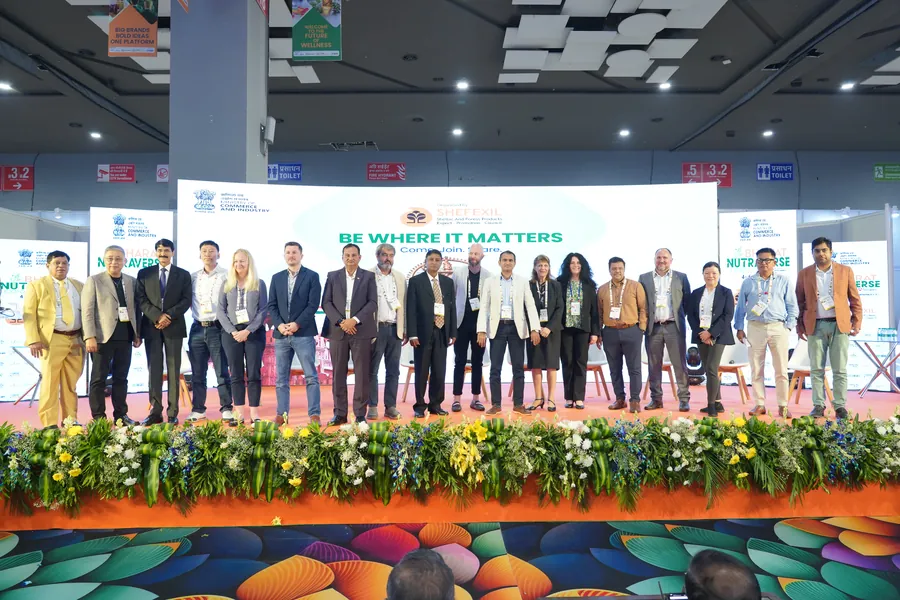 The government of India’s Nutra Task Force is aiming to become a US$100 billion nutraceutical powerhouse.“The opportunity now is clear: to translate traditional wisdom into scientifically robust, evidence-backed ingredients that meet global regulatory and commercial expectations.”
National ambitions
Roy reveals that the Government of India’s Nutra Task Force is aiming to become a US$100 billion nutraceutical powerhouse.
He states that this national ambition is strategic and achievable. “Success will depend on integration across science, regulation, and market access, not scale alone. In this context, the Government of India’s announcement of the second annual Bharat Nutraverse Expo 2026 marks a significant milestone.”
“The event highlights India’s intent to position itself as a global leader in nutraceuticals while extending a formal invitation to international finished goods innovators, brand leaders, and product development teams to engage directly with the Indian ecosystem.”
From supply hub to solution provider
The event, organized by SHEFEXIL under the Ministry of Commerce and Industry, represents one of the most strategically important trade and collaboration platforms for the global nutraceutical sector, says Roy. “Bharat Nutraverse shifts India from ‘supply hub’ to ‘solution provider.’”
He details five key pillars that support the 100 billion vision: The event connects Indian ingredient manufacturers with global brands, distributors, and investors while positioning the nation not just as a raw material supplier but as a provider of clinically validated, standardized ingredients.
“Additionally, Bharat Nutraverse facilitates dialogue on global compliance (US FDA, European Food Safety Authority, Australian Therapeutic Goods Administration), helping Indian players become export-ready. Advancements in botanical standardization, delivery formats, and functional blends are also key,” says Roy.
 Roy points to opportunities to translate tradition into evidence-backed ingredients that meet global regulatory and commercial expectations.Lastly, the event brings together academia, start-ups, contract manufacturers, and brands under one umbrella.
Leading categories and ingredients
Women’s health is rapidly growing across supplement markets across reproductive health, hormonal balance, bone density, perimenopause and menopause support, and longevity, notes Roy.
“Drivers of this trend include demographic shifts due to global aging populations, a rise in a preventative health care mindset that moves from treatment to prevention, and data-driven wellness spurred by wearables, microbiome testing, and genetic insights.”
He details additional drivers pointing to the rise in women-centric research that addresses gaps in hormonal, reproductive, and menopausal health and post-pandemic awareness on immunity and holistic well-being.
“Furthermore, ingredients leading the space in women’s health are shatavari for hormonal balance and fenugreek for metabolic and lactation support. In longevity or healthy aging, curcumin (anti-inflammatory) and adaptogens like Ashwagandha lead.”
Roy adds that probiotics and prebiotics lead in personalized nutrition and microbiome solutions. “The convergence of biology, data, and lifestyle is redefining nutrition as highly individualized.”
Enabling cost-effective innovation
According to Roy, India’s burgeoning nutraceuticals sector fills critical global gaps, such as for probiotics, microbiome, and healthy aging solutions.
He touts the local industry’s fermentation expertise at scale, with a cost-efficient production of probiotic strains and enzymes. Also, new advances in botanical and microbiome solutions bring a unique capability to combine Ayurvedic botanicals with modern microbiome science.
“The country’s active pharmaceutical ingredient pharma backbone ensures strong infrastructure supports quality, scalability, and export compliance. Additionally, the combined cost advantage and skilled talent enable global brands to innovate affordably.”
 Ingredients leading the space in women’s health are shatavari for hormonal balance and fenugreek for metabolic and lactation support.“The emerging contract development and manufacturing organization ecosystem is expanding rapidly, and India is uniquely positioned to deliver holistic gut plus longevity solutions at scale,” notes Roy.
Integrating pharma with nutrition amid GLP-1 boom
India has been seeing a GLP-1 boom as Novo Nordisk’s semaglutide patent expired last March, marking a major moment for India’s pharma and nutrition sectors, as local drug makers launched cheaper alternatives, increasing global access for millions suffering from chronic diseases.
On this topic, Roy comments: “The rapid rise of GLP-1 therapies, such as semaglutide, is reshaping the weight management landscape in India. At the same time, the Drug Controller General of India has intensified surveillance to curb the unauthorized sale and promotion of these drugs, reinforcing the need for ethical and compliant use.”
“While highly effective for weight loss, GLP-1 therapies also highlight a critical gap: nutrition. Their mechanism, primarily appetite suppression, can inadvertently lead to unintended physiological consequences if not supported appropriately.”
Nutrition Insight previously spoke with India-based testing center Equinox Labs to learn how wider access to generics could impact eating patterns.
“Key challenges associated with GLP-1 use include appetite suppression, which may lead to nutrient deficiencies, muscle loss risk, gut health imbalance, and long-term dependency concerns.”
“Nutraceuticals can step in with protein and amino support to prevent muscle loss, dietary fiber solutions to improve satiety and gut health, and probiotics to restore microbiome balance.”
He adds botanicals, such as Gymnema sylvestre and Garcinia cambogia, can aid in appetite modulation.
“India’s advantage is its ability to offer safe, adjunct nutritional solutions alongside pharmacotherapy, alongside the potential to develop GLP-1 companion nutraceutical protocols.”
“The future is not pharma versus nutraceuticals, it is integrated metabolic care.”
Roy underscores that India’s opportunity lies not just in what it produces, but in how it validates, standardizes, and positions it globally. “Bharat Nutraverse 2026 becomes the bridge, connecting tradition, science, and global market demand into one coherent, scalable story.”
Event details
The government-facilitated trade show is designed to generate real commercial outcomes between global influential buyers and India’s leading nutraceutical exporters, raw material suppliers, and ingredient innovators.
A science-led conference at the event will address the global trends reshaping supplement formulation, such as aging and longevity, women’s health, microbiome, personalized nutrition, and evidence-based botanical actives. The event will also host a dedicated Women in Nutraceuticals program.
Attendees can also directly engage with government ministers, export council officials, and regulatory authorities at the ministerial function. They can also access knowledge forums on regulatory harmonization, trade facilitation, and global compliance.d lactation support.