




 5 min read
There are numerous reasons to include more fiber-rich foods in your daily diet, chief among them the fact that most people are not getting enough fiber. While brown rice is often a go-to pick for people looking to do just that—it’s tasty, easy to make, and adaptable to a variety of dishes—there are also plenty of foods with more fiber than brown rice that are worth enjoying on a regular basis.
“Adding more fiber to your diet is a simple, effective step toward improved gut health and overall well-being,” says Natalie Ledesma, M.S., R.D.N., a registered dietitian nutritionist in San Francisco. Along with aiding digestion and supporting regularity, Ledesma explains that fiber also nourishes the beneficial bacteria living in your gut to boost energy and optimize metabolism. But that’s not all fiber can do.
Meet the experts: Natalie Ledesma, M.S., R.D.N., a registered dietitian nutritionist in San Francisco; Juliana Vocca, M.S., R.D., a registered dietitian and owner of Prime Women Nutrition.
Soluble fiber, the type that dissolves in water to form a gel-like substance during digestion, may help lower cholesterol levels and support blood sugar management, says Juliana Vocca, M.S., R.D., a registered dietitian and owner of Prime Women Nutrition. “Insoluble fiber, the type that does not dissolve in water, is important for preventing constipation, promoting digestive health, and supporting weight management by increasing satiety,” she adds.
According to the U.S. Department of Agriculture (USDA), one cup of cooked long-grain brown rice contains 3.23 grams (g) of fiber. And per the Mayo Clinic, you should aim to consume 14 g per 1,000 calories every day, or between 25 and 30 g of fiber per day. Read on for the tasty foods that will deliver more than brown rice, along with a slew of other health benefits.
High-fiber foods that beat out brown riceOatmeal
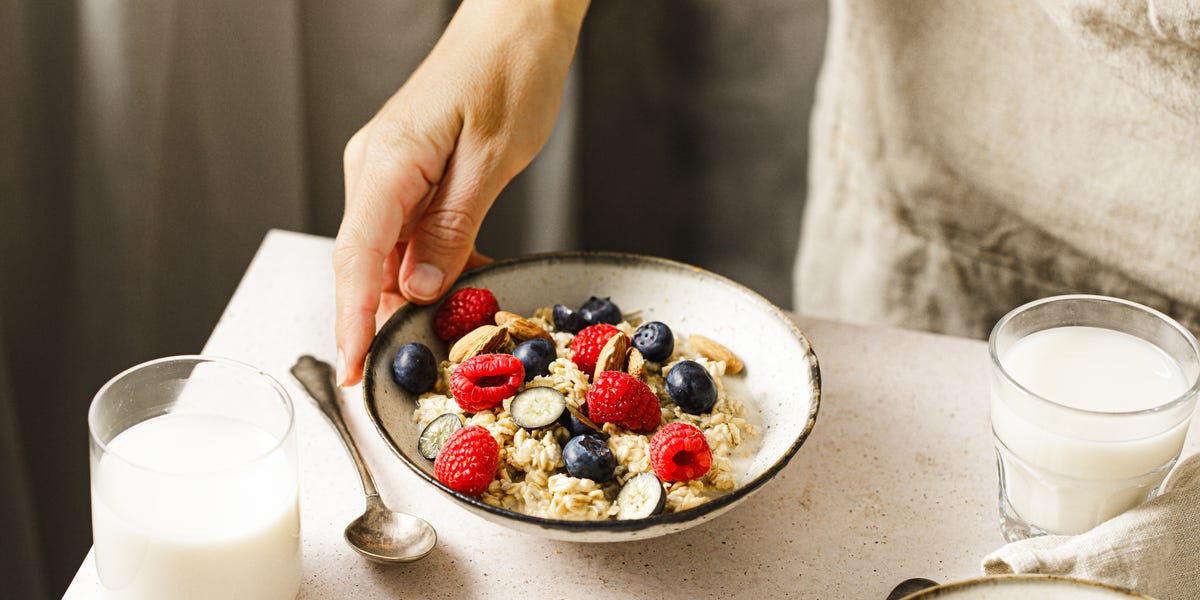
“Oatmeal, particularly whole oats or steel-cut oats, can be a great source of soluble fiber and also resistant starch,” says Ledesma. Per the USDA, one serving of whole, old-fashioned oats (which is ½ cup of dry oats) contains 5.2 g of fiber. Ledesma adds that if you make overnight oats or cook and cool your oatmeal in the fridge before eating it, you can increase the amount of good-for-you resistant starch. “These are carbohydrates that increase beneficial bacteria and protective short-chain fatty acids, ultimately improving gut barrier function and reducing gut inflammation,” she explains.
Brussels sprouts
Brussels sprouts contain 4.8 g of filling fiber per cup. “In addition to dietary fiber, vitamins, and minerals, these veggies are rich in sulforaphane,” says Ledesma. “A powerful antioxidant with anti-inflammatory actions, sulforaphane has been shown to reduce cancer risk and help to facilitate liver detoxification.”
Quinoa
“Quinoa earns its reputation as a nutrition powerhouse for more than its fiber,” says Vocca, despite the fact that cooked quinoa contains 5.18 g of fiber per cup. “This naturally gluten‑free seed delivers complete protein, meaning it contains all nine essential amino acids your body uses for muscle repair, hormone production, and steady energy. That protein‑plus‑fiber combo helps keep you satisfied longer, which supports appetite control throughout the day.” Vocca adds that quinoa also contains flavonoids to reduce inflammation and magnesium and potassium, “two minerals that help relax blood vessels, regulate fluid balance, and support healthy blood pressure.”
Broccoli
“Broccoli is a cruciferous vegetable that is not only a good source of fiber, but it is also packed with antioxidants, vitamins, and bioactive compounds that support long‑term health in multiple ways,” says Vocca. She explains that a cup of broccoli contains nearly a full day’s worth of immune-boosting vitamin C, as well as vitamin K, calcium, and magnesium for bone health, and lutein and zeaxanthin for eye health. “Broccoli also contains cancer-protective compounds, sulforaphane and indole‑3‑carbinol, which have been shown to help protect cells from DNA damage and support the body’s detox pathways,” Vocca adds. Per the Mayo Clinic, one cup of chopped, cooked broccoli contains 5 g of fiber—just one of many reasons to eat broccoli every day.
Pears
According to the USDA, one medium Bartlett pear contains an impressive 5.52 g of fiber. Pears are also a great source of polyphenols, notes Ledesma. “Polyphenols have been shown to support beneficial microbes and those protective short-chain fatty acids in the gut and inhibit the growth of pathogenic bacteria,” she explains. “They offer cardiometabolic benefits as well—helping with cholesterol, blood sugar, blood pressure, and body weight.”
Apples
While apples contain a variety of antioxidants, including quercetin and chlorogenic acid, their true claim to fame is their fiber. “Apples are one of the richest food sources of pectin, a soluble, fermentable fiber that feeds beneficial gut bacteria, supports smoother digestion, and helps lower LDL (bad) cholesterol,” Vocca says. A medium-sized apple contains around 4 g of fiber, provided you are eating the skin.
Raspberries
“Raspberries are nutrient-dense, low-calorie, and packed with fiber—8 grams per cup,” says Vocca. “This combination makes them exceptionally satiating and useful for appetite regulation without feeling deprived.” These gems are also loaded with antioxidants and anti-inflammatory compounds, including vitamin C, lutein, and zeaxanthin. “These compounds support vision, heart, gut, and brain health and aid in blood sugar and weight management,” Vocca says. They also make raspberries the number-one fruit to eat for better blood sugar.
Lentils
Lentils may be tiny, but they pack an impressive punch of fiber: 15.64 g per cup, to be exact. “In addition to their fiber content, lentils are rich in polyphenols and resistant starch,” says Ledesma. “The saponins and phytosterols in these legumes offer antioxidant, anti-inflammatory, and cardiovascular benefits.” She adds that lentils have been associated with improved lipid levels, better blood sugar management, and healthier blood pressure and body weight.
Chia seeds
Chia seeds contain an impressive 10 g of fiber per ounce—and that’s just the start of their health perks. “Chia is one of the richest plant sources of alpha-lipoic acid (ALA), an omega‑3 fatty acid tied to lower inflammation, healthier arteries, and long‑term cognitive support,” says Vocca. “Just one serving delivers meaningful amounts of calcium, magnesium, and phosphorus, a trio that supports bone density, muscle and nerve function, and energy metabolism. Between omega‑3s, fiber, and minerals, chia seeds support healthier cholesterol levels, steadier blood pressure, and better blood sugar control.”
Black beans
Like lentils, black beans also deliver an impressive array of plant compounds that help fight cancer, boost heart health, and improve digestion, per the Cleveland Clinic. “They also provide folate, potassium, magnesium, iron, and zinc,” Ledesma says, in addition to 11.5 g of fiber per cup.
RELATED STORIES