




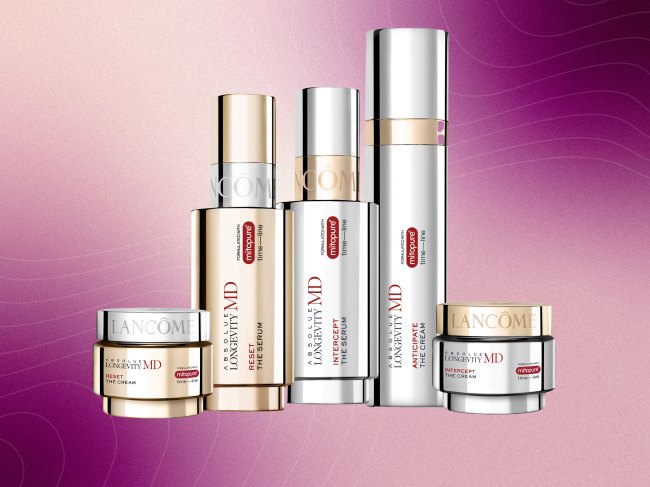
Instead of waiting for a problem to arise, beauty companies today are embracing a preventative approach. The field of skin longevity is especially gaining popularity, encompassing products aimed at keeping skin healthier and younger for longer.
“Longevity is a true paradigm shift, and beauty is its most visible frontier. If you want to see how science extends the look of vitality, you look at the skin,” Dr. Tiffany Moon, an advisory board member at Lancôme, tells Flow Space. “It’s no longer about simply correcting visible signs of aging, but about acting on the skin’s visible biological age, to preserve and extend its vitality over time.”

Lancôme recently launched its Absolue Longevity MD Collection, five new products to help the skin “behave more youthful” and “resilient,” Moon says. The products are grouped into three categories to address signs of aging before, during, and after they arise. They are, therefore, called “Anticipate, Intercept, and Reset.” Timeline, a longevity biotechnology company based in Switzerland, produces Mitopure, a potent form of the Urolithin A supplement found in the skincare line, which has been touted as an enhancer of mitochondrial function and performance. Moon calls the supplement a “potent cellular battery rejuvenator.”
Market research shows that consumers are ready for beauty that supports health and longevity. A vast majority, 75%, of Gen Xers say that buying beauty products is a great way to treat themselves, many of whom say they also do so for their health, according to a survey conducted by Women’s Wear Daily. And language matters. Kari Molvar, a writer covering the beauty industry in New York City and author of The New Beauty: A Modern Look at Beauty, Culture, and Fashion, previously told Flow Space that “anti-aging” rhetoric on products sends a harmful message that women shouldn’t be aging. Longevity, therefore, may help signal that skincare isn’t just about aesthetics but also about improving health span, how long we live in good health.
“People may externally see the appearance, but what’s happening at the cellular level and the biological level is like improved functioning,” Dr. Zakia Rahman, a clinical professor of dermatology at Stanford School of Medicine and faculty member at the Stanford Center on Longevity, previously told Flow Space.
The science underlying the products has culminated in investments totaling $50 million in research and development, according to Lancôme.
“Longevity focuses on supporting skin health throughout every stage of a woman’s journey,” Moon says. “It’s no longer about accepting age or simply correcting visible signs, but about acting on fundamental biological processes to preserve & restore skin health span.”