




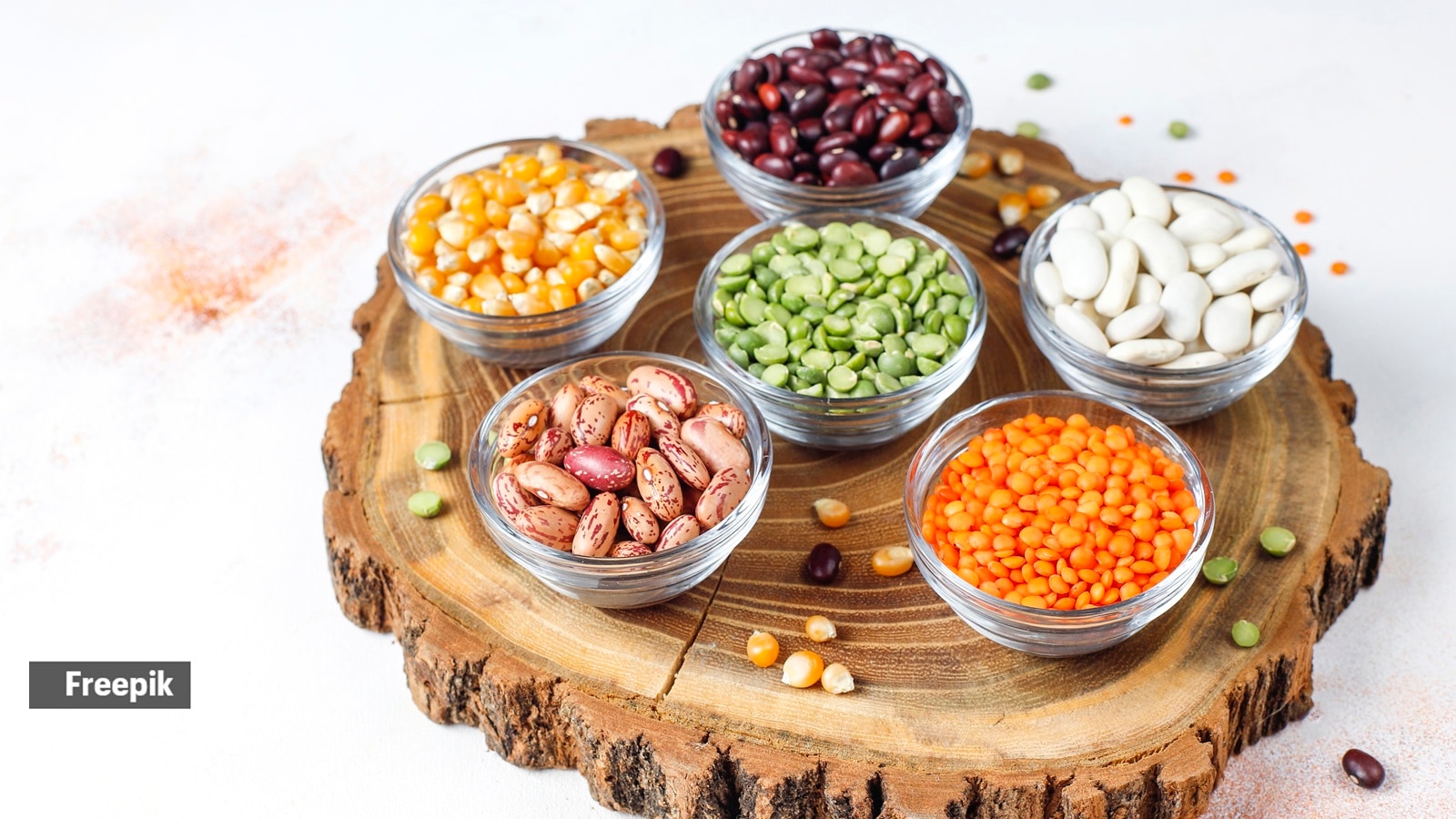
Just like you cannot get through a gruelling day without ranting to your work bestie, a high-protein diet alone cannot guarantee long-term health. You need to pair protein with carbohydrates to maximise its efficiency in the body. During a recent episode of The Masoom Minawala Show, health coach Luke Coutinho revealed that if you’ve been relying on dal as your only source of protein, this might change how you build your meals. “Dal alone is not the protein. Dal is a carbohydrate. It’s got amino acids that have to combine with a cereal to complete the amino acid profile so that it becomes a complete protein.”
Why is protein alone not enough?
Dr Samrat Shah, a consultant physician at Ruby Hall Clinic, Pune, explains that without carbs, the body will lack glucose to use as fuel. “In several days, it can start transitioning to burning fat and producing ketones, an experience that can accumulate to producing so-called low-carb flu symptoms of fatigue, headache, irritability, or brain fog as the shift progresses,” explains Dr Shah.

DISCLAIMER: This article is based on information from the public domain and/or the experts we spoke to. Always consult your health practitioner before starting any routine.
If you are on a high-protein diet, consuming carbs becomes even more essential. “Protein, by nature, is very satiating and causes a natural drop in calorie consumption. It also exhibits a greater thermic effect, aka, your body burns up more calories in order to break down the protein compared to the perspective of fats or carbohydrates,” he further elaborates. This is generally why there is a link between high-protein diets and rapid weight loss.
“But, pairing protein with carbohydrates and healthy fats is crucial as this helps stabilise blood sugar and keeps you fuller for longer,” he points out.
So, while carbs are important, the type of carbs consumed is also very important.
According to him, minimally processed and wholesome carbs are always preferred. “Ultra processed carbs with little to no nutritional benefits are best consumed minimalised. Rather than cutting out carbs, the idea is to eat a balanced diet with complex carbohydrates, sufficient protein and fat as well as plenty of fruits and vegetables,” says Shah.
Make protein work for you
Dr Dipak Bhangale Consultant Gastroenterology, Hepatology, Interventional Endoscopy, Liver Transplantation, Kokilaben Dhirubhai Ambani Hospital, Navi Mumbai also notes that the body can “absorb” protein at once, but the real issue isn’t digestion. Our gut easily handles large amino-acid loads, but how much protein meaningfully supports muscle growth before returns fade.
Story continues below this ad
“Research suggests about 0.3–0.4 g/kg per meal (roughly 20–40 g for most adults) maximizes muscle protein synthesis, spread across 3–4 meals to reach 1.6 g/kg/day,” he said. Larger doses aren’t wasted. They extend the anabolic response or are used for repair and energy,” he illustrates.
Finally, it is essential to distribute your protein intake evenly through the day. “Choosing high-quality proteins (milk, eggs, fish, lean meats, or complementary plant sources), and ensuring each meal supplies ~2.5–3 g leucine, a key amino acid that triggers muscle building, would help in this regard. “Combine this with resistance exercise, proper recovery, and spaced meals rather than constant snacking to “re-sensitize” the system,” he added.
DISCLAIMER: This article is based on information from the public domain and/or the experts we spoke to. Always consult your health practitioner before starting any routine.