




Milk Powder Market: A Global Staple in Modern Nutrition
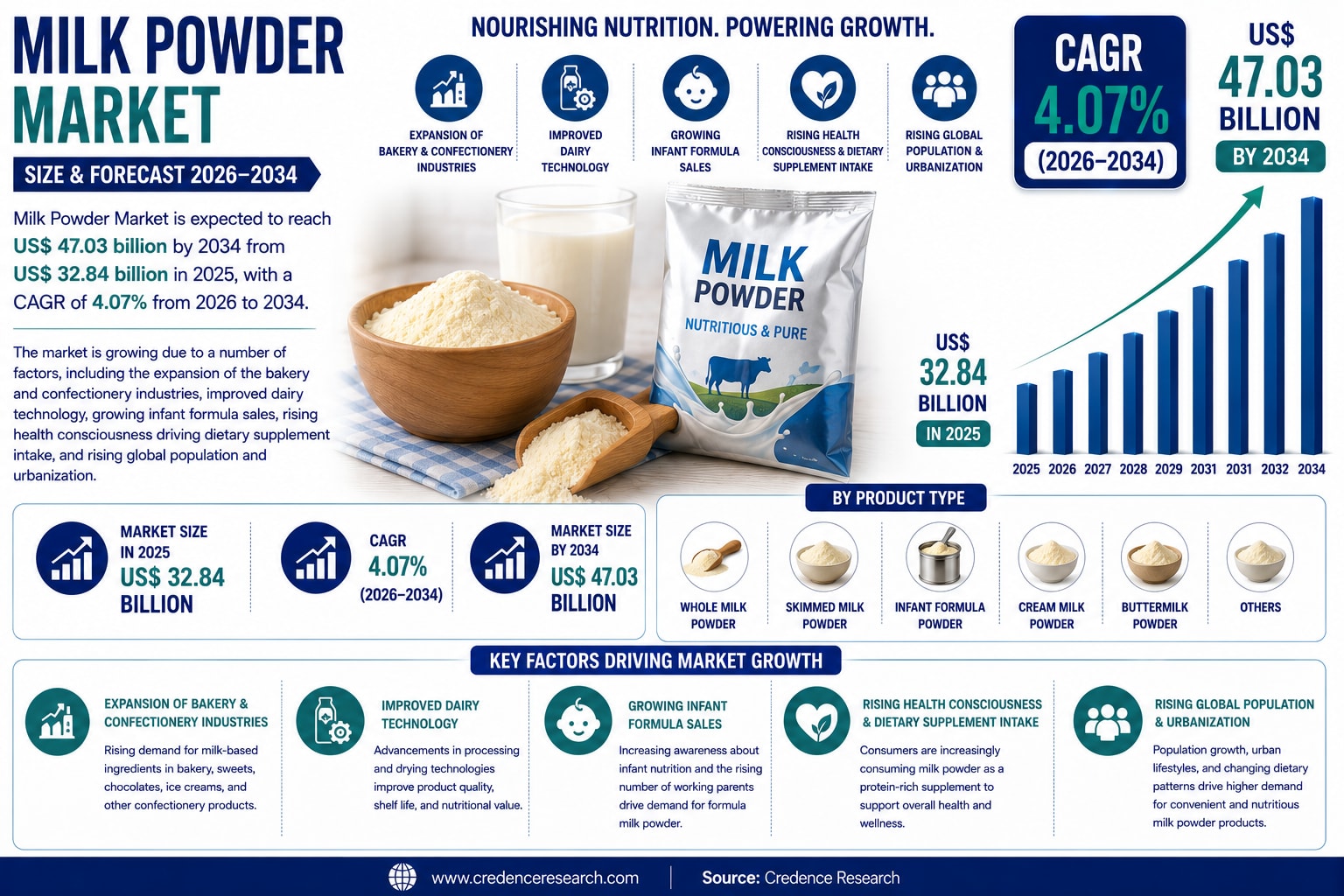
The global dairy industry continues to evolve, and milk powder has emerged as one of its most essential and versatile segments. According to Renub Research, the Milk Powder Market is projected to grow from US$ 32.84 billion in 2025 to US$ 47.03 billion by 2034, expanding at a CAGR of 4.07% from 2026 to 2034.
This steady growth reflects the increasing global demand for convenient, long-lasting, and nutritionally rich dairy products. Milk powder plays a critical role in both household consumption and industrial food production, making it a cornerstone of the global food supply chain.
What Is Milk Powder and Why It Matters
Milk powder is produced by removing water from liquid milk through processes such as spray drying, resulting in a shelf-stable product that is easy to store and transport.
It is widely used across various applications, including:
Infant formulaBakery and confectionery productsBeveragesProcessed foodsAnimal feed
Its long shelf life and ease of handling make it particularly valuable in regions with limited refrigeration or inconsistent dairy supply.
Key Growth Drivers Shaping the Market
Rising Global Demand for Dairy Products
One of the primary drivers of the milk powder market is the increasing global demand for dairy products. Population growth, urbanization, and rising disposable incomes are fueling consumption across both developed and developing regions.
Milk powder offers a convenient solution for meeting this demand, especially in areas where fresh milk supply is limited. Its versatility in food manufacturing further enhances its importance in the global dairy ecosystem.
Technological Advancements in Processing and Fortification
Technological innovation is significantly improving the quality and appeal of milk powder. Modern processing techniques ensure better nutritional retention, safety, and consistency.
Key advancements include:
Spray-drying and dehydration technologiesFortification with vitamins, minerals, and probioticsImproved packaging for extended shelf life
These innovations are particularly important for infant nutrition and health-focused products, where quality and safety are critical.
Expanding Export Opportunities
Global trade plays a crucial role in the milk powder market. Many countries rely on imports to meet their dairy needs due to limited domestic production.
Major exporting countries supply milk powder to regions in Asia, the Middle East, and Africa, where demand for dairy products continues to grow.
Improved logistics, trade agreements, and cold chain infrastructure are further supporting cross-border distribution and market expansion.
Market Segments Driving Demand
Whole and Skimmed Milk Powder
Whole milk powder and skimmed milk powder are the primary product types in the market. Whole milk powder is valued for its rich taste and fat content, while skimmed milk powder is preferred by health-conscious consumers seeking lower-fat options.
Infant Formula: A Key Growth Segment
Infant formula is one of the most important applications of milk powder. Parents increasingly seek fortified products that support infant growth, development, and immunity.
This segment is particularly strong in emerging markets, where rising incomes and awareness of nutrition are driving demand.
Food Processing and Industrial Applications
Milk powder is widely used in the food industry, particularly in:
Bakery productsConfectioneryReady-to-eat mealsDairy-based beverages
Its versatility and long shelf life make it an essential ingredient for manufacturers.
Regional Insights: Global Market Trends
United States: Strong Domestic and Export Demand
The United States milk powder market benefits from a well-developed dairy industry and strong export capabilities. Milk powder is widely used in processed foods and infant formula, supporting both domestic consumption and international trade.
Germany: High-Quality Production
Germany’s market is supported by advanced processing technologies and strict quality standards. The country plays a significant role in supplying milk powder to European and global markets.
India: Rapid Growth and Rising Consumption
India’s milk powder market is expanding rapidly due to increasing dairy consumption, urbanization, and population growth. Milk powder serves as a convenient alternative in regions with limited refrigeration.
UAE: Import-Driven Demand
The UAE relies heavily on imports to meet its milk powder demand. High urbanization and changing dietary preferences are driving consumption in the region.
Challenges Facing the Market
Fluctuating Raw Milk Prices and High Production Costs
Volatility in raw milk prices is a major challenge for the industry. Production costs are also influenced by energy consumption, packaging, and logistics expenses.
Manufacturers must balance cost management with maintaining product quality and competitive pricing.
Competition from Plant-Based Alternatives
The growing popularity of plant-based milk powders is creating competition for traditional dairy products.
Consumers seeking lactose-free, vegan, or environmentally friendly options are increasingly turning to alternatives such as soy, almond, and oat-based powders.
Competitive Landscape
The global milk powder market includes major players such as Nestlé, Danone, Saputo Inc., Arla Foods amba, The Kraft Heinz Company, Royal FrieslandCampina N.V., Land O’Lakes Inc., China Mengniu Dairy Company Limited, and Ausnutria Dairy Corporation Ltd.
These companies are focusing on:
Product innovation and fortificationExpansion of export marketsSustainable production practicesAdvanced processing technologiesFinal Thoughts
The milk powder market is a vital component of the global dairy industry, offering a unique combination of convenience, nutrition, and versatility. With projections reaching US$ 47.03 billion by 2034, the market is set for steady and sustained growth.
As consumer preferences evolve and global demand for dairy products continues to rise, milk powder will remain an essential ingredient in both household and industrial food applications.
The future of the market will depend on innovation, sustainability, and the ability to adapt to changing dietary trends—ensuring that milk powder continues to meet the needs of a rapidly evolving global population.