




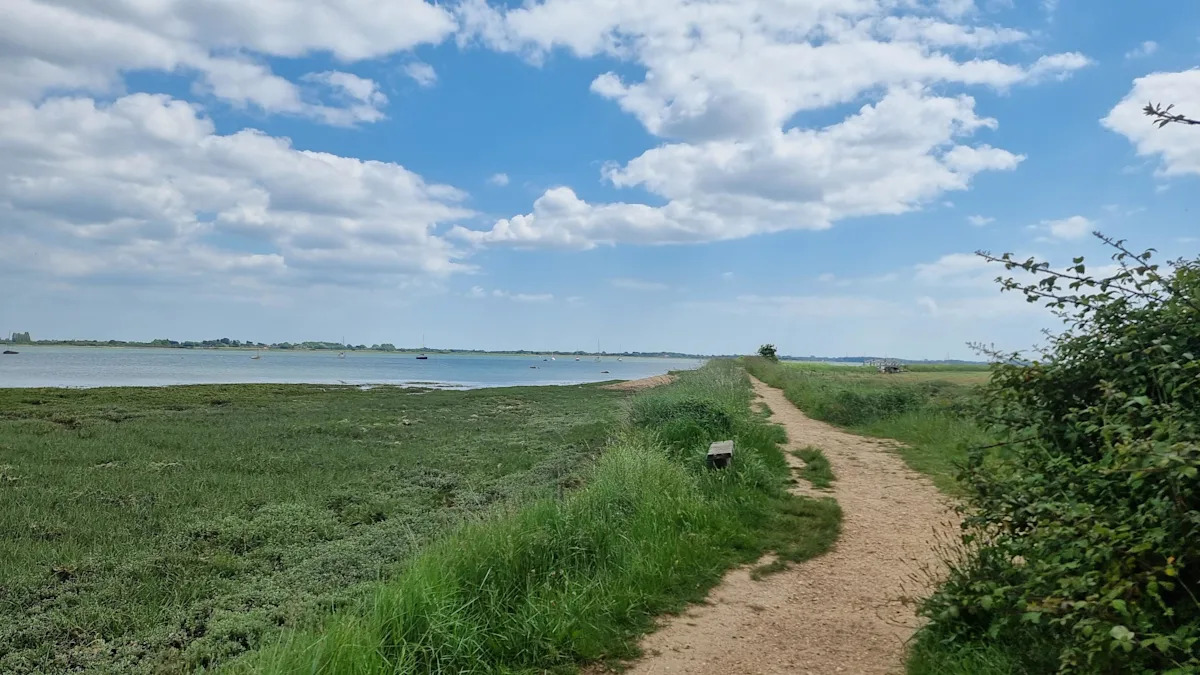
Thorney Island, a low‑lying peninsula on the West Sussex coast, is a place which often escapes public attention.
Connected to the mainland by one causeway and surrounded by Chichester Harbour, it appears at first glance to be a quiet stretch of countryside.
But behind its landscape is a long and complex history, shaped by military strategy, coastal defence and a community that has evolved under restricted access.
Lucy Pitts, from Sussex Exclusive, and Simon Furber take a stroll around Thorney Island, the remote beauty spot accessed via a secret button through a barbed wire fence.
The island’s modern identity was shaped during World Ward Two, and was established by the Royal Air Force in 1938.
Previously named RAF Thorney Island – part of Britain’s expanding air defence network – the site is now owned by the Ministry of Defence.
In the post‑war years, the base became a hub for transport aircraft before the RAF withdrew in 1976, and it remains a secure military zone to this day.
The island is not solely defined by its military past, as much of the surrounding coastline is designated as a Site of Special Scientific Interest (SSSI), supporting internationally important populations of overwintering birds.
“It’s a really popular spot for birdwatchers,” Pitts told Secret Surrey, with some of the common birds being curlews, oyster catchers, and migrating geese.
In recent years, the site has also attracted attention for its role in humanitarian operation, as the base has been used to support training for overseas deployments.
It also occasionally used as temporary accommodation for people arriving in the UK under emergency circumstances.
Civilians and some military personnel also live on the island in the village of West Thorney, which once housed RAF families.
Follow BBC Sussex on Facebook, on X, and on Instagram. Send your story ideas to southeasttoday@bbc.co.uk or WhatsApp us on 08081 002250.
Related storiesRelated internet links