





 Scientists developed a genetics-first framework to uncover rare diseases that may respond to targeted vitamin therapy. In a mouse model of lethal NAXD deficiency, high-dose vitamin B3 dramatically extended survival and corrected signs of disease, suggesting a simple treatment could have powerful effects when matched to the right genetic condition.
A new study suggests that certain genetic diseases may be treatable with carefully matched vitamins, including a deadly childhood disorder that responded strikingly to vitamin B3.
Scientists at Gladstone Institutes have taken an unusual route in the search for treatments for deadly genetic diseases. Rather than choosing a disease first and then looking for a therapy, they started with vitamins and used a systematic approach to find genetic disorders that might respond to large doses of specific supplements.
With this strategy, the researchers found that vitamin B3 supplementation successfully treated NAXD deficiency in mice. The rare genetic disorder is devastating in children, who usually die within the first few months of life. In a new mouse model of the disease, vitamin B3 therapy extended survival by more than 40 times and removed signs of the condition.
The work also pointed to dozens of additional genetic diseases that may be treatable with vitamin B2 or B3. If confirmed, the findings could create new paths for treating rare diseases with therapies that are relatively safe, inexpensive, and widely available.
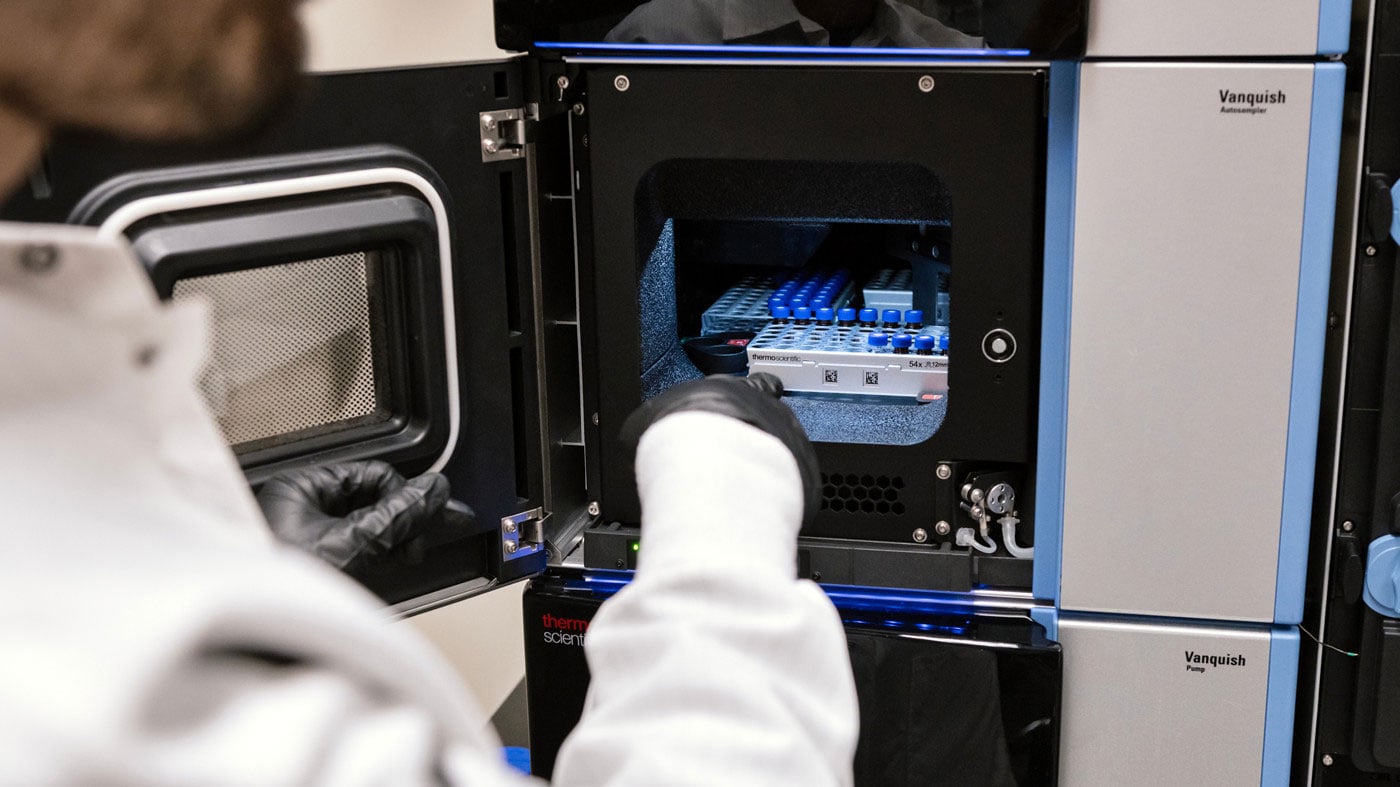 Gladstone scientists developed a new framework that matches vitamins with genetic diseases and helped uncover that high-dose vitamin B3 can dramatically extend survival in mice with NAXD deficiency. Credit: Gladstone Institutes
“Our goal is to revisit classical vitamin biology with causal and rigorous frameworks,” says Gladstone Investigator Isha Jain, PhD, senior author of the new study published in Cell. “Rather than randomly supplementing vitamins, we’re using modern genetics to systematically identify which diseases can be treated with which vitamin.”
Reviving Vitamin Research
In the early 20th century, scientists showed that vitamin deficiencies caused diseases such as scurvy and beriberi, and that specific vitamins could cure them. That work led to several Nobel Prizes. In recent decades, however, the easy availability and low cost of supplements have also encouraged broad, untargeted use, with many people taking vitamins without clear evidence that they need them.
Jain, who is also a core investigator at Arc Institute and an associate professor at UC San Francisco, thinks targeted vitamin treatments still hold major unexplored promise. In October, she won a prestigious NIH Transformative Research Award to support her effort to bring modern tools back to the study of vitamin biology.
 Jain (center) and her team developed an approach to systematically identify diseases that could be treated with individual vitamins. Credit: Gladstone Institutes
Her lab created a method for identifying which diseases might respond to particular vitamins. Using CRISPR gene editing, the researchers removed selected genes from human cells, then tested whether those cells grew or survived better when exposed to high levels of vitamins.
“Each cell represented a different genetic condition that can affect humans,” says Skyler Blume, a research associate in Jain’s lab and co-first author of the new paper. “We asked: if we have a vitamin as a potential therapy, which of these genetic conditions could it treat?”
When the researchers screened cells with vitamin B3, they found that cells missing NAXD survived much better under the high vitamin conditions. In children, mutations in the NAXD gene cause severe developmental delays and death.
“Our screen suggested that something as simple as giving vitamin B3 could make a difference for human patients,” says co-first author Ankur Garg, PhD, a postdoctoral fellow in Jain’s lab.
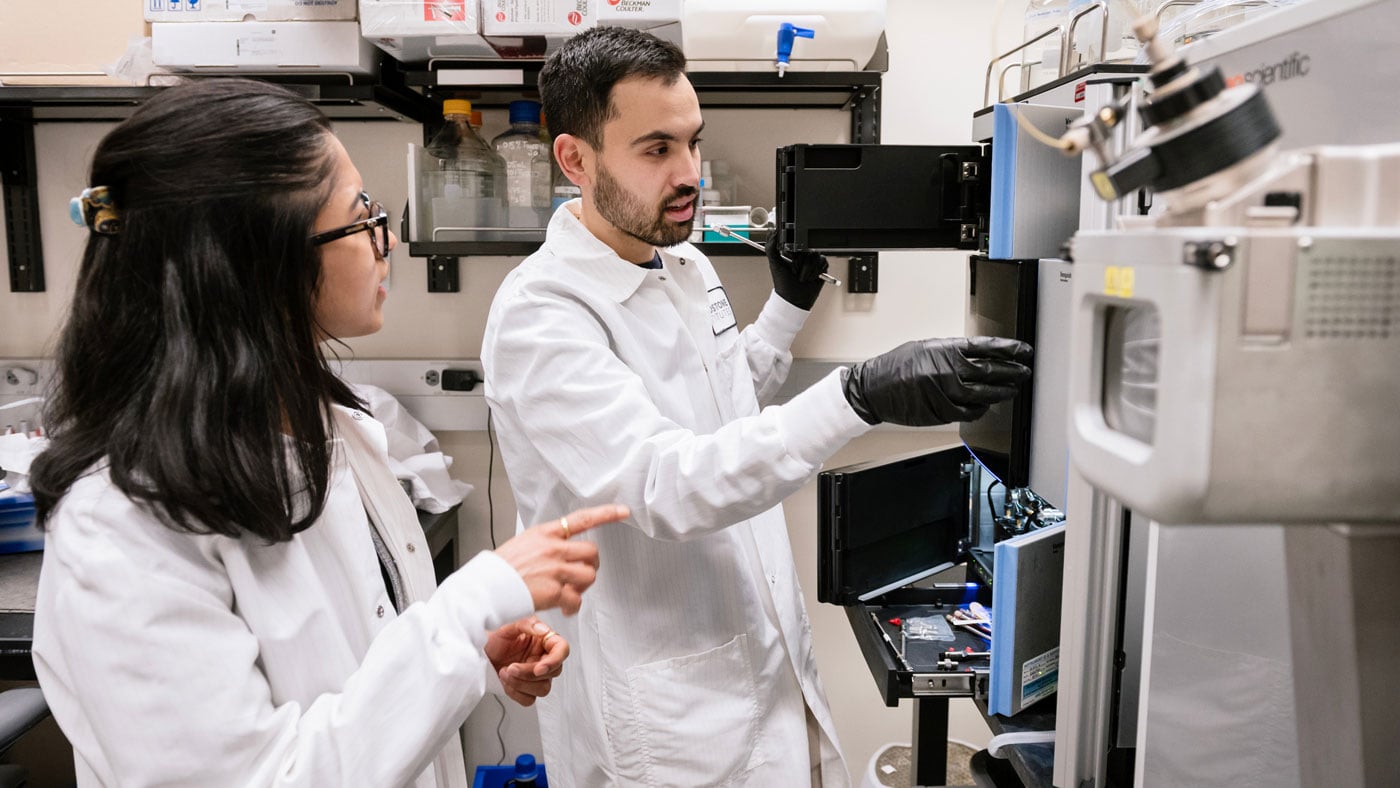 Scientists at Gladstone Institutes developed an approach to systematically identify diseases that could be treated with individual vitamins. With this framework, the team—including Ankur Garg (left) and Skyler Blume (right)—discovered that vitamin B3 therapy reversed symptoms of a devastating genetic disease called NAXD deficiency in mouse models, offering hope for children with this condition. Credit: Michael Short/Gladstone Institutes
Earlier research, especially in yeast, had suggested that normal NAXD helps repair damaged forms of NADH, a molecule that carries energy used by cells. When NAXD is mutated and cannot work properly, damaged NADH accumulates in the brain, and the active form becomes depleted. That imbalance triggers a chain of harmful effects.
A Potential Path for Treating NAXD
To find out whether vitamin B3 could help with NAXD deficiency throughout the body, rather than only in isolated cells, the researchers created the first mouse model of the disease. The mice appeared normal when they were born, but their health quickly worsened, and they died within days. Jain’s group found that the damaged form of NADH had built up across the body, while the brain and skin had very low levels of normal, active NADH and serine, another essential molecule.
When Jain’s group treated the mice with daily injections of high-dose vitamin B3 beginning right after birth, the effect was dramatic.
“The treated mice were indistinguishable from their healthy littermates,” Blume says.
Mice that did not receive treatment died at about five days old. Mice that received vitamin B3 were still alive at 300 days, when the experiment was stopped. Their brain inflammation disappeared, and their NADH and serine levels returned to normal.
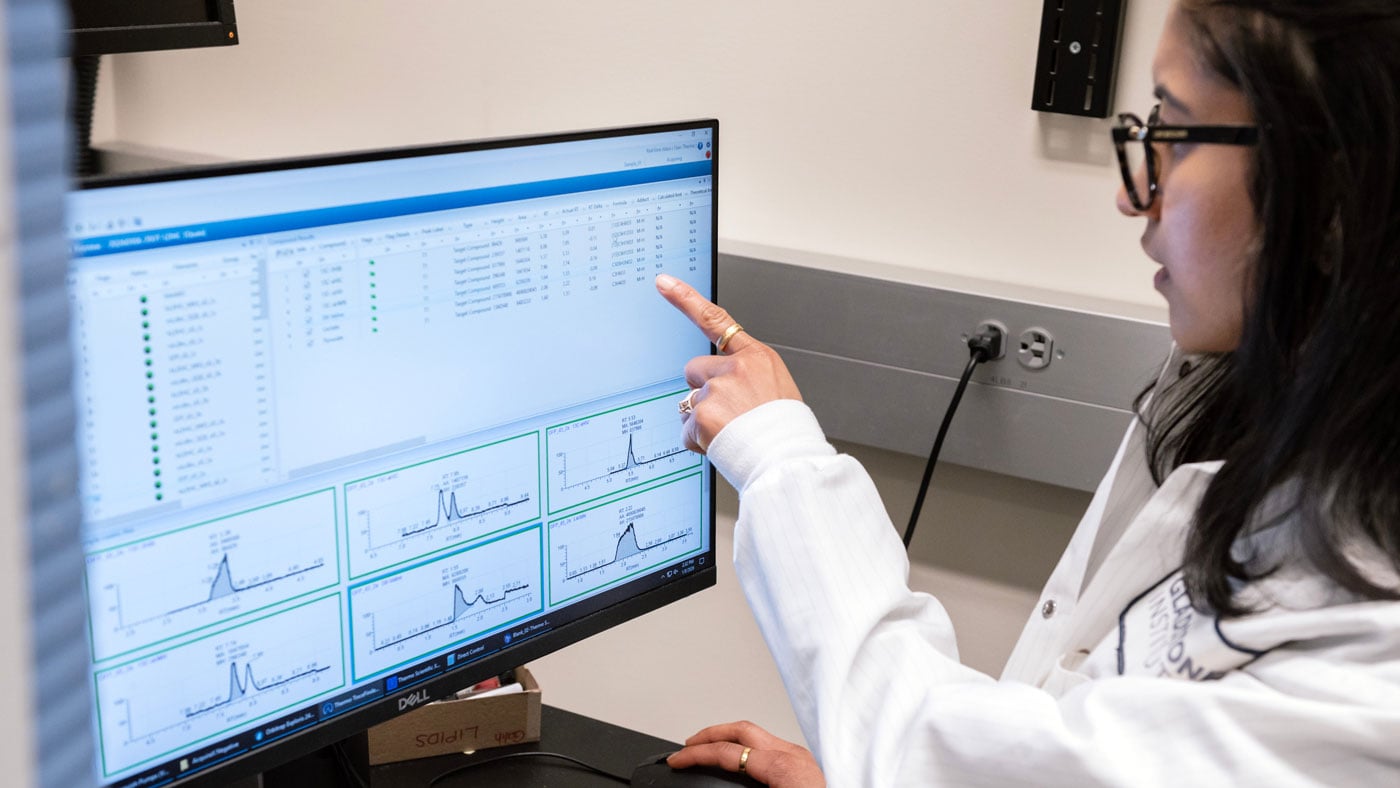 The scientists—including Garg, seen here—developed a scalable framework that could help identify therapies using vitamins and other micronutrients to treat many other genetic diseases. Credit: Gladstone Institutes
Jain and her colleagues say the findings could be meaningful for children with NAXD deficiency. Some case reports had described patients improving after supplements, but that evidence had been anecdotal. The new work provides experimental support that vitamin B3 therapy can target the underlying cause of the disease. Because treatment had to begin at birth in the mouse model, the results also point to the need for early diagnosis.
“This tells us that NAXD should be added to newborn screening panels,” Jain says. “If we can diagnose children immediately after birth and start therapy, we may be able to save lives.”
The framework developed in Jain’s lab also identified dozens of other disease genes that may respond to vitamin treatment. Jain and her colleagues plan to test other vitamins for potential use against genetic diseases and to investigate other cell types that grew better in conditions with high levels of B vitamins.
“This framework is completely scalable,” Jain says. “We could potentially identify vitamin therapies for hundreds of genetic diseases. We hope other labs will also apply this framework to other micronutrients, beyond vitamins”
Reference: “Vitamin B2 and B3 nutrigenomics reveals a therapy for NAXD disease” by Ankur Garg, Skyler Y. Blume, Helen Huynh, Alec M. Barrios, Onurkan O. Karabulut, Qian Zhao, Ayush D. Midha, Adam W. Turner, B. Vittorio Resnick, Xuewen Chen, Ayushi Agrawal, JaeYeon Kim, Liuji Chen, Qitao Ran, Alison M. Ryan, Reece C. Larson, Mina Negahban, Sophia C.K. Nelson, Andrew C. Yang, Michela Traglia, Reuben Thomas, Ramon Sun, Mercedes Paredes, M. Ryan Corces, Hening Lin and Isha H. Jain, 25 February 2026, Cell.
DOI: 10.1016/j.cell.2026.01.022
The work was supported by a gift from Renee and David Wentz, the National Institutes of Health (DP5OD026398, C06 RR018928), the Searle Scholars Program, Arc Institute, and the American Heart Association.
Never miss a breakthrough: Join the SciTechDaily newsletter.
Follow us on Google and Google News.