




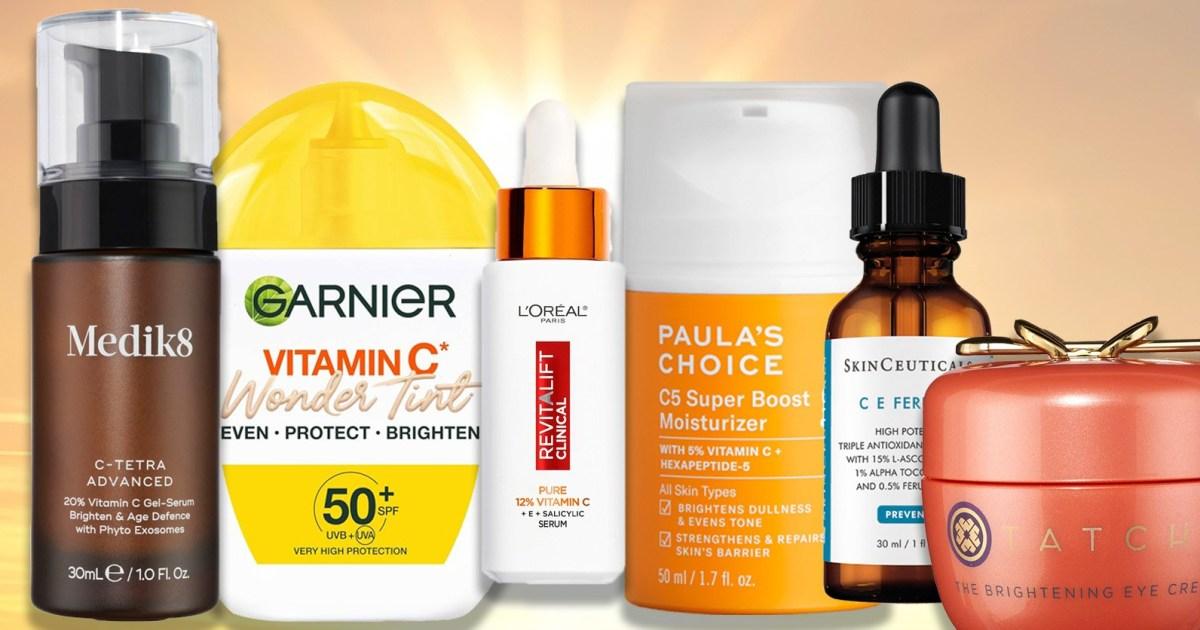
Vitamin C has officially transcended its humble origins as a simple dietary supplement to become the undisputed, scientifically validated cornerstone of modern dermatological science. Beyond mere aesthetic enhancement, it offers unparalleled cellular protection against severe environmental degradation, aggressive urban pollution, and the relentless march of premature aging.
Clinical dermatologists and leading aesthetic experts universally advocate for the daily topical application of L-ascorbic acid to neutralize tissue-destroying free radicals and actively inhibit melanin overproduction. As the global skincare market expands at a breathless pace, educated consumers from the smog-filled streets of London to the sun-drenched avenues of Nairobi are increasingly turning to these potent antioxidant formulations as mandatory armor in their daily health regimens.
The Biochemical Architecture of Protection
The true power of topical Vitamin C lies in its profound ability to function as a highly aggressive antioxidant shield. When human skin is exposed to invisible environmental aggressors—specifically dense particulate pollution and fierce ultraviolet radiation—it triggers the catastrophic generation of free radicals. These unstable, highly reactive molecules systematically attack and degrade healthy collagen and elastin structures, accelerating the formation of deep wrinkles and severe skin sagging.
Eminent aesthetic physician Dr. Wassim Taktouk explicitly warns that incorporating robust antioxidants into a daily routine is no longer a luxury, but an absolute physiological necessity. By neutralizing free radical damage at the cellular level, Vitamin C actively prevents the structural collapse that leads to visible aging. Furthermore, it directly interrupts the tyrosinase enzyme responsible for melanin production, effectively fading dark patches of hyperpigmentation and restoring a unified, luminous dermal tone.
However, the ingredient requires careful, highly specific deployment to achieve clinical efficacy. Formulations vary wildly in quality and stability. Savvy consumers must navigate a complex labyrinth of chemical nomenclature, identifying active variants such as pure L-ascorbic acid or highly stable fat-soluble derivatives like tetrahexyldecyl ascorbate. Purchasing a poorly formulated product is a massive squandering of both capital and crucial preventative time.
The Protocol for Maximum Efficacy
Dermatological consensus dictates a rigid protocol for maximum absorption and protection. Vitamin C must be applied strictly in the morning, acting as an invisible biological shield before the skin is subjected to the daily assault of the outside world. It serves as the vital intermediary layer, applied immediately after gentle cleansing but strictly prior to heavy moisturizers and non-negotiable broad-spectrum sunscreens.
The delivery mechanism is equally critical to the outcome. Lightweight serums are universally preferred over dense creams or diluted cleansers. Serums are engineered with vastly higher concentrations of the active ingredient and are designed for rapid, deep dermal penetration, ensuring maximum molecular contact time with vulnerable cells. Washing a costly antioxidant down the drain in a cleanser is universally dismissed by experts as scientifically futile.
Potency represents the final, crucial variable in the equation. Leading dermatologists universally recommend seeking formulations containing a concentration window of exactly ten to twenty percent. Concentrations falling below this threshold offer negligible biological benefits, while those exceeding twenty percent frequently trigger severe, painful irritation and compromised skin barriers without delivering any proportional increase in anti-aging efficacy.
The Numbers Behind the Science
The statistical realities of dermatological science reveal the precise parameters required for effective skin protection.
Clinical efficacy is strictly optimized at concentrations between 10 and 20 percent; anything higher causes severe cellular irritation.
Daily application has been scientifically proven to boost the protective power of standard SPF by neutralizing UV-induced free radicals that penetrate physical blocks.
The global antioxidant skincare sector is experiencing exponential year-on-year growth, driven by alarming increases in urban pollution metrics.
L-ascorbic acid remains highly unstable; products exposed to excessive oxygen or UV light degrade rapidly, rendering them biologically useless within months.
Topical application is up to 20 times more effective at delivering Vitamin C directly to the skin tissue compared to oral dietary supplementation.
Global Parallels and Environmental Reality
The necessity for robust antioxidant protection is a truly global phenomenon, heavily influenced by localized environmental extremes. In equatorial regions like Kenya, the intensity of direct ultraviolet radiation demands a relentless, uncompromising approach to daily skin defense. While melanin-rich skin provides a degree of natural SPF, it remains acutely vulnerable to severe hyperpigmentation and melasma triggered by UV exposure—conditions that concentrated Vitamin C is uniquely qualified to treat and prevent.
Simultaneously, the explosive growth of urban centers worldwide has introduced staggering levels of atmospheric pollution. The microscopic particulate matter generated by endless traffic congestion in major metropolitan hubs aggressively attacks the skin barrier. A potent, daily antioxidant serum acts as the crucial biological firewall against this invisible, highly toxic urban smog.
The modern approach to skincare is no longer rooted in simple vanity; it is an exercise in strict, scientifically validated preventative healthcare. As the atmosphere becomes increasingly hostile, the daily application of proven, high-potency molecules is the only definitive strategy to protect the largest, most exposed organ of the human body.
The integration of Vitamin C into the daily routine represents a profound shift in consumer understanding. It is an acknowledgment that true dermal health is not simply purchased in a jar, but fiercely defended every single morning.