




Organic Baby Food Market Witnesses Rapid Global Expansion
The global organic baby food market is experiencing remarkable growth as modern parents increasingly prioritize safe, nutritious, and chemical-free food options for infants and toddlers. Concerns over food safety, pesticide exposure, artificial additives, and long-term child health are reshaping buying behavior worldwide, pushing organic baby food from a niche category into a mainstream segment of the global food industry.
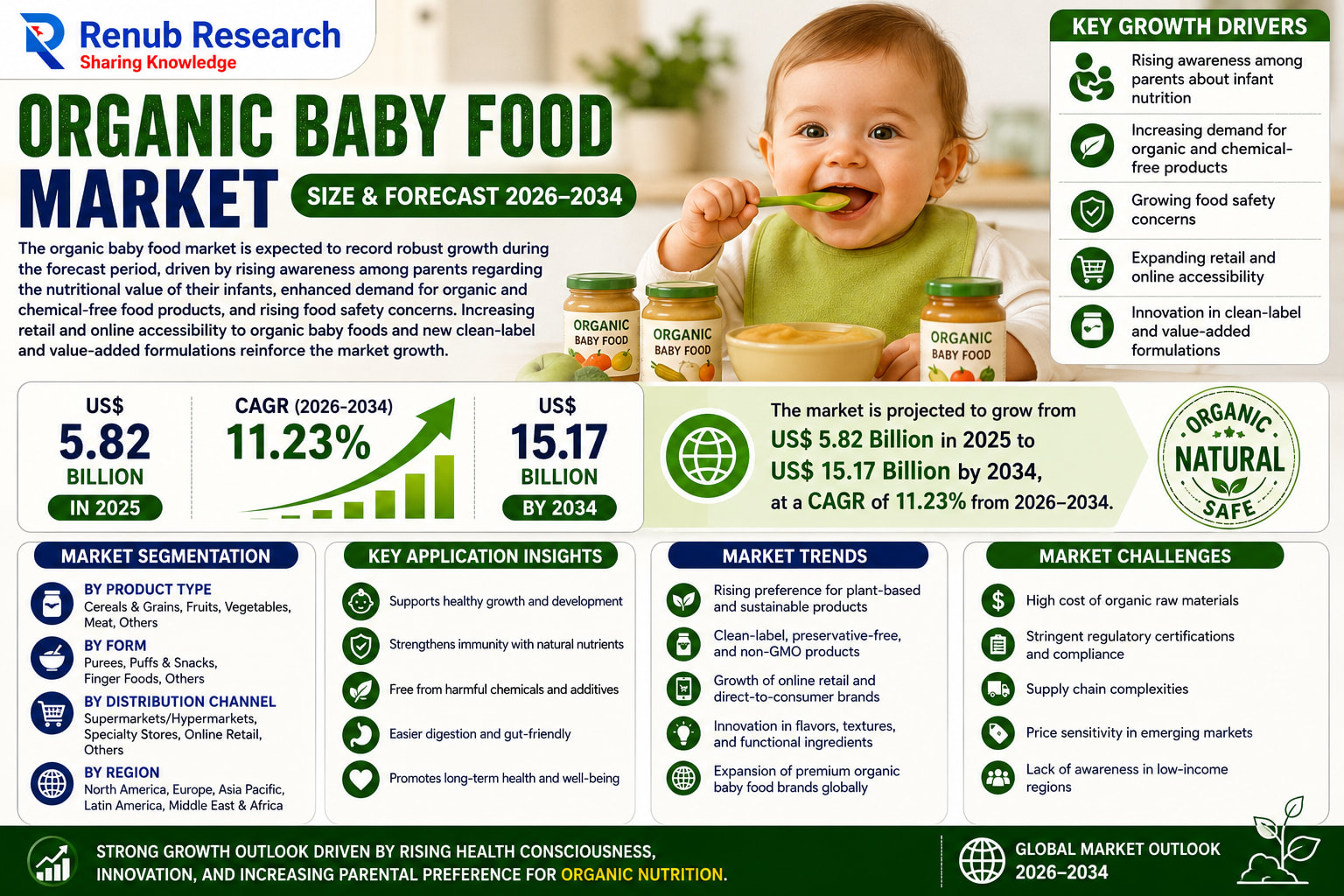
According to Renub Research, the organic baby food market is projected to grow from US$ 5.82 billion in 2025 to US$ 15.17 billion by 2034, expanding at a strong compound annual growth rate (CAGR) of 11.23% from 2026 to 2034. The market’s rapid growth reflects rising global demand for healthier infant nutrition solutions and growing consumer trust in organic food products.
Organic baby food includes infant and toddler food products made from fruits, vegetables, grains, and dairy ingredients cultivated without chemical pesticides, synthetic fertilizers, genetically modified organisms (GMOs), or harmful additives. These products include purees, cereals, prepared meals, snacks, and infant milk formulas designed specifically to support early childhood nutrition and development.
As awareness around infant nutrition continues to grow, the market is becoming one of the fastest-expanding categories within the global packaged food industry.
Parents Are Becoming More Health-Conscious
One of the biggest drivers of the organic baby food market is the growing awareness among parents regarding infant nutrition and long-term health development. Scientific research increasingly highlights the importance of early nutrition in supporting physical growth, brain development, immunity, and cognitive performance.
Modern parents are paying much closer attention to ingredient quality and food sourcing than previous generations. Many consumers now actively avoid products containing artificial preservatives, synthetic chemicals, genetically modified ingredients, or pesticide residues. Organic baby food brands benefit directly from this shift because they are positioned as safer and healthier alternatives to conventional baby food products.
The report notes that concerns surrounding allergies, intolerances, and chemical exposure are encouraging more families to choose organic baby food products. Rising disposable incomes in urban areas are also supporting demand because consumers are increasingly willing to spend more on premium nutrition for their children.
Abbott Laboratories’ launch of a new organic infant formula line demonstrates how major companies are responding to the growing clean-label movement and increased consumer demand for healthier baby nutrition options.
Clean-Label Products Are Reshaping the Industry
The global clean-label trend is playing a major role in the growth of the organic baby food market. Parents today want transparency, simplicity, and trust when purchasing food products for infants. Labels that emphasize natural ingredients, minimal processing, and absence of artificial additives are becoming increasingly influential in purchasing decisions.
Organic baby food naturally aligns with this movement because it focuses on chemical-free ingredients and ethical production methods. Consumers increasingly expect brands to clearly communicate ingredient sourcing, farming standards, and manufacturing processes.
The report highlights how Gerber earned multiple Clean Label Project certifications, reinforcing the growing importance of product transparency and safety testing within the industry. Such certifications help strengthen consumer confidence and differentiate brands in a highly competitive market.
The demand for chemical-free, preservative-free, and minimally processed products is expected to continue shaping the future of infant nutrition globally.
E-Commerce and Retail Expansion Boost Accessibility
The rapid expansion of retail and e-commerce channels is making organic baby food products more accessible than ever before. Modern supermarkets, specialty health stores, pharmacies, and digital shopping platforms now offer a wide range of organic baby food brands and product categories.
Online shopping, in particular, has transformed how parents purchase baby food. E-commerce platforms provide convenience, detailed product information, home delivery, and access to premium brands that may not be available in local stores. This has been especially important for consumers in smaller cities and remote areas.
The report also notes that innovation in flavors, textures, and product formulations is helping attract more consumers to the category. Companies are increasingly developing products that combine convenience with enhanced nutritional value and clean-label positioning.
Babylife Organics’ launch of regenerative organic certified products designed to reduce toxic heavy metal contamination highlights how brands are pushing innovation further in response to rising safety concerns among parents.
High Prices Remain a Major Market Challenge
Despite strong growth prospects, the organic baby food industry still faces several obstacles. One of the biggest challenges is the high cost associated with organic products compared to conventional baby food. Organic farming requires stricter agricultural standards, certified production methods, and more expensive supply chain management. These factors significantly increase production costs.
Price sensitivity remains especially important in developing and middle-income countries, where many consumers may recognize the benefits of organic baby food but struggle to afford premium-priced products. This affordability gap continues limiting broader market penetration in some regions.
As competition increases and production scales improve, manufacturers may gradually reduce costs, but pricing pressure is expected to remain a challenge for the foreseeable future.
Organic Ingredient Supply Remains Limited
Another key challenge involves sourcing certified organic raw materials. Organic farming follows strict guidelines regarding pesticide use, fertilizers, and crop management. These regulations often result in lower crop yields compared to conventional agriculture.
Weather conditions, climate variability, and supply chain disruptions can further affect ingredient availability. Ensuring a reliable and consistent supply of certified organic ingredients remains one of the industry’s most important operational challenges.
As global demand for organic products rises, companies will need to strengthen partnerships with organic farmers and invest in sustainable agricultural practices to maintain stable production capacity.
Prepared Organic Baby Food Gains Popularity
Prepared organic baby food products are becoming increasingly popular among busy parents seeking healthy yet convenient meal solutions for infants and toddlers. This segment includes purees, ready-to-eat meals, snacks, and packaged baby foods designed for quick consumption.
Urban lifestyles and working parents are driving demand for these convenient products because they reduce preparation time while still meeting nutritional expectations. Convenience and health are no longer viewed as separate priorities; parents increasingly expect both from modern baby food products.
As a result, prepared organic baby foods are expected to remain one of the most profitable and rapidly expanding categories within the market.
Organic Infant Formula Market Continues to Expand
The organic infant milk formula segment is also witnessing strong growth as parents seek alternatives that avoid synthetic pesticides, antibiotics, and genetically modified ingredients. Organic formulas are especially important for infants who require supplemental nutrition or cannot receive breast milk.
Food safety concerns and growing awareness around clean-label nutrition are driving consumer confidence in organic infant formula products. Regulatory approvals and certification standards also play a crucial role in strengthening trust within this highly sensitive product category.
As infant nutrition becomes an increasingly important global health focus, organic formula demand is expected to continue growing across both developed and emerging markets.
Online Retail Emerges as a Powerful Growth Channel
Online retailers are becoming one of the fastest-growing distribution channels for organic baby food products. Digital platforms provide access to a wider range of products, convenient delivery services, subscription purchasing models, and detailed nutritional information.
Parents increasingly value the ability to compare products, read reviews, and purchase specialty nutrition items directly from online stores. E-commerce also helps brands reach consumers in regions where physical retail access may still be limited.
The continued rise of digital shopping habits is expected to remain a major driver of future market growth.
United States Leads the Global Market
The United States remains one of the most advanced organic baby food markets globally due to high consumer awareness, strong purchasing power, and strict food safety standards. American parents are highly focused on ingredient transparency, allergen safety, and nutritional quality.
The country’s well-developed supermarket and online retail networks further support widespread product availability. Innovation in plant-based, allergen-free, and clean-label formulations continues strengthening the U.S. market position.
As health-conscious parenting trends continue to rise, the United States is expected to remain one of the industry’s largest and most mature markets.
Emerging Markets Show Strong Potential
The United Kingdom market is growing steadily due to rising awareness around sustainability, infant health, and environmentally friendly nutrition. Supermarkets and online retailers are helping increase product accessibility, while government health initiatives are encouraging healthier dietary habits for children.
India’s organic baby food market is also expanding gradually due to urbanization, rising incomes, healthcare awareness, and increasing concern about chemical exposure in food products. E-commerce growth is making organic baby foods more accessible to Indian consumers.
Saudi Arabia is witnessing growing demand for premium organic nutrition products due to high purchasing power and increasing awareness around infant health. The report highlights Nestlé’s plans to establish a new baby food production facility in Saudi Arabia, demonstrating the market’s rising importance in the Middle East.
Competitive Landscape
The global organic baby food market includes major companies such as Abbott Laboratories, Kraft Heinz, Nestlé, Danone, Kewpie Corporation, Hero Group, Arla Foods, and AAK AB.
These companies are competing through product innovation, organic certifications, clean-label positioning, sustainable sourcing, and expanded online distribution strategies. As parents become increasingly selective about infant nutrition, competition within the industry is expected to intensify significantly.
Final Thoughts
The organic baby food market is evolving rapidly as parents around the world place greater importance on infant health, food safety, and clean nutrition. Rising awareness of chemical exposure, growing trust in organic products, and increasing availability through digital retail channels are transforming the industry at an unprecedented pace.
With the market projected to grow from US$ 5.82 billion in 2025 to US$ 15.17 billion by 2034, the future of organic baby food appears exceptionally strong. Companies that successfully combine nutrition, transparency, affordability, and convenience will likely lead the next phase of growth in the global infant nutrition industry.