





U.S Corporate Wellness Market Size
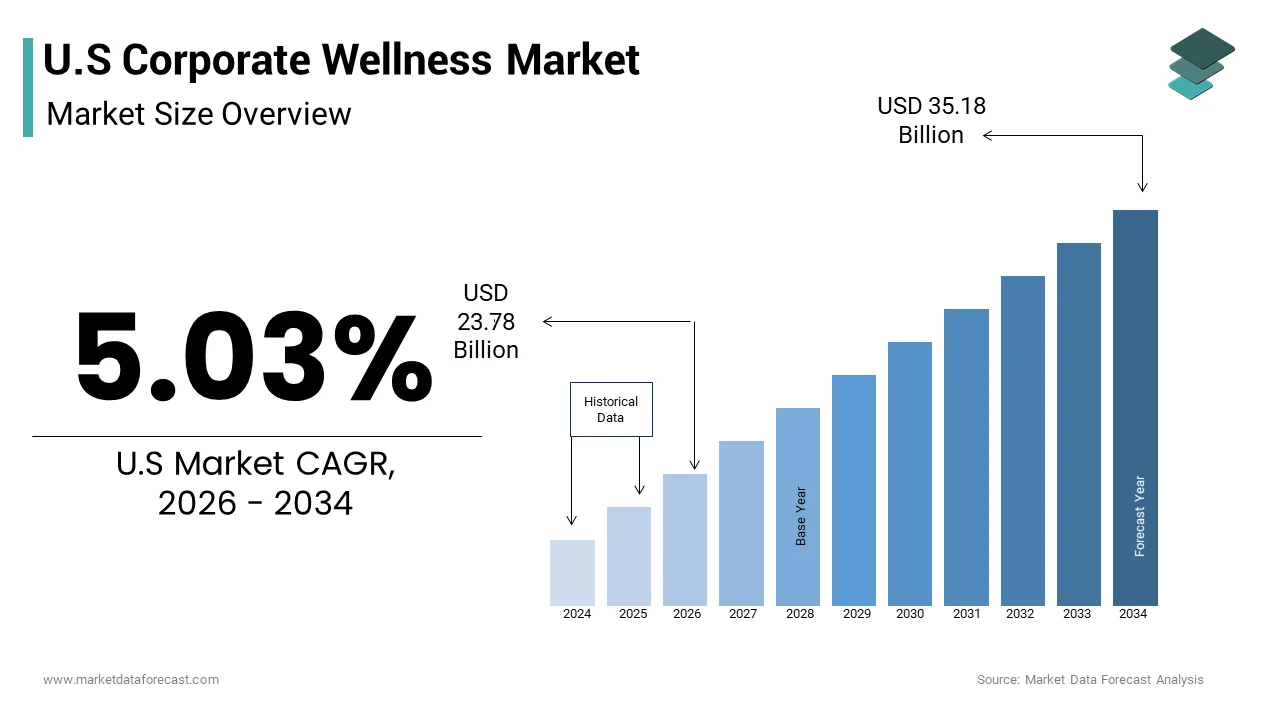
The U.S corporate wellness market size was valued at USD 22.64 billion in 2025 and is anticipated to reach USD 23.78 billion in 2026 to reach USD 35.18 billion by 2034, growing at a CAGR of 5.02% during the forecast period from 2026 to 2034.
Current Market Overview and Definition
The corporate wellness is a strategic array of programs and services designed to support the physical mental and financial health of employees within organizational settings. These initiatives range from biometric screenings and fitness challenges to mental health counseling and nutritional coaching aiming to reduce healthcare costs and enhance productivity. As per the Centers for Disease Control and Prevention chronic diseases such as heart disease cancer and diabetes are leading causes of death and disability in the United States accounting for 90% of the nation’s 4.1 trillion dollars in annual healthcare expenditures. This staggering financial burden motivates employers to invest in preventive measures that mitigate long term medical risks. The shift towards remote and hybrid work models has further accelerated the adoption of digital wellness platforms ensuring accessibility for distributed workforces. Regulatory frameworks, such as the Affordable Care Act provide incentives for employers to offer wellness programs reinforcing their prevalence. Organizations increasingly view wellness investments as essential for talent retention and engagement in a competitive labor market. The integration of data analytics allows for personalized interventions improving outcome measurement and program efficacy. This holistic approach addresses the multifaceted nature of health recognizing the interconnection between physical vitality mental resilience and financial stability.
MARKET DRIVERS Rising Prevalence of Chronic Conditions Drives Employer Investment
The escalating incidence of chronic health conditions, among the workforce is majorly expanding the growth of the United States corporate wellness market. Employers face substantial financial pressure due to the high costs associated with managing diseases, such as obesity diabetes and hypertension, which are prevalent among working age adults. As per the National Center for Chronic Disease Prevention and Health Promotion, 6 in 10 adults in the United States have a chronic disease and 4 in 10 have two or more chronic diseases. These conditions significantly impact productivity through increased absenteeism and presenteeism where employees are at work but not fully functional due to health issues. Companies recognize that proactive wellness interventions can help manage these conditions before they require expensive medical treatments. Wellness programs often include screening services that identify risk factors early allowing for timely lifestyle modifications. The focus on preventive care aligns with broader public health goals and reduces the overall burden on employer sponsored health plans. This strategic shift from reactive sick care to proactive health management is driven by the need to control escalating healthcare expenditures.
Increasing Focus on Mental Health and Emotional Well Being
The growing emphasis on mental health and emotional well-being for the adoption of corporate wellness programs is propelling the growth of the United States corporate wellness market. The stigma surrounding mental health issues is diminishing leading to greater openness, among employees to seek support for stress anxiety and depression. As per the American Psychological Association, nearly 81% of workers plan to look for workplaces that support mental health in the near future highlighting its importance in job selection and retention. The pandemic exacerbated mental health challenges creating an urgent need for organizational support systems that address psychological resilience. Employers are expanding their wellness offerings to include access to counseling services mindfulness apps and stress management workshops. These initiatives aim to create a supportive work environment that prioritizes holistic health rather than just physical fitness. The recognition that mental well being influences productivity and engagement has prompted leadership to allocate resources towards these programs. Companies are also implementing policies that promote work life balance such as flexible hours and mental health days to prevent burnout. This cultural shift towards acknowledging the psychological aspects of health ensures that mental wellness becomes a central pillar of corporate strategy.
MARKET RESTRAINTS High Implementation Costs and Budget Constraints
The significant implementation costs and stringent budget constraints for the widespread adoption of programs, particularly among small and medium sized enterprises is hindering the growth of the United States corporate wellness market. Developing and maintaining effective wellness initiatives requires substantial financial investment in technology personnel and external vendors, which can be prohibitive for organizations with limited resources. Small businesses often operate with tighter margins by making it difficult to justify the upfront costs of wellness programs without immediate visible returns. The complexity of designing customized programs that cater to diverse employee needs further increases administrative burdens and expenses. Many companies struggle to measure the return on investment accurately leading to skepticism about the value of these expenditures. Economic uncertainties and fluctuating revenue streams prompt businesses to prioritize essential operational costs over discretionary spending on wellness. The lack of standardized metrics for evaluating program effectiveness makes it challenging for decision makers to advocate for continued funding. Additionally, the rapid pace of technological change requires ongoing updates to digital platforms adding to the total cost of ownership.
Low Employee Engagement and Participation Rates
The low employee engagement and inconsistent participation rates is degrading the growth of the United States corporate wellness market. Despite substantial investments, many organizations struggle to achieve meaningful involvement from their workforce due to lack of interest time constraints or perceived irrelevance of the offerings. Only a fraction of employees actively participates in available wellness initiatives with engagement levels often dropping after the initial launch phase, as per the study. Barriers, such as inconvenient scheduling lack of awareness and insufficient incentives contribute to this apathy. Employees may view wellness programs as intrusive or disconnected from their personal health goals leading to resistance. The one size fits all approach fails to address the diverse preferences and needs of a multigenerational workforce resulting in low uptake. Furthermore, the absence of visible leadership support can signal that wellness is not a true organizational priority discouraging participation. Without active engagement the potential health benefits and cost savings of these programs remain unrealized. Companies face the challenge of designing compelling and accessible interventions that resonate with employees on a personal level. The difficulty in sustaining long term behavior change further complicates efforts to maintain high participation levels.
MARKET OPPORTUNITIES Integration of Artificial Intelligence and Personalized Wellness
The integration of artificial intelligence and data analytics by enabling highly personalized and predictive health interventions is creating new opportunities for the expansion of the United States corporate wellness market. Advanced algorithms can analyze individual health data to provide tailored recommendations that improve adherence and outcomes. As per the International Data Corporation, spending on artificial intelligence solutions is expected to grow significantly with healthcare and wellness sectors being key adopters of this technology. AI driven platforms can identify health risks early and suggest proactive measures by reducing the likelihood of chronic disease development. Personalization enhances user experience by delivering relevant content and challenges that align with individual preferences and goals. This targeted approach increases engagement and motivation leading to more sustainable behavior changes. Employers benefit from improved health metrics and reduced healthcare costs through more effective program delivery. The ability to track real time progress allows for dynamic adjustments to wellness strategies ensuring continuous improvement. Digital tools also facilitate seamless communication between employees and health coaches enhancing support and accountability. The scalability of AI solutions makes them accessible to organizations of all sizes democratizing access to high quality wellness resources.
Expansion into Holistic and Financial Wellness Domains
The expansion of corporate wellness programs into holistic and financial wellness domains by addressing the comprehensive needs of employees is additionally to set up the growth of the United States corporate wellness market. Modern workers recognize the interconnection between physical health mental stability and financial security prompting demand for integrated solutions. Employers are responding by incorporating financial education retirement planning and debt management services into their wellness portfolios. This holistic approach acknowledges that financial anxiety contributes to stress and health issues thereby affecting productivity. The inclusion of social and emotional well being components such as community building and purpose driven initiatives further enriches the wellness experience. This broadened scope attracts a wider range of participants who may not engage with traditional fitness focused programs. Organizations that offer comprehensive wellness solutions enhance their employer brand and appeal to top talent seeking supportive work environments. The trend towards total well being reflects a deeper understanding of the factors that influence employee satisfaction and retention.
MARKET CHALLENGES Data Privacy Concerns and Regulatory Compliance
The data privacy concerns and stringent regulatory compliance requirements, as programs increasingly rely on personal health information is a key challenge for the growth of the United States corporate wellness market. The collection and analysis of sensitive data raise ethical and legal questions regarding consent storage and usage. As per the Health Insurance Portability and Accountability Act strict guidelines govern the handling of protected health information requiring robust security measures to prevent breaches. Employees may hesitate to participate in wellness programs if they fear their data could be used against them in employment decisions or shared with third parties. High profile data breaches in the healthcare sector have heightened awareness of these risks leading to greater scrutiny of wellness vendors. Companies must invest heavily in cybersecurity infrastructure and legal counsel to ensure compliance with evolving regulations such as the General Data Protection Regulation for global workforces. The complexity of navigating different state and federal laws adds to the administrative burden for multinational corporations. Lack of transparency in data practices can erode trust and damage employer reputation. Ensuring anonymity and confidentiality is to maintaining employee confidence in wellness initiatives. Failure to address these privacy concerns can result in legal penalties and reduced participation rates. Balancing the benefits of data driven insights with the imperative to protect individual privacy remains a persistent challenge for industry stakeholders.
Difficulty in Measuring Return on Investment
The difficulty in accurately measuring return on investment constitutes is also to impede the growth of the United States corporate wellness marke. While the benefits of wellness programs are widely acknowledged quantifying their financial impact remains complex due to multiple confounding variables. Many studies on wellness program ROI yield mixed results with some indicating modest savings, while others show negligible effects. The long-term nature of health improvements makes it difficult to attribute cost reductions directly to specific interventions within short reporting periods. Factors, such as lifestyle changes outside of work and broader economic trends influence healthcare costs complicating isolation of program effects. Employers often rely on proxy metrics, such as participation rates and satisfaction scores, which do not directly correlate with financial outcomes. The lack of standardized evaluation frameworks leads to inconsistent reporting and comparison difficulties across organizations. Without clear evidence of financial benefit companies may reduce funding or discontinue programs during economic downturns.
REPORT COVERAGE
REPORT METRIC
DETAILS
Market Size Available
2025 to 2034
Base Year
2025
Forecast Period
2026 to 2034
CAGR
5.02%
Segments Covered
By Services, Delivery Mode, End-User, and By Country
Various Analyses Covered
Global, Regional, and Country Level Analysis, Segment-Level Analysis; DROC, PESTLE Analysis; Porter’s Five Forces Analysis; Competitive Landscape; Analyst Overview of Investment Opportunities.
Regions Covered
California, Washington, Oregon, New York & Rest of the United States
Market Leaders Profiled
ComPsych Corporation (U.S.), Wellable, Privia Health (U.S.), Virgin Pulse (U.S.), EXOS (U.S.), Marino Wellness (U.S.), Vitality (U.S.), Wellsource, Inc. (U.S.)
SEGMENTAL ANALYSIS By Services Insights
The fitness services segment was the largest by occupying 36.8% of the United States corporate wellness market share in 2025 with the tangible nature of physical activity and its direct correlation to employee health outcomes. Employers prioritize fitness initiatives, such as gym reimbursements on site exercise facilities and step challenges because they are easy to implement and measure. As per the International Health Racquet and Sportsclub Association, over 60 million Americans belong to health clubs indicating a strong cultural predisposition towards fitness that employers leverage. Corporate fitness programs often serve as the entry point for broader wellness engagement by allowing employees to build healthy habits that extend to other areas of life. The visibility of fitness activities fosters a sense of community and competition among staff which enhances participation rates. Companies recognize that regular physical activity reduces the risk of chronic diseases such as heart disease and type 2 diabetes which are major drivers of healthcare costs. The availability of wearable technology has further integrated fitness into daily work routines enabling real time tracking and feedback. Employers view fitness investments as a proactive strategy to reduce absenteeism and improve energy levels throughout the workday.
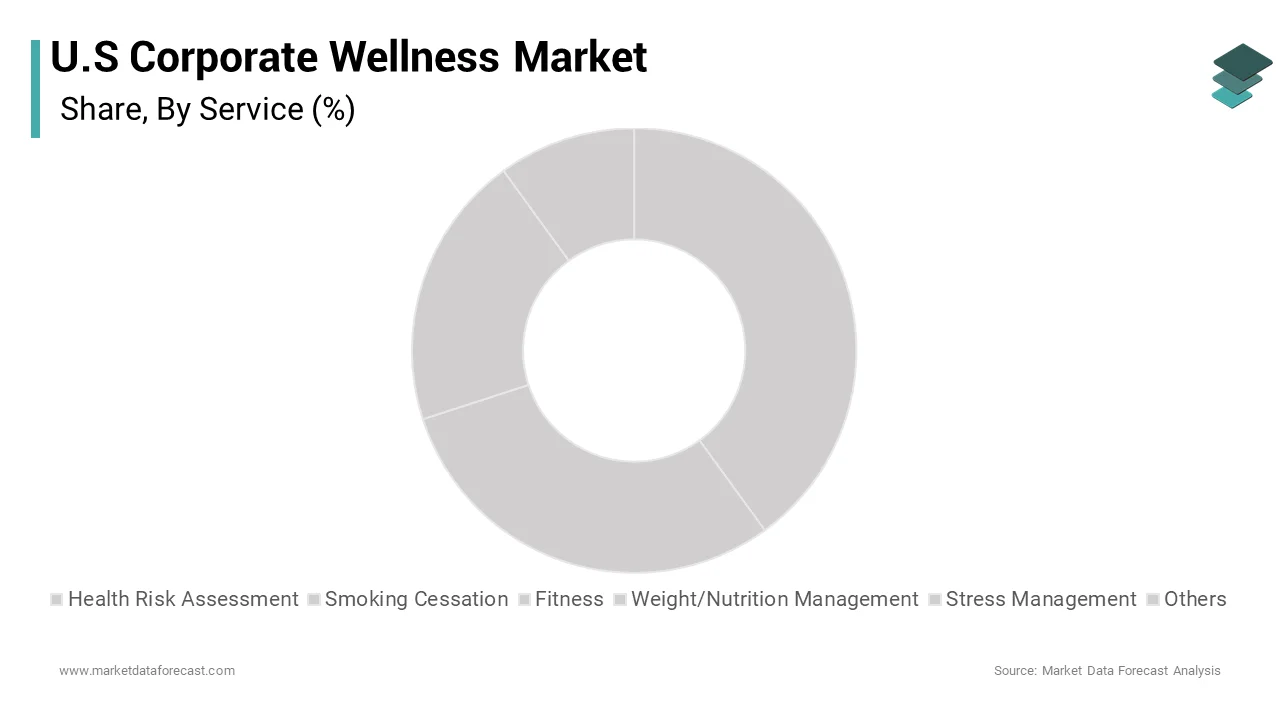
The stress management services segment is likely to grow at an anticipated CAGR of 12.1% from 2026 to 2034 with the increasing awareness of the impact of mental health on overall well-being and productivity. As per the American Institute of Stress, 83% of US workers suffer from work related stress with significant implications for organizational performance. The pandemic accelerated the adoption of mental health resources as remote work blurred the boundaries between professional and personal life leading to burnout and anxiety. Employers are responding by integrating mindfulness meditation counseling services and resilience training into their wellness offerings. The destigmatization of mental health issues has encouraged more employees to seek support driving demand for accessible and confidential services. Digital platforms offering guided meditation and cognitive behavioral therapy tools have made stress management scalable and affordable. Companies recognize that addressing psychological well-being is essential for retaining talent and maintaining a positive workplace culture. The shift towards holistic health models that encompass mind body and spirit further supports this growth. Stress management is no longer viewed as a niche benefit but as a critical component of comprehensive employee support systems.
By Delivery Model Insights
The virtual delivery model segment was accounted in holding 33.2% of the United States corporate wellness market share in 2025 with its flexibility accessibility and scalability. The shift towards remote and hybrid work arrangements has made digital platforms, where the primary channel for delivering wellness services to distributed workforces. Virtual wellness programs offer a wide range of services including online fitness classes telehealth consultations and digital mental health apps that employees can access from anywhere. This convenience removes barriers such as travel time and scheduling conflicts leading to higher participation rates. Cloud based platforms enable seamless integration with wearable devices and health trackers providing personalized insights and real time feedback. Employers benefit from lower overhead costs compared to maintaining on site facilities and can reach a broader audience including rural and remote employees. The ability to scale virtual programs quickly allows companies to adapt to changing workforce dynamics and health trends.
The onsite delivery model segment is expected to witness a fastest CAGR of 8.3% from 2026 to 2034 with a desire to rebuild company culture and foster social connection post pandemic. Many organizations are bringing employees back to offices part time by creating demand for hybrid wellness solutions that include on site components. Onsite services, such as biometric screenings, flu vaccinations, and on site fitness centers provide tangible benefits that virtual platforms cannot replicate. The physical presence of wellness resources serves as a visible reminder of the company’s commitment to employee health. Face to face interactions with health coaches and trainers enhance trust and accountability leading to deeper engagement. Onsite programs also facilitate team building and social support networks which are crucial for mental well being. Companies in industries, such as manufacturing and healthcare, where remote work is not feasible continue to rely heavily on onsite wellness infrastructure. The integration of onsite and virtual elements creates a comprehensive ecosystem that caters to diverse employee needs.
By End User Insights
The large organizations segment was the largest by holding a dominant share of the United States corporate wellness market in 2025 due to their substantial resources extensive workforces and strategic focus on employee well being. These entities have the financial capacity to invest in comprehensive wellness programs that include a wide array of services and technologies. The scale allows them to negotiate favorable terms with wellness vendors and insurance providers by reducing per employee costs. Large organizations often have dedicated human resources and wellness teams that design implement and evaluate sophisticated programs. They are also more likely to adopt innovative technologies such as artificial intelligence and data analytics to personalize wellness experiences. Regulatory compliance and risk management considerations drive large firms to prioritize wellness as a means of reducing liability and healthcare expenditures. The visibility of their wellness initiatives enhances employer branding and attracts top talent in competitive labor markets. Large organizations often serve as early adopters of new wellness trends setting standards for the industry.
The small sized organizations segment is expected to grow at a fastest CAGR of 10.4% during the forecast period with the increasing awareness of the benefits of wellness and the availability of affordable scalable solutions. As per the Small Business Administration, small businesses constitute 99.9% of all US businesses representing a vast untapped market for wellness providers. Historically, resource constraints limited their ability to offer formal wellness programs but technological advancements have changed this landscape. Cloud based platforms and subscription-based services allow small firms to access high quality wellness tools without significant upfront investment. The competitive labor market has compelled small businesses to offer wellness benefits to attract and retain talent. Government incentives and tax credits further encourage small employers to invest in employee health. Peer learning networks and industry associations provide guidance and support for implementing wellness initiatives. The agility of small organizations allows them to adopt new trends quickly and tailor programs to their unique cultures. The growing emphasis on holistic well-being resonates with employees in smaller firms who often value close knit communities.
COMPETITIVE LANDSCAPE
The competition in the United States corporate wellness market is intense and characterized by a mix of established technology firms insurance carriers and specialized wellness providers. Major players differentiate themselves through advanced digital platforms personalized content and comprehensive service offerings that address physical mental and financial well being. Innovation in data analytics and artificial intelligence enables companies to deliver targeted interventions and measure outcomes effectively enhancing value for employers. Partnerships with healthcare systems and insurance providers create integrated ecosystems that offer seamless experiences and broader access to resources. Price competition is significant particularly for small and medium sized enterprises prompting providers to offer scalable and affordable solutions. Customer retention relies heavily on user experience engagement levels and demonstrated return on investment. Emerging startups challenge incumbents with niche offerings and agile technologies forcing continuous adaptation and improvement. Brand reputation and scientific validation of program efficacy serve as critical differentiators in building trust with corporate clients.
KEY MARKET PLAYERS
A few of the market players that are dominating the U.S corporate insurance marker are
ComPsych Corporation (U.S.) Wellable Privia Health (U.S.) Virgin Pulse (U.S.) EXOS (U.S.) Marino Wellness (U.S.) Vitality (U.S.) Wellsource, Inc. (U.S.) Top Players In The Market Virgin Pulse maintains a strong presence in the European corporate wellness sector by delivering comprehensive digital health platforms that prioritize employee engagement and holistic well being. The company focuses on integrating physical mental and financial health services into a single accessible interface for diverse workforces. Recent actions include strategic partnerships with local healthcare providers to enhance service delivery and cultural relevance across various European markets. Virgin Pulse leverages advanced data analytics to provide employers with actionable insights into workforce health trends enabling targeted interventions. The company continuously updates its mobile applications to improve user experience and accessibility ensuring high participation rates. Its emphasis on behavioral science drives program design fostering sustainable lifestyle changes among employees. Virgin Pulse also invests in cybersecurity measures to protect sensitive health data maintaining trust and compliance with regional regulations. Wellable contributes significantly to the European corporate wellness market by offering a flexible aggregation platform that connects employees with a wide array of wellness vendors and resources. The company enables organizations to customize their wellness offerings without the burden of managing multiple contracts and systems. Recent initiatives involve expanding its network of international partners to provide localized content and services that resonate with European employees. Wellable focuses on inclusivity by offering diverse wellness options ranging from fitness and nutrition to mental health and financial planning. The platform utilizes intuitive technology to streamline access and engagement making it easy for employees to find relevant resources. Wellable also provides robust analytics tools that help employers measure program effectiveness and return on investment. Its agile approach allows for rapid adaptation to emerging wellness trends and employee preferences. Vitality Group plays a pivotal role in the European corporate wellness market through its innovative shared value insurance model that rewards healthy behaviors. The company partners with major insurers and employers to create programs that incentivize employees to engage in positive health activities. Recent actions include expanding its partnerships with wearable technology providers to enhance data accuracy and user engagement. Vitality Group focuses on creating ecosystems where healthier individuals receive better insurance rates and rewards driving mutual benefit for employers and employees. The company invests heavily in scientific research to validate the impact of its programs on health outcomes and cost savings. Its platform integrates seamlessly with existing human resources systems ensuring smooth implementation and administration. Vitality Group also emphasizes sustainability by promoting eco friendly health practices among participants. Top Strategies Used By Key Market Participants In The Market
Key players in the United States corporate wellness market primarily focus on digital integration and personalization to enhance employee engagement and program effectiveness. Companies leverage artificial intelligence and machine learning to analyze health data and deliver tailored recommendations that resonate with individual needs. Strategic partnerships with healthcare providers and insurance carriers are common to create comprehensive ecosystems that offer seamless access to services. Providers increasingly emphasize mental health and financial wellness alongside physical health to address the holistic needs of the workforce. Mobile first designs ensure accessibility and convenience allowing employees to engage with wellness tools anytime and anywhere. Data security and privacy protection remain top priorities to build trust and comply with regulatory standards. Gamification techniques are employed to boost participation and motivation through rewards and social competition. Continuous innovation in content and features keeps programs relevant and appealing to diverse demographic groups.
MARKET SEGMENTATION
This research report on the U.S corporate wellness market is segmented and sub-segmented into the following categories.
By Services
Health Risk Assessment Smoking Cessation Fitness Weight/Nutrition Management Stress Management Others
By Delivery Model
By End User
Small-sized Organizations Medium-sized Organizations Large Organizations
By Country
California Washington Oregon New York Rest of the United States