




Weight Loss Market Is Entering a New Growth Phase
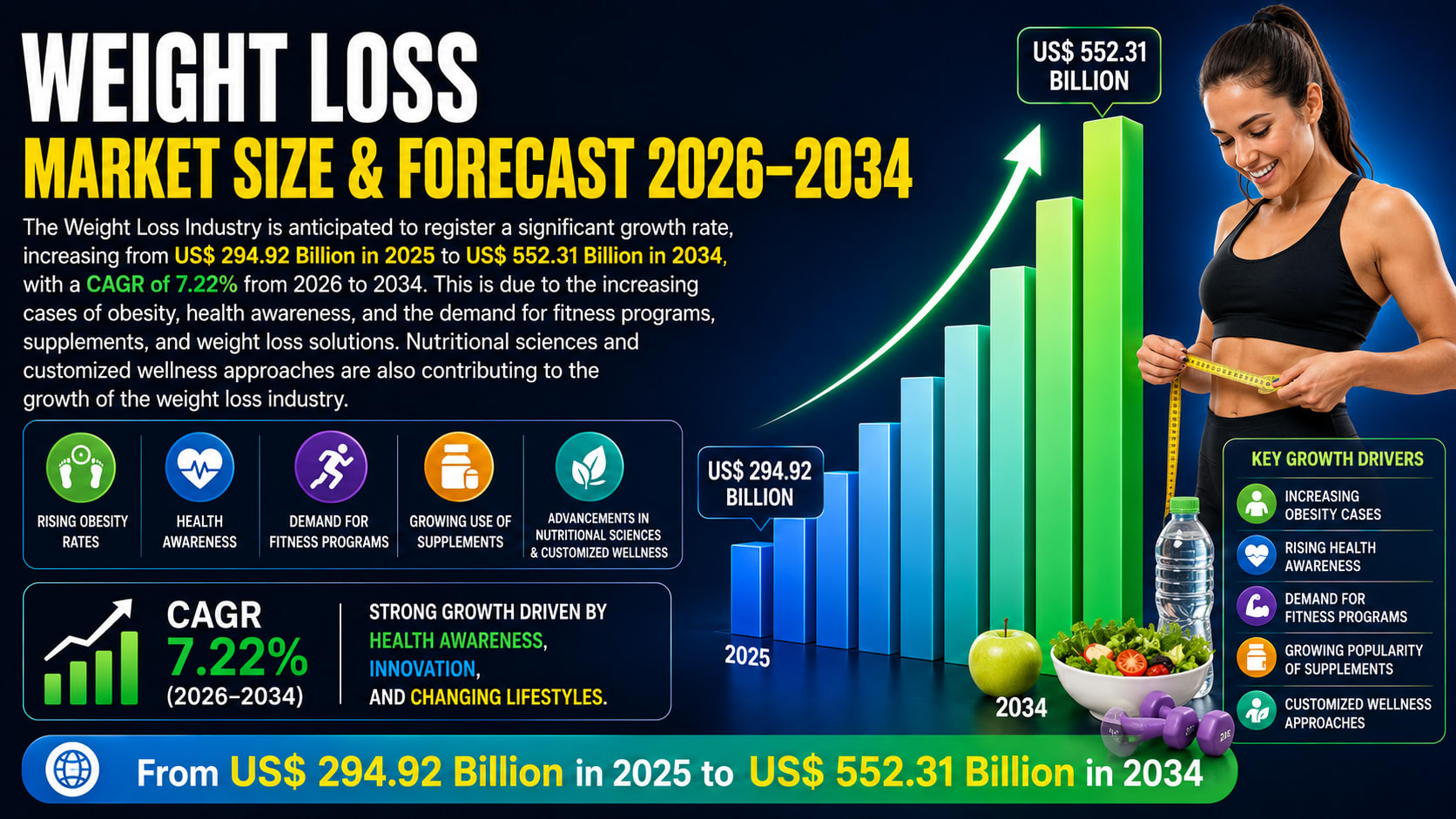
The global weight loss market is witnessing strong and sustained expansion as consumers increasingly prioritize healthier lifestyles, fitness, and preventive wellness. According to Renub Research, the industry is projected to grow from US$ 294.92 billion in 2025 to US$ 552.31 billion by 2034, registering a CAGR of 7.22% from 2026 to 2034. The market’s growth is being fueled by rising obesity rates, increasing health awareness, demand for personalized wellness programs, and growing adoption of supplements, fitness services, and technology-driven weight management solutions.
Weight Loss Has Become a Long-Term Wellness Priority
Weight loss is no longer viewed only as a cosmetic goal. Modern consumers increasingly associate healthy weight management with overall wellbeing, disease prevention, mental wellness, and long-term quality of life. Weight loss programs today often combine nutrition planning, physical activity, behavioral support, and digital monitoring rather than relying solely on restrictive dieting methods.
This shift reflects a broader global movement toward preventive healthcare. People are becoming more conscious of the connection between obesity and chronic illnesses such as diabetes, cardiovascular disease, hypertension, and musculoskeletal disorders. As awareness grows, weight management is increasingly seen as a critical part of maintaining long-term health.
Rising Obesity Rates Are Driving Global Demand
One of the biggest drivers behind the market’s expansion is the alarming rise in obesity worldwide. The report states that more than 1 billion people were recorded as obese in 2022, representing around 13% of the global population. Obesity rates have nearly tripled since 1975, and forecasts suggest that by 2035, around 1.9 billion adults could be affected by obesity. Long-term estimates indicate that by 2050, over half of the world’s projected adult population may be overweight or obese.
Sedentary lifestyles, unhealthy eating habits, rising consumption of processed foods, and urbanization have all contributed to this trend. As obesity-related health concerns increase, individuals are actively searching for effective weight management solutions that can improve both physical health and daily quality of life.
Preventive Wellness Trends Are Reshaping Consumer Behavior
Another important factor fueling the weight loss market is the growing emphasis on preventive wellness. Consumers are no longer focused only on treating illness after it appears. Instead, they are investing in healthier lifestyles designed to prevent chronic diseases before they develop. Weight management is becoming part of a broader wellness routine that includes healthy eating, exercise, stress management, and mental wellbeing.
Digital media has also played a major role in changing consumer attitudes. Social platforms, fitness influencers, health coaches, and wellness communities have significantly increased awareness about nutrition and fitness. As a result, consumers today are more informed and proactive about managing their health than ever before.
Corporate wellness programs and insurance-supported health initiatives are further encouraging individuals to adopt healthier habits. Governments and healthcare systems are also emphasizing preventive care strategies, which continue to strengthen demand for structured weight loss programs and services.
Technology Is Revolutionizing the Weight Loss Industry
Technology has become one of the most transformative forces in the weight loss market. Mobile apps, wearable fitness devices, AI-powered coaching tools, and online wellness platforms are changing the way consumers approach weight management. These technologies allow users to track calorie intake, monitor physical activity, measure sleep quality, and evaluate progress in real time.
Personalized nutrition planning and virtual coaching have made weight loss programs more accessible and interactive. Telehealth services are also enabling users to consult healthcare professionals remotely, making expert guidance easier to access across different regions.
The convenience and customization offered by digital wellness platforms are especially attractive to younger consumers and busy professionals. As artificial intelligence and health monitoring technologies continue to improve, digital weight management solutions are expected to become even more sophisticated and personalized.
Long-Term Sustainability Remains a Major Challenge
Despite rapid growth, the industry still faces major challenges related to long-term effectiveness. Many individuals experience short-term success with weight loss programs but struggle to maintain results over time. Unrealistic expectations, restrictive dieting methods, and lack of behavioral support often contribute to weight regain.
This issue affects consumer trust and highlights the importance of sustainable, evidence-based approaches rather than quick-fix solutions. Experts increasingly emphasize long-term lifestyle changes, balanced nutrition, and behavioral coaching instead of extreme dieting trends.
Misinformation and Safety Concerns Continue to Impact the Market
The weight loss industry also faces challenges related to misinformation, unsafe supplements, and fad diets. The popularity of unverified products and unrealistic marketing claims can confuse consumers and create health risks. Regulatory agencies worldwide are increasing scrutiny over product safety, advertising practices, and ingredient transparency.
Compliance with evolving regulations can increase operational costs for manufacturers and service providers. Negative consumer experiences with ineffective or unsafe products may also damage overall confidence in the industry. As a result, scientifically backed and clinically supported solutions are becoming increasingly important for long-term market credibility.
Weight Loss Supplements Continue to Gain Popularity
The weight loss supplements segment remains one of the largest areas within the market. Consumers are increasingly seeking convenient solutions such as fat burners, appetite suppressants, protein supplements, metabolism boosters, and meal replacements.
Demand for plant-based and natural supplements is rising rapidly as consumers become more health-conscious and ingredient-aware. Innovation within the supplement industry is also accelerating as companies focus on developing products supported by scientific research and personalized nutrition strategies.
Fitness Equipment and Home Workouts Are Expanding Rapidly
The weight loss fitness equipment market is growing steadily as consumers increasingly adopt home-based and hybrid fitness routines. Equipment such as treadmills, exercise bikes, rowing machines, resistance bands, and smart fitness devices are becoming common household products.
Busy lifestyles and the convenience of home workouts have encouraged consumers to invest in flexible fitness solutions. Connected fitness equipment and virtual training platforms are also improving user engagement by offering interactive exercise experiences and real-time progress tracking.
Fitness Centers and Health Clubs Remain Important
Although home fitness has grown significantly, gyms, health clubs, and fitness centers continue to play a major role in the weight loss market. Many consumers value structured workout programs, professional guidance, group activities, and social motivation that fitness centers provide.
Modern fitness centers are increasingly integrating nutrition counseling, wellness services, and personalized health coaching into their offerings. This holistic approach aligns with the broader trend toward sustainable and balanced weight management solutions.
Women and Middle-Aged Consumers Are Key Market Segments
The women’s weight loss market remains especially strong because of growing awareness surrounding fitness, wellness, hormone balance, and post-pregnancy health. Women-focused programs often combine nutrition, exercise, mental wellness, and long-term lifestyle planning.
The 31 to 60 years age group also represents a major market segment. Consumers within this category are increasingly concerned about obesity, diabetes, heart disease, and metabolic health. Because of work-related stress and limited free time, many prefer convenient solutions such as digital coaching, personalized fitness programs, and guided nutrition plans.
The United States Continues to Lead the Market
The United States remains one of the world’s largest weight loss markets due to high obesity levels and widespread health awareness. Consumers actively use supplements, fitness programs, mobile health platforms, and medical weight loss solutions. Innovations in wearable technology, telemedicine, and personalized nutrition continue to shape the market.
The report also highlights the growing role of pharmaceutical innovation in medical weight management. Approval of advanced GLP-1 medications and other obesity-related treatments is expected to further influence the market in coming years.
India and Saudi Arabia Are Emerging Rapidly
India’s weight loss market is expanding quickly due to rising urbanization, changing dietary habits, increasing disposable income, and greater health awareness. Consumers are increasingly adopting fitness programs, yoga, supplements, and health apps as part of their wellness routines.
Saudi Arabia is also witnessing steady growth as obesity concerns and interest in fitness continue to rise. Government-backed wellness initiatives, expanding fitness infrastructure, and growing use of digital health platforms are supporting market development across the region.
Competition Is Intensifying Across the Industry
The market includes major players such as Apollo Endosurgery Inc., Johnson & Johnson, Johnson Health Tech. Co. Ltd., Kellogg Company, Medtronic plc, TECHNOGYM S.p.A, The Simply Good Foods Company, and WW International Inc. These companies are investing in innovation, personalization, connected fitness, nutrition science, and medical wellness technologies to strengthen their market positions.
As competition grows, brands that focus on sustainable results, evidence-based solutions, and personalized wellness experiences are likely to gain stronger consumer trust.
Final Thoughts
The weight loss market is evolving far beyond traditional dieting trends into a broader wellness and preventive healthcare movement. Rising obesity rates, digital fitness innovation, personalized nutrition, and growing health awareness are all contributing to the market’s strong expansion. With Renub Research forecasting growth from US$ 294.92 billion in 2025 to US$ 552.31 billion by 2034, the industry is expected to remain one of the most influential segments within global health and wellness. As consumers continue prioritizing long-term health and sustainable lifestyle changes, the future of the weight loss market appears increasingly strong and technology-driven.