




Feature Story | 12-May-2026
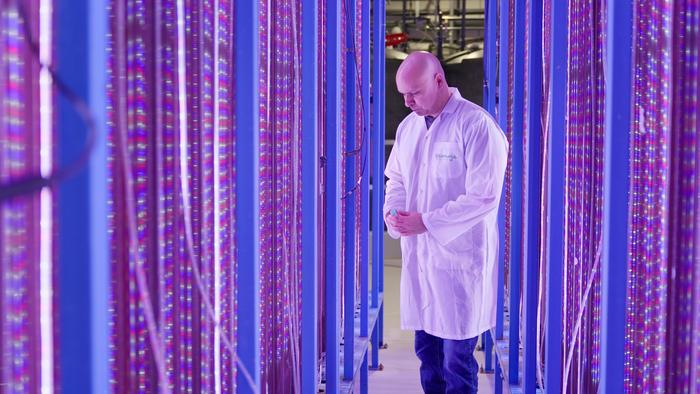
image:
Dr Amikam Bar Gil of Yemoja standing beside an algae bioreactor
Credit: European Science Communication Institute gGmbH
Since 1990 cases of inflammatory bowel disease (IBD) have nearly doubled. It has risen fastest among those aged 15-39. IBD is a chronic inflammation of the digestive tract and includes both Crohn’s disease and ulcerative colitis. IBD patients face intense abdominal pain, severe diarrhoea, fatigue or bleeding — symptoms that have a major impact on their quality of life.
“We have lots of therapies for IBD,” said Dr. Federica Ungaro, Leader of the Experimental Gastroenterology Group, San Raffaele Hospital, Milan. “But the problem is that many patients cannot respond to this treatment or in some cases, develop resistance. The inflammation persists and it becomes chronic.”
Since 2021 the EU-funded Algae4IBD project has been studying algae – both microalgae and seaweeds – as a natural source of compounds that could help reduce inflammation, support gut health, and combat microbial imbalances linked to IBD.
Footage of this research is available to download and remix for free on Science Stories
“The project is about how to use the biodiversity of micro and macroalgae for its nutritional and health benefits to try to reduce inflammation, pain and inflammatory bowel disease,” said Dr. Dorit Avni of MIGAL Galilee Research Institute and the project’s coordinator.
Over 20 types of algae have shown positive results for developing new treatments for inflammatory bowel disease. With the most promising extracts from these algae and considering a wide range of IBD patients, ranging from very young age to elderly, the scientists behind the Algae4IBD project developed food prototypes that include: chocolates, gummy bears, butter, vegan brownies, and pesto.
“We considered athe wide range of IBD patients, from a very young age to the elderly,” explains Dr. Avni. ”We wanted to create functional foods that could be used daily, not just as a premium product. Our findings show that algae can provide bioactive ingredients that are both effective and compatible with industrial-scale food production. This bridges the gap between marine biotechnology and preventive nutrition.”
The team hopes that the developed foods can soon reach the markets to support the treatment of IBD patients or help prevent the onset of IBD in society.
Key highlights of the work done in Algae4IBD
A collection of 187 seaweeds, microalgae, and cyanobacteria was established: 20 strains that have been classified as promising based on previous studies, while the remaining 157 are largely unexplored.
More than 600 extracts were obtained from the algae species in the collection, using water and organic liquids, resulting in diverse active compounds.
The 600+ extracts were analysed with tests that use cells (cell-based) and enzymes (in vitro) for their anti-inflammatory, antioxidant, anti-pain, anti-microbial and prebiotic properties.
Over 20 types of algae have shown positive results for developing new treatments for inflammatory bowel disease. Some are understudied, while others are commercially available, offering faster access, scalability, and cost-effectiveness for developing novel solutions for public health.
The most promising compounds or extracts from algae are being tested using biopsies from patients as well as model organisms that mimic the conditions of inflammatory bowel disease. This will help find out which compounds can help reduce inflammation and ease pain, demonstrating their potential to prevent or treat the disease.
Disclaimer: AAAS and EurekAlert! are not responsible for the accuracy of news releases posted to EurekAlert! by contributing institutions or for the use of any information through the EurekAlert system.