



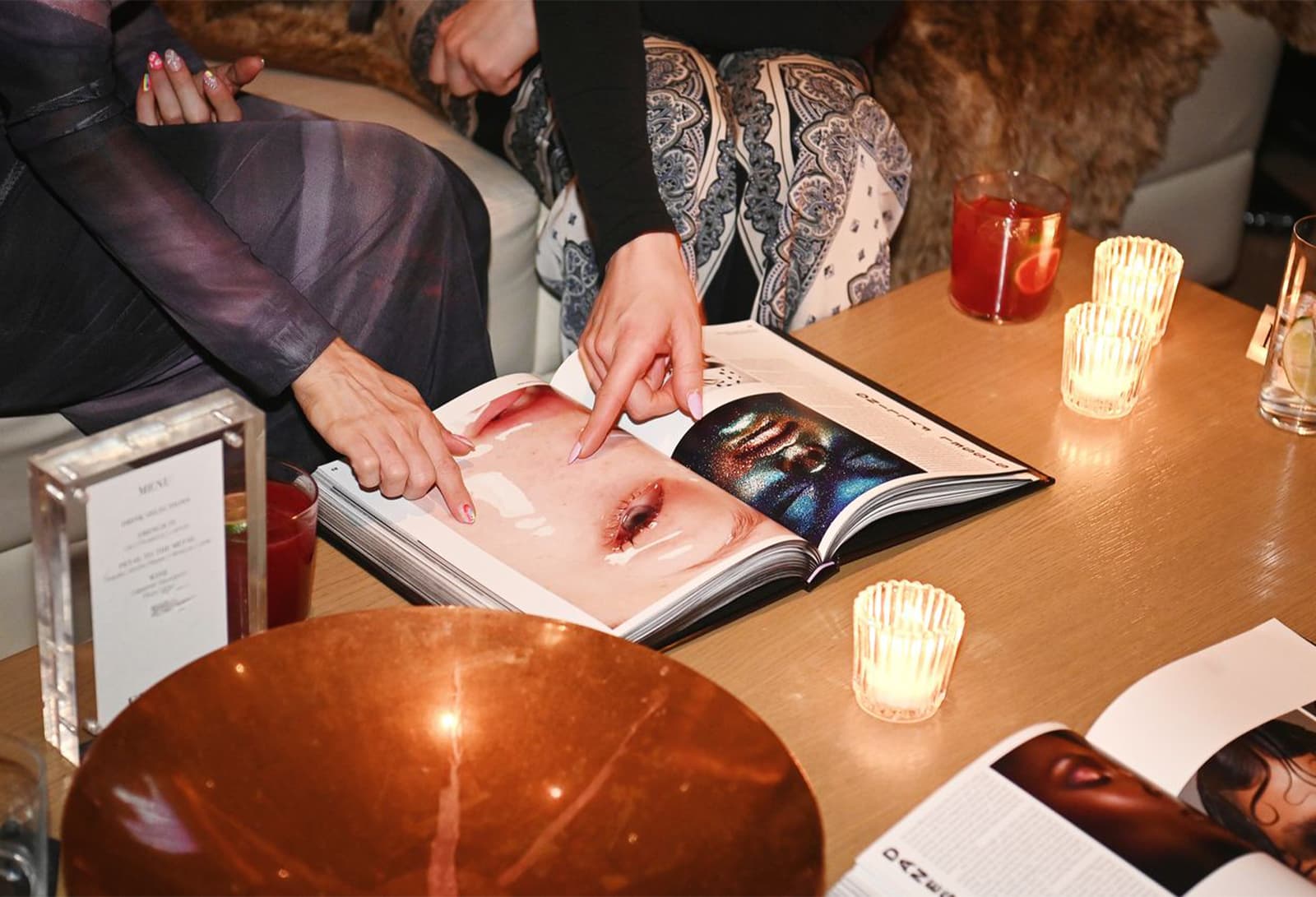
The book, edited by Phaidon with a foreword by renowned model Linda Evangelista and an introduction by fashion writer and curator Alistair O’Neill, surveys both established industry names—including Lisa Eldridge, Charlotte Tilbury, Pati Dubroff, and Sir John—and emerging artists pushing the boundaries of visual beauty culture.
What distinguishes Blush from traditional beauty publishing is its rejection of product-centric storytelling. While beauty media and social platforms remain deeply tied to commerce, the book intentionally shifts the focus toward artistry, process, and emotion. According to Cusson, “This book opens the door to creativity. It focuses on artistry and self-expression. It celebrates creativity and individuality.”
That emphasis mirrors broader movements reshaping the global beauty industry. Consumers increasingly approach makeup less as a prescribed routine and more as an adaptable emotional tool. Social media has accelerated experimentation, making bold beauty choices feel temporary, accessible, and low-risk. “I think beauty consumers today are much more open to taking risks with makeup,” Cusson added. “And the reason is simple: If you do not like it, you just remove it.”
The imagery inside Blush reflects that freedom. The book showcases everything from classic red lips to surreal embellishments involving rhinestones, orchids, toothpicks, and painted teeth, revealing makeup’s growing overlap with performance art, fashion photography, and sculpture. In this context, cosmetics become less about enhancement and more about atmosphere, mood, and visual narrative.
That emotional dimension is perhaps where contemporary beauty culture feels most transformed. Trends like “dopamine glam” and maximalist self-expression point to makeup’s expanding psychological role, especially in an era shaped by digital identity and constant self-documentation. For Cusson, makeup’s power lies not in concealment but in perception.
“When I create a makeup look, I can see how it can bring confidence and assurance to someone,” Cusson said. “It can change the perception a person has of themselves. That is very powerful, because makeup can bring joy, self-care, and self-love.”
In many ways, Blush documents a beauty industry in transition, from aspirational beauty to expressive beauty, from product obsession to artistic experimentation, and from perfection to individuality. The book positions makeup artists not simply as technicians, but as cultural image-makers who help define how beauty functions in contemporary life.
As beauty continues to intersect with art, identity, and emotion, Blush argues that makeup’s future may be less about selling transformation and more about enabling self-definition.