





You may start out with the best intentions, like aiming to meal prep every weekend, but sometimes the reality is that it just doesn’t happen. You work late, grab a quick bite, and skip the gym to rest. We get it—that’s life as a busy professional. But one thing many people may choose to do, especially if they don’t feel they’re living up to their dietary ambitions, is take a vitamin supplement. B12 is a popular one.
B12 is a water-soluble vitamin that’s essential for central nervous system development, red blood cell formation, and DNA synthesis. It’s naturally found in some foods, like eggs, tuna, and beef, and it can also be added to other foods, like cereal. Some people take vitamin B12 as a prescription medication, while others choose over-the-counter multivitamins. Curious to learn more, we asked our testing team to try several popular options and report back. Here’s what they consider the best B12 supplements.
Why Trust Fortune
Our team of expert testers has tried hundreds of the most popular supplements on the market today, using our comprehensive supplement testing methodology to find the best products for most people.
Best B12 Supplements of 2026
Best B12 Supplements Comparison Table
SupplementAmountForm of Vitamin BOther IngredientsSupplement FormServing SizeThird-Party TestingNutricost B121,000 mcgMethylcobalaminRice flour, dicalcium phosphate, hypromellose (cellulose) capsuleCapsule1 capsuleYesOra Buzzy B121,500 mcgMethylcobalaminOrganic xylitol, organic erythritol, organic tapioca maltodextrin, organic raspberry flavor, organic tapioca starchChewable tablet1 tabletYesLuma Nutrition B121,000 mcgMethylcobalaminL-Leucine, hydroxypropyl, methylcellulose capsule, silicified microcrystalline cellulose, silicon dioxideCapsule1 capsuleYesMary Ruth’s Liquid Morning Multivitamin12 mcgMethylcobalaminVitamin A, vitamin C, vitamin D, vitamin E, thiamin, riboflavin, niacin, vitamin B6, folate, biotin, and moreLiquid2 tbsp (if 14 years of age or older)YesGoli Apple Cider Vinegar Gummies1,2 mcgCyanocobalaminApple cider vinegar powder, beetroot, pomegranate, vitamin B12, tapioca syrup, water, cane sugar, pectin, sodium citrate, citric acid, malic acid, natural apple flavors, fruit and vegetable juiceGummy3 to 6 gummies per dayNoNutricost B12Amount1,000 mcgForm of Vitamin BMethylcobalaminOther IngredientsRice flour, dicalcium phosphate, hypromellose (cellulose) capsuleSupplement FormCapsuleServing Size1 capsuleThird-Party TestingYesOra Buzzy B12Amount1,500 mcgForm of Vitamin BMethylcobalaminOther IngredientsOrganic xylitol, organic erythritol, organic tapioca maltodextrin, organic raspberry flavor, organic tapioca starchSupplement FormChewable tabletServing Size1 tabletThird-Party TestingYesLuma Nutrition B12Amount1,000 mcgForm of Vitamin BMethylcobalaminOther IngredientsL-Leucine, hydroxypropyl, methylcellulose capsule, silicified microcrystalline cellulose, silicon dioxideSupplement FormCapsuleServing Size1 capsuleThird-Party TestingYesMary Ruth’s Liquid Morning MultivitaminAmount12 mcgForm of Vitamin BMethylcobalaminOther IngredientsVitamin A, vitamin C, vitamin D, vitamin E, thiamin, riboflavin, niacin, vitamin B6, folate, biotin, and moreSupplement FormLiquidServing Size2 tbsp (if 14 years of age or older)Third-Party TestingYesGoli Apple Cider Vinegar GummiesAmount1,2 mcgForm of Vitamin BCyanocobalaminOther IngredientsApple cider vinegar powder, beetroot, pomegranate, vitamin B12, tapioca syrup, water, cane sugar, pectin, sodium citrate, citric acid, malic acid, natural apple flavors, fruit and vegetable juiceSupplement FormGummyServing Size3 to 6 gummies per dayThird-Party TestingNo
Best B12 Supplement Overall: Nutricost B12
Best B12 Supplement Overall
Nutricost B12
Other ingredients
Rice flour, dicalcium phosphate, hypromellose (cellulose) capsule
Servings per container
120
Product HighlightsPros & Cons
Our thoughts: We like the dosage and neutral flavor, and that it’s third-party tested
Who it’s for: People seeking a straightforward B12 supplement
What makes it different: Available in three doses, and has a short and simple ingredient list
Lowest-priced option in the lineupEasy to swallowThird-party testedWebsite doesn’t offer much product informationCap isn’t child-resistantSome reviewers said they questioned the supplement’s efficacy, but most reviews were positive
Our Thoughts on Nutricost B12
Nutricost offers several dosage options for its B12 supplement, including 1,000 mcg, 2,000 mcg, and 5,000 mcg. This supplement contains the methylcobalamin form of B12, and the company notes that this product is vegetarian-friendly, non-GMO, gluten-free, and third-party tested. It’s also made in a GMP-compliant, FDA-registered facility. The company website doesn’t offer much in the way of purported product benefits, however.
Paige, our tester, tried Nutricost B12 and shared her experience. She first noted the “very clean” packaging and “compact” bottle, saying, “I could easily store this in a medicine cabinet as well as travel with it.” One thing to note: Paige said the bottle does not have a child-resistant cap and opens and closes with ease.

The instructions were pretty straightforward: Take one capsule daily with 8 to 12 ounces of water or as directed by your healthcare professional. “These instructions are very clearly labeled and easy to read,” said Paige, rating them a 5 out of 5.
Paige also said the capsule is “on the smaller end,” with a soft outer coating. She reported it was “easy to swallow without weird powder coating,” giving it a 5 out of 5 for swallowability. It was flavorless as well, with Paige rating it a 5 out of 5 for its neutral flavor.
She didn’t experience any side effects and, overall, said, “I would look forward to adding this to my daily supplements. This supplement is very cheap and easy to take.”
Best Chewable B12 Supplement: Ora Buzzy B12
Best Chewable B12 Supplement
Ora Buzzy B12
Other ingredients
Organic xylitol, organic erythritol, organic tapioca maltodextrin, organic raspberry flavor, organic tapioca starch
Product HighlightsPros & Cons
Our thoughts: Our tester loved the raspberry flavor and thought it was fun having a chewable option
Who it’s for: People who want an alternative to capsules
What makes it different: The tablet is chewable and raspberry-flavored
Great flavorA nice alternative to capsulesThird-party testedGlass bottle is nice, but breakableCap isn’t child-resistantSome people may prefer a flavorless capsule
Our Thoughts on Ora Buzzy B12
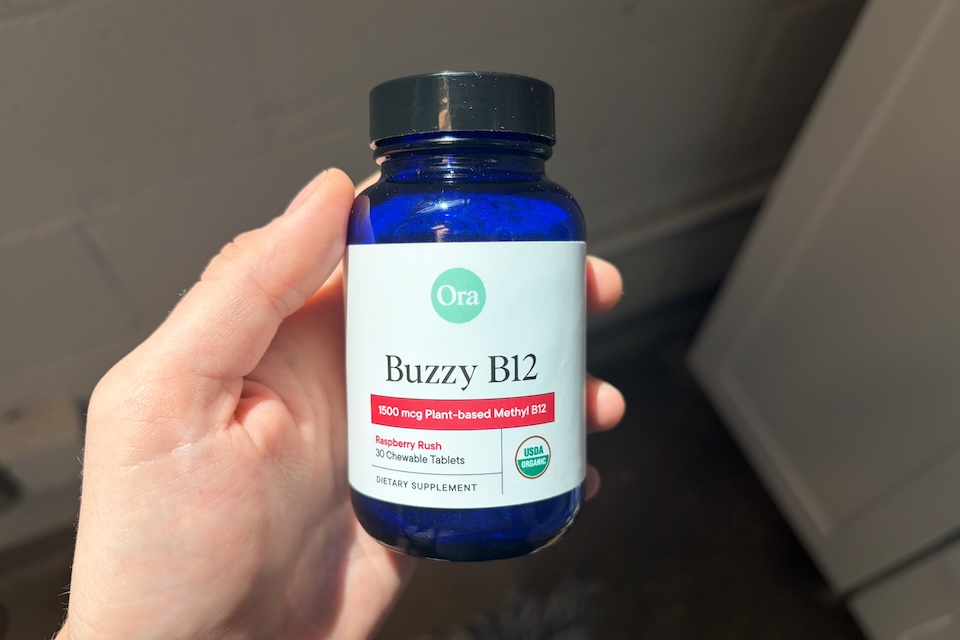
Ora says its Buzzy B12 supplement delivers bioactive methylcobalamin, which the company says is “the form your body actually absorbs.” It’s worth noting, however, that research shows that the overall bioavailability of various forms of supplemental B12 can be influenced by a lot of different things—including gastrointestinal pathologies, age, and genetics—and that for the majority of people, most bioidentical forms of B12 may have similar bioavailabilities and physiological effects. Ora’s supplement is designed to support energy, mood, and brain health—plus it comes in a chewable, raspberry-flavored tablet.
Paige, our tester, tried Ora Buzzy B12 and appreciated the “very sleek” aesthetic of the packaging. Additionally, “The glass bottle makes it feel more expensive,” said Paige, though she noted that someone may accidentally break. She also reported that the bottle isn’t childproof, as the lid opens easily.
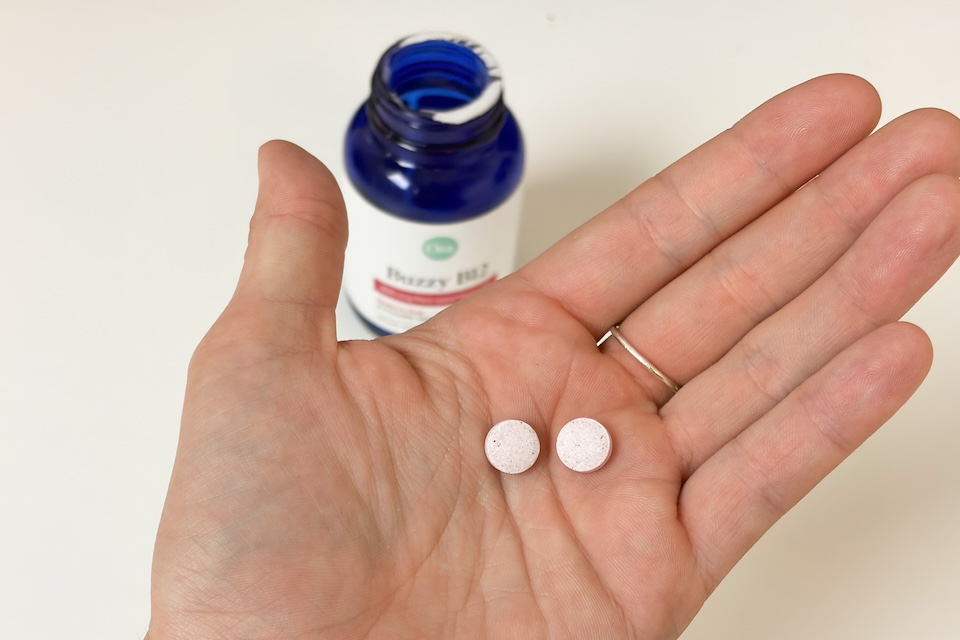
When it came time to take the supplement, Paige said the instructions “are very simple and easy to read.” She rated them a 5 out of 5 for how easy they were to understand. She took one tablet as instructed and liked that it’s chewable—calling it “so fun.” Paige added, “The pill is very small and easy to chew. It is soft and slightly powdery when chewed, but it dissolves quickly. There is a slight powdery coating, but it has a pleasant taste and texture.” She gave it a 5 out of 5 for swallowability, and another 5 out of 5 for the enjoyable raspberry taste, which was “refreshing” and “fruity.”
Paige said she felt great after taking this product and didn’t notice any weird aftertaste or digestive issues. “I would definitely continue to take this product and add it to my daily supplements,” she said, noting, “It’s a nice change to just swallowing boring pills.”
Best B12 Supplement with BCAAs: Luma Nutrition B12
Best B12 Supplement with BCAAs
Luma Nutrition B12
Other ingredients
L-Leucine, hydroxypropyl, methylcellulose capsule, silicified microcrystalline cellulose, silicon dioxide
Product HighlightsPros & Cons
Our thoughts: We thought this was a solid, easy-to-take option, and we appreciate the added BCAA
Who it’s for: Those who could benefit from the addition of leucine, including those looking for muscle growth support
What makes it different: The addition of L-leucine
Easy to swallowIncludes L-Leucine, a branched-chain amino acid (BCAA) that your body can’t make on its ownThird-party testedCap isn’t child-resistantPowdery coating on capsulesSome people may already take a supplement with L-leucine, so they may not need an additional dose
Our Thoughts on Luma Nutrition B12
Luma says its vitamin B12, which is in the methylcobalamin form, is essential for energy production, cognitive clarity, nerve health, and red blood cell formation. The purported benefits include more energy, a “sharpened brain,” nerve relief, and elevated mood, and the formula also includes L-leucine—a branched-chain amino acid (aka “BCAA”) that can help with muscle growth.
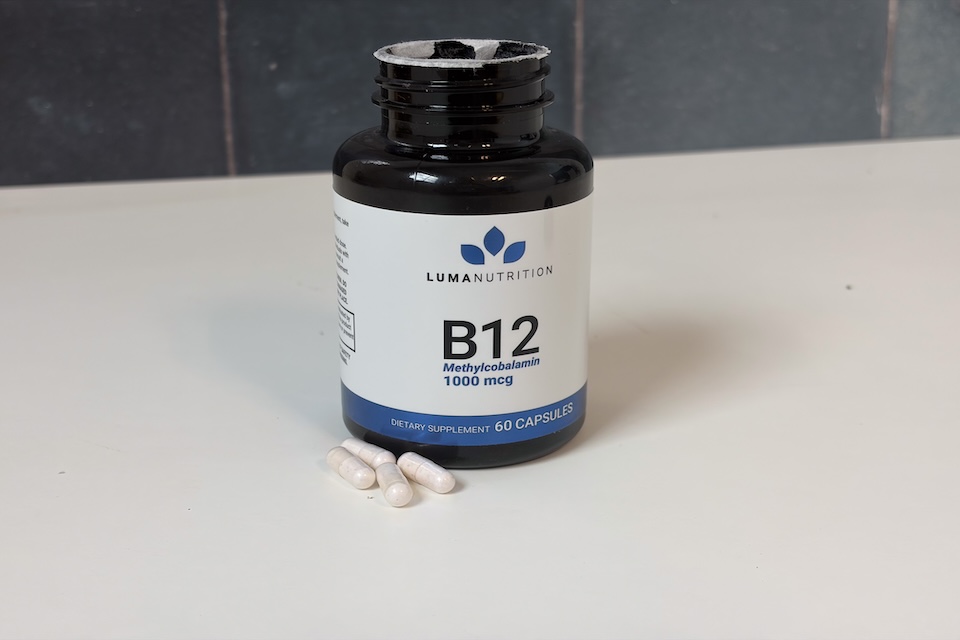
Paige tested this option, too, and appreciated the “compact and clean” bottle, noting, “It can easily be stored in a medicine cabinet or can fit in travel bags.” She reported that the bottle felt durable but didn’t have a child-resistant cap, so it opens and closes easily.
The instructions say to take one capsule per day with food, and according to Paige, “The instructions are clearly labeled and easy to read.” She rated them a 5 out of 5 for clarity.

Another plus: The capsule “is pretty small in size with a soft outer shell,” said Paige, explaining, “This capsule is easy to swallow since it is so small.” She rated it a 5 out of 5 for swallowability. One drawback: “There is a powdery coating on the capsule that is annoying just because it gets on my fingers,” she said.
The capsule itself “has no taste” and also didn’t have an aftertaste, said Paige. She rated it a 3 out of 5 for its neutral flavor.
Overall, said Paige, even though she didn’t notice immediate benefits, “I would definitely continue to take this product and add it to my daily supplements.”
Best Liquid B12 Supplement: Mary Ruth’s Liquid Morning Multivitamin
Best Liquid B12 Supplement
Mary Ruth’s Liquid Morning Multivitamin
Other ingredients
Vitamin A, vitamin C, vitamin D, vitamin E, thiamin, riboflavin, niacin, vitamin B6, folate, biotin, and more
Product HighlightsPros & Cons
Our thoughts: While our tester found it very sweet and syrupy, she liked all the vitamins and minerals included
Who it’s for: People looking for a broader blend of vitamins and minerals that includes B12
What makes it different: Formulated for anyone over 1 year of age, and the liquid form offers an alternative for people who dislike capsules
Good for people who prefer to avoid swallowing capsulesOffers a blend of vitamins and minerals, not just B12Third-party testedMost expensive product in the lineupIncludes a lower dosage of B12 than some other optionsVery sweet flavor and syrupy consistency that left a residue
Our Thoughts on Mary Ruth’s Liquid Morning Multivitamin
Mary Ruth’s Liquid Morning Multivitamin is just that—a broad-spectrum supplement that includes a blend of vitamins and minerals, rather than offering B12 as the key ingredient. For example, the formula also includes vitamin C, vitamin D, beta carotene, and more. There’s also a specific “B-Vitamin Blend” with B6, biotin, folate, pantothenic acid, and B12 (methylcobalamin), which the company says helps support various functions from circulatory health to mood and cognitive performance.
This product is designed for the entire family, including kids aged 1 year and older, with dosage instructions for people of various ages.
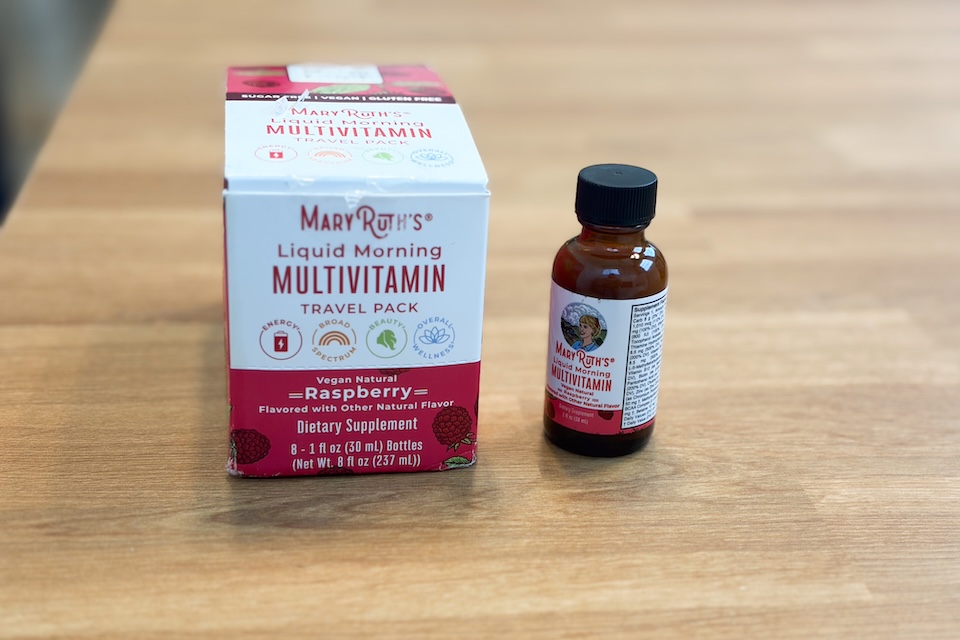
Our tester, Paige, tried this option and first noted, “The packaging is very artsy and cute. I like the pink coloring and the drawings of the raspberries.” She did say the packaging was slightly difficult to open, however.

The instructions were clear and easy to understand, said Paige, rating them a 5 out of 5. She said the product is already a suspended liquid, but after shaking it as instructed, she “did not notice any odd texture, chunks, or undissolved vitamins.” She reported, “The texture of this vitamin liquid is thicker and almost cough syrup-like.”
Flavor was a drawback. “I personally did not like the taste of this vitamin,” said Paige, who rated it a 1 out of 5 for how it tasted. Paige explained, “The flavor is raspberry, and it is very sweet and medicinal,” and said she’d have appreciated some tartness to even out the sweetness. “I had a hard time finishing the recommended serving,” she added, saying the liquid is syrupy and left a film on her tongue. “I would not look forward to drinking this regularly and would prefer a gummy or pill vitamin,” she said. Paige rated the sweetness as the highest amount of sweetness possible.
Paige didn’t report any side effects “other than some brief nausea from the taste and texture,” and she said there was a strong aftertaste that “lasted a while.” She said she experienced a “greasy residue” on her mouth as well. On a more positive note, she said the product seems to get a lot of great reviews and that the list of vitamins is impressive. Additionally, this product may be well-suited for someone who doesn’t like swallowing capsules or taking gummy vitamins.
Best Gummy B12 Supplement: Goli Apple Cider Vinegar Gummies
Best Gummy B12 Supplement
Goli Apple Cider Vinegar Gummies
Other ingredients
Apple cider vinegar powder, beetroot, pomegranate, vitamin B12, tapioca syrup, water, cane sugar, pectin, sodium citrate, citric acid, malic acid, natural apple flavors, fruit and vegetable juice
Serving size
1 to 2 gummies, 3 times per day
Product HighlightsPros & Cons
Our thoughts: Our tester loved the apple flavor of this gummy
Who it’s for: People who are looking for a low dose of B12
What makes it different: Apple cider vinegar is the main ingredient, so there isn’t a lot of B12
Gummy form may be desirable for people with capsule fatigueExcellent apple flavorCustomer service responded quicklyWebsite lacks key product informationNot third-party testedLow dosage of B12
Our Thoughts on Goli Apple Cider Vinegar Gummies
Goli Apple Cider Vinegar Gummies also include vitamin B12, though this option uses the cyanocobalamin form and contains the lowest dosage of B12 in the lineup at just 1.2 mcg—which isn’t that surprising given that apple cider vinegar, not B12, is the key ingredient. One thing we noticed right away: The website lacked key product information, like how many gummies were in a bottle. We had to email the company to get that information, but we appreciated that customer service responded quickly.
Paige tested Goli’s Apple Cider Vinegar Gummies and said, “I love the packaging. It is really sleek and a nice shade of red. The font on the front is large and easy to read.” She said the bottle itself is travel-friendly, and that even though it was designed to be child-resistant, it still opened easily.
The instructions said to take one to two gummies three times a day, and to chew them thoroughly. But Paige said the instructions didn’t specify whether to take the gummies with food or not, and said the directions were in a small, faded font. Paige rated the instructions a 3 out of 5.

“The gummies are on the larger end,” said Paige, and with the serving size being one to two gummies three times a day, it was a bit much. “I think this is a lot of gummies to chew,” she said.
Flavor-wise, “This gummy is apple flavor with efforts to disguise the apple cider vinegar flavor,” reported Paige, who said she was skeptical at first “because I still smelled a hint of vinegar when I opened the bottle.” However, she was pleasantly surprised. “The flavor tastes just like apple juice,” she said, adding, “I could eat these like candy. Great balance of sweet and tart and no weird aftertaste.” She rated these gummies a 5 out of 5 for taste.
They were also fairly easy to swallow, with Paige rating them a 3 out of 5 for swallowability and explaining, “After chewing this product, I felt a very subtle burn/cooling sensation in my throat, which I know comes from the apple cider vinegar. I did not mind this because when you actually drink apple cider vinegar, this sensation is much worse.”
Overall, said Paige, “I would definitely add this to my normal supplement routine.”
How We Tested and Selected the Best B12 Supplements
No matter the supplement—whether postnatal vitamins, biotin, maca root, or something else—there can be wide variation in supplement quality. Here’s what we paid attention to when testing B12 supplements.

Formula
As part of our testing process, we work with a registered dietitian to review formulas for safety. We check to make sure product dosages are clinically supported and in line with the recommended daily values, and that products don’t contain any undesirable ingredients.
Serving Size
We look not only at the form of the supplement, whether capsule, gummy, liquid, or tablet, but also at the amount required. Swallowing one capsule per day is very different than needing to take four or five per day, for example, and can affect what we call “swallowability”—how easy it is to take a supplement.
Taste
Assessing flavor is an important part of our testing process. If a supplement doesn’t taste good, it can reduce a person’s willingness to take it, leading to an inconsistent routine. We ask testers to assign ratings for taste and, if applicable, sweetness, with the latter rated on a scale of 1 to 5, with 3 meaning well-balanced sweetness, and 5 indicating maximum sweetness.
Third-Party Testing
The U.S. Food and Drug Administration (FDA) doesn’t approve dietary supplements for safety or efficacy, which means ingredients and their amounts may differ from what’s on the label. For this reason, we look for products that have been third-party tested to confirm safety and accuracy.
Value
Here’s what our top picks cost, including how much each serving costs—as that’s often more helpful than looking at price alone.
Benefits of B12 Supplements
According to Kylie King, MS, RD of Kylie King Nutrition, “B12 is essential for energy production, red blood cell formation, and neurological function. But the ‘benefit’ only applies if you’re truly B12 deficient or at risk of becoming deficient. Healthy adults eating a balanced diet that includes animal products do not generally need to supplement B12.”
However, adds King, there are certain groups who can benefit from vitamin B12 supplementation, including:
Adults over 50, as B12 absorption naturally declines with age
Those following a vegan diet, because B12 is almost exclusively found in animal foods
People who are on long-term acid-blocking medications like PPIs or metformin, as well as anyone with absorption issues like celiac disease, Crohn’s, or post-bariatric surgery
GLP-1 patients who aren’t getting enough B12 from food alone because the medication’s appetite suppression leads to lower food intake
King explains, “When deficiency is real, supplementation can effectively resolve the side effects of fatigue, brain fog, mood symptoms, and tingling in the hands and feet. But for those without a deficiency or a risk of deficiency, taking extra B12 beyond what the body needs does not create additional energy or health benefits.”
One thing King recommends to her patients: “Request nutrient lab testing through your physician before starting a vitamin or mineral supplement. This gives us a much better idea of whether or not it’s needed, and how to correctly dose.”
What to Avoid in B12 Supplements
King says there are certain things to look for and avoid when shopping for a B12 supplement.
“I generally recommend methylcobalamin or adenosylcobalamin, the active, body-ready forms, if cost isn’t a barrier,” says King, “Cyanocobalamin is still effective, widely studied, and more affordable, so it’s a fine choice too.”
“For general supplementation in a healthy adult,” says King, “250 to 500 micrograms daily is plenty. But for those with greater needs, including adults over 50, vegans, or people with absorption issues, 500 to 1,000 micrograms is common and well-tolerated.”
King says it’s also important to note that third-party tested products (for example, those that are USP, NSF, or ConsumerLab verified) are “worth the small potential cost increase because the supplement industry is generally poorly regulated.”
Finally, “I recommend avoiding proprietary blends that don’t show exact B12 amounts, products combining B12 with stimulants or ‘energy boosters’ (which is usually just caffeine driving the energy claim, not the B12), and anything making marketing claims about weight loss or metabolism,” says King. “B12 doesn’t improve weight loss success in people with normal levels, which is a myth I correct in my practice constantly.”
How to Find the Best B12 Supplements for You
It’s worth noting that you can get B12 from food sources, too, not just supplements.
As King explains, “Sourcing it through food is the best way to get B12. Some everyday options include eggs, dairy (especially Greek yogurt and cottage cheese), and lean beef or chicken. The richest sources [of B12] are clams, sardines, salmon, tuna, trout, and beef liver. Just three ounces of salmon delivers about 130 percent of the daily requirement. And one large egg provides roughly 20 percent.” She also noted that people following a plant-based diet can look for foods fortified with B12, including nutritional yeast, fortified plant milks, and fortified cereals.
For those who aren’t getting enough B12 from diet alone and are interested in a supplement, here’s what to think about.
Your Wellness Goals
Consider your own health goals when choosing a B12 supplement. Think about the benefits you’re hoping to see, and choose the product best designed to support those goals.
Potency
According to King, for adults, the RDA is 2.4 micrograms daily. “But most over-the-counter B12 supplements contain far more in the range of 500 to 1,000 micrograms,” she says, adding, “That sounds pretty excessive, but it’s actually intentional since oral B12 absorption is inefficient. Only a small percentage of high-dose oral B12 is absorbed, which is why supplements are often formulated at much higher levels than the RDA.”
Cost
Think about your budget before buying, and consider the likelihood that you may need to keep repurchasing this product. With so many B12 supplements on the market today, most people can find something in their preferred price range.
Third-Party Testing
We prioritize products that have been third-party tested, as the FDA doesn’t test supplements for safety or efficacy. This information can usually be found on the manufacturer’s website and/or the product packaging, but if you don’t see mention of third-party testing in either of those spots, you can also usually email the company to ask.
Frequently asked questions
What is the best brand of vitamin B12 to take?
There isn’t one best brand, as everyone is different and has different health needs and goals. The important thing is to find a B12 supplement that’s the best fit for you. To do that, we recommend speaking with a healthcare provider to ask if you’re a good candidate for B12 supplementation, and if so, making sure you choose a B12 supplement with an appropriate dosage that’s been third-party tested and meets any other criteria you have. Our top pick overall is Nutricost B12—we appreciate its dosage, its neutral flavor, and that it’s third-party tested.
What form of B12 is most effective?
Research shows that the bioavailability of B12 supplements depends on gastrointestinal pathologies, age, and genetics. While some research shows a preference for bioidential forms of B12, there’s a synthetic form of B12 called cyanocobalamin that is also considered acceptable.
What are the signs of B12 deficiency?
According to the National Institutes of Health (NIH), vitamin B12 deficiency can cause numerous symptoms like fatigue, neurological changes, megaloblastic anemia, palpitations, and low white and red blood cell counts.